



When a commercial garage door suddenly fails, it does more than slow things down; it can bring an entire operation to a standstill. Deliveries back up, staff workflows are disrupted, vehicles can’t move in or out, and security may be compromised. For many businesses, the garage door is not just another piece of hardware; it is a critical access point, a safety barrier, and a central part of daily logistics.
This guide walks through the big picture: what happens when a commercial door fails, how it affects safety, security, and operations, and how professional support, whether commercial garage door installation, repair, or full commercial garage door replacement, fits into your broader responsibilities as an owner or manager.
What Failure Looks Like in a Commercial Setting
When a commercial garage door fails, the impact is rarely confined to one small area. In most facilities, that door is part of a larger system involving people, vehicles, storage, loading docks, inventory, and sometimes public access. Understanding the types of failures that occur helps you recognize the seriousness of the situation and respond accordingly.
Failures may be obvious, such as a door that will not open or close, or more subtle, such as a door that operates intermittently or moves unevenly. In either case, the effect on your operation can be significant. A door that sticks open exposes stock and equipment; a door that sticks closed can isolate vehicles and staff. Even a door that technically works but behaves unpredictably can undermine confidence and slow down every task around it.
Learn how a failed commercial garage door can create safety hazards, liability concerns, and costly downtime by reading: The Real Risks of a Failed Commercial Garage Door: Safety, Liability, and Downtime.
Operational Disruption on Site
The most immediate impact of a failed commercial garage door is disruption. If the door controls access for deliveries, dispatch, or service vehicles, a failure alters your entire timetable. Drivers may be forced to wait, reroute, or unload manually in less suitable areas. Staff may have to improvise to move goods in and out, and internal workflows can quickly become strained.
Even in less obvious scenarios—such as a secondary door that is not used constantly—failure still creates challenges. It can affect how you stage inventory, where you park fleet vehicles, or how you plan daily maintenance and cleaning. Over time, small disruptions accumulate into broader operational inefficiencies that affect productivity and service levels.
A malfunctioning door can also disrupt communication. Teams that are used to predictable access suddenly have to coordinate work around a blocked entrance. Supervisors may have to update drivers, suppliers, and customers on delays. In a busy environment, that added complexity is the last thing anyone needs, especially when the focus should be on serving clients and keeping staff safe.
Find out why operations slow, and productivity drops the moment a commercial garage door stops working by reading: When the Door Stops, Business Slows: How Commercial Garage Door Failures Hit Your Bottom Line.
Safety, Liability, and Compliance Concerns
Commercial garage doors are heavy, powered systems. When they fail, the safety implications are serious. A door that moves unpredictably, does not stay in position, or fails to respond to controls can put staff, visitors, and contractors at risk. Even if an incident never occurs, the potential for harm becomes part of your responsibility as an employer and duty holder.
Liability concerns go hand in hand with safety. Suppose a person is injured or property is damaged as a result of a door failure. In that case, questions will be asked about how the door was managed and whether appropriate professional services were engaged. Insurers, regulators, and internal risk managers will all want to know whether qualified experts were managing the system.
In some sectors, especially those involving food, pharmaceuticals, or regulated goods, a failed door can raise compliance concerns. If it affects temperature control, contamination risk, or separation between zones, it may affect audits and certifications. In such scenarios, engaging experienced commercial garage door opener repair and door service providers is essential not only for convenience but for regulatory peace of mind.
See why having the right service partner makes all the difference during unexpected breakdowns by reading: In the Middle of a Breakdown: Why the Right Commercial Garage Door Partner Matters.
Understanding Your Commercial Garage Door as a System
A commercial garage door is not a single object; it is a system of interdependent parts designed to safely and repeatedly move controlled weight. Appreciating that bigger picture helps you contextualise what goes wrong when the door fails and why professional intervention is so important.
Every commercial door system is built to perform under specific loads and duty cycles. For example, a warehouse with round-the-clock truck activity places very different demands on its doors than a small trade unit with limited daily opening. Doors, openers, and control systems are selected and configured accordingly. When something fails, it can be a sign that parts of that system are no longer suited to the work they are being asked to do.
The Door, Hardware, and Tracks
The visible door panels, tracks, rollers, hinges, and brackets are the mechanical heart of the system. They guide and support the door’s movement, maintaining alignment and stability as the door opens and closes. When something is wrong with these elements, you may see the door become uneven, hear unusual noises, or notice that the door no longer sits square in its opening.
Because these parts work together, a problem with one can quickly spread. A misaligned track can affect how the rollers move; damaged rollers can put stress on brackets and hinges; bent or fatigued panels can place uneven loads on the system. This interdependence is why commercial garage door service should always be handled by technicians who can diagnose the whole system rather than treating each component in isolation.
For business owners, the key point is that a visible symptom, such as a door catching or dragging, may have an underlying cause that is not obvious at a glance. A thorough inspection by a commercial specialist is the only reliable way to understand what is really happening and what should be done about it.
Understand federal safety requirements for residential garage door operators by reviewing the Federal Register.
The Opener, Controls, and Safety Devices
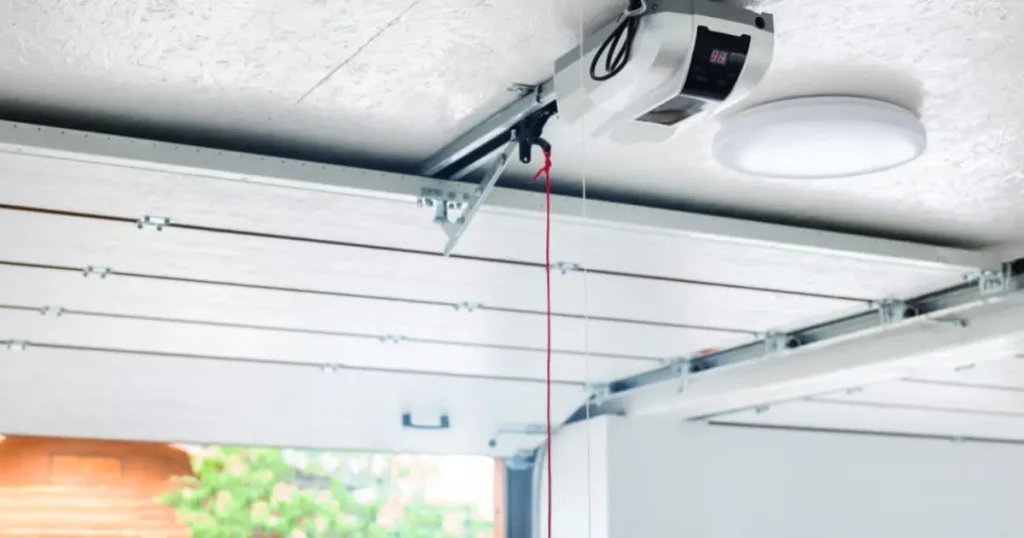
The opener and control system are often the most noticeable parts of a commercial garage door, especially when they stop working as expected. The motor unit, drive mechanism, control panel, remotes, and safety devices all contribute to how the door responds to commands and how it behaves when obstacles or faults are detected.
Commercial systems may be integrated with access control, security systems, or building management platforms. A failure in one part of this network can influence the others. For example, an issue that appears to be related to power or controls may actually stem from a mechanical fault that is causing the opener to operate outside its safe operating conditions.
This is where commercial garage door opener repair performed by a qualified technician comes into play. Rather than blindly adjusting settings, a professional evaluates both the mechanical and electrical sides of the system, ensuring that any work on the opener is grounded in an accurate understanding of the door’s overall behavior.
Review regulatory updates and safety data for automatic garage door operators at Regulations.gov.
Immediate Priorities When a Door Fails
When a commercial garage door fails, business owners and managers are immediately pulled in several directions at once. There are safety concerns, operational pressures, and communication obligations to juggle. Clarity on priorities helps you act decisively.
The first priority is always people: ensuring that no one is at risk around the failed door and that the area is treated with appropriate caution. After that, attention turns to securing the site and maintaining as much operational continuity as possible while professionals are contacted and arrangements are made for inspection and service.
Securing People and Property
When a door fails, the area around it becomes a high-risk zone. Staff and visitors may not fully appreciate the danger of a partially open door, one that might move unexpectedly or no longer be properly controlled by the opener. Clear instructions, temporary barriers, and signage can all help ensure people do not treat the door as “almost normal” when it is anything but.
Property security is also a concern. A door stuck open or unable to close properly may expose inventory, equipment, or sensitive areas. In such cases, it may be necessary to adjust access routes, deploy additional security measures, or temporarily reconfigure how goods are stored and moved. These actions are not a substitute for professional repair or replacement, but they buy time while you wait for specialist support.
Communication is part of securing the situation as well. Supervisors need to know that the door is out of service, and staff should understand what is expected of them until professionals arrive. The clearer this communication is, the less likely it is that someone will attempt to operate the door or work around it in an unsafe way.
Stabilising Operations and Access
Once people and property are safe, attention shifts to keeping the business running as smoothly as possible under the circumstances. This may involve rerouting deliveries to another door if available, rescheduling certain activities, or coordinating with drivers and suppliers about temporary changes.
In some cases, the failure of a key door may require short-term changes to how you use your site. You may need to stagger vehicle movements, designate alternative loading points, or adjust working hours to match revised access arrangements. These decisions are operational rather than technical, but they are still influenced by how quickly you can secure professional commercial support.
This is where having an established relationship with a company that provides commercial garage door service near me is invaluable. When you know whom to call, how they respond, and what information they need from you, it is easier to stabilize your operation with confidence. You are not starting from scratch in the midst of a problem; you are activating a plan.
Repair, Replacement, and Installation Decisions
Once the nature of the failure and the overall condition of the system are understood, you face decisions. Should the focus be on returning the existing setup to service, or is this the moment to consider a more substantial change? The guidance you receive from your service partner is crucial here.
These decisions are rarely just technical. They involve considerations of reliability, performance, suitability for current operations, and future needs. Commercial environments evolve—new vehicle types, expanded operations, and different shift patterns may require your doors, openers, and related systems to evolve as well.
When Repair Is the Right Approach
There are many situations where targeted professional repair is an appropriate and effective response. If the door and opener are fundamentally sound and suited to the work they are doing, addressing specific issues can restore reliable operation without altering the broader system.
This might involve correcting faults in mechanical components, rectifying control or sensor issues, or carrying out commercial garage door opener repair to restore proper function. The key is that such work is grounded in a full understanding of the system’s condition, so that repair is not masking a more profound mismatch between the door and its operational context.
For business owners, the important thing is to view repair as part of an ongoing professional service relationship rather than a one-off patch. Good providers will help you understand how the repaired door should perform, what signs to watch for in the future, and how the repair fits into the wider lifecycle of your equipment.
Trusted Commercial Service Provider
Understanding your door as a system, prioritizing people and property in the event of failure, and building a strong relationship with a qualified commercial service provider all contribute to better outcomes. Whether the solution is targeted repair, comprehensive commercial garage door opener repair, carefully planned commercial garage door replacement, or new commercial garage door installation, the decisions you make in partnership with your provider shape the reliability of your operation.
Ascension Garage Door Service provides reliable residential and commercial garage door solutions throughout Colorado Springs. Our team handles everything from precise installations and durable replacements to fast, dependable repairs. We work with all major door and opener brands, ensuring every system operates safely and smoothly. With years of hands-on experience, we bring expert workmanship and honest service to every project. Whether you need routine maintenance or a complete upgrade, we deliver results you can trust.
Contact us today or give us a call to schedule your garage door service.
Frequently Asked Questions
What should we do first when a commercial garage door fails?
When a commercial garage door fails, we always prioritize safety and securing the area around the door. We then contact a qualified commercial garage door service provider to inspect and make the system safe before anyone attempts to use or work around the door again.
How do we know if our door needs commercial garage door replacement instead of repair?
We look at the age of the door, the pattern of failures, the overall condition of the hardware, and whether the system still matches how you use the building today. If we see repeated breakdowns, extensive wear, or a door that no longer meets your operational needs, we generally consider commercial garage door replacement the more reliable long-term option.
Why is it important to use a specialist for commercial garage door opener repair?
Commercial door openers are designed for heavier loads and higher usage than typical residential systems, so we believe they should be handled by technicians who work with this equipment every day. We focus on both the opener and the door system around it, because problems in one area often create issues in the other.
How often should we schedule professional commercial garage door service?
We usually recommend that businesses follow a planned service schedule based on how often the door is used and how critical it is to operations. For high-cycle or mission-critical doors, we tend to suggest more frequent inspections so we can identify issues before they lead to an unexpected failure.
What should we look for when searching for commercial garage door service near me?
When we evaluate service providers, we look for experience with commercial and industrial systems, clear safety practices, and structured reporting on inspections and repairs. We also pay attention to how they communicate, how quickly they can respond, and whether they take time to understand how your specific site operates.
Can we keep using the door if it is still moving but not working normally?
If a door is moving unpredictably, making unfamiliar noises, or no longer stopping where it should, we treat that as a warning sign and avoid using it until it has been assessed. We find that continuing to operate a faulty door often leads to further damage and increases the risk to people and property.
How does commercial garage door installation affect our daily operations?
When a new door is installed, we try to plan the work around your schedule so disruption is kept to a minimum. We also look at how you use the space, vehicle types, shift patterns, and security needs, so that the commercial garage door installation supports your day-to-day operations rather than forcing you to work around the equipment.
What information should we share with a technician when a door fails?
We find it helpful when businesses share how the door was behaving before the failure, how often it is used, and whether there have been previous issues or repairs. We also like to know which activities depend on that door most, so we can focus on restoring safe access in a way that supports your operations.
How does a commercial garage door failure affect safety compliance?
From our perspective, any failure that changes how the door moves or closes can have implications for safety procedures and, in some sectors, regulatory requirements. We therefore treat a failed door as a priority issue and aim to ensure it is brought back into safe, compliant operation as quickly as possible.
Why should we think about the door as part of business continuity planning?
We see commercial garage doors as critical access points that can influence everything from logistics to security. By including them in business continuity planning, we can work with you to identify which doors are most critical, agree on service priorities, and put clear steps in place for how we respond if a door fails unexpectedly.