


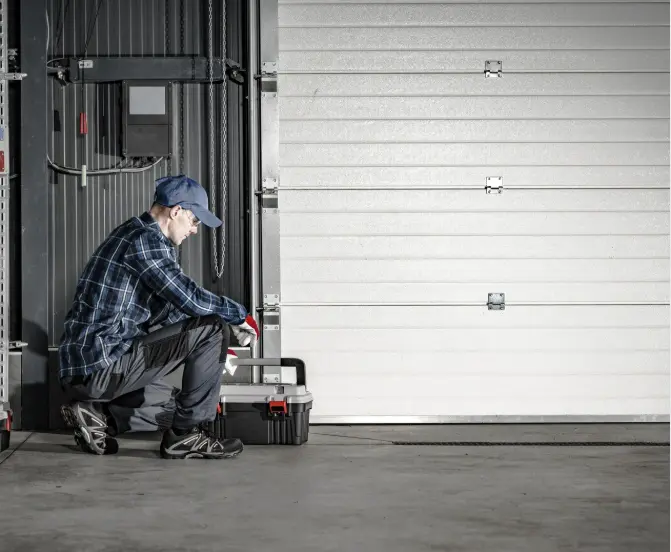
A commercial garage door is more than a big moving panel at the edge of a building. It is part of how a business controls access, protects people, and keeps products and vehicles moving on schedule. When that door fails, the impact spreads quickly, affecting not only the immediate environment but also the business’s overall workflow. Safety can be compromised, leading to potential injuries for employees and visitors alike. In addition, liability questions can arise, raising concerns about whether the company is complying with safety regulations and standards. This can result in costly legal repercussions and damage to the business’s reputation. Timely commercial garage door repair is essential to mitigate these risks and ensure smooth operations.
Furthermore, operational efficiency can suffer significantly when a garage door malfunctions. Delays in loading and unloading can cascade into broader disruptions, affecting delivery schedules and customer satisfaction. The failure of a seemingly simple component can halt operations, causing frustration among staff and clients. In such scenarios, businesses may need to invest in emergency repairs or temporary solutions, which can further strain resources. Ultimately, the risks associated with a failed commercial garage door underscore the necessity of regular maintenance and prompt attention to any signs of wear or malfunction.
How Commercial Garage Door Failures Develop
Commercial garage doors are built to work hard. In many facilities, they open and close dozens or even hundreds of times each day. Every cycle puts a load on the panels, hardware, counterbalance system, and operator. Problems rarely appear all at once. They usually build slowly in the background until something finally gives.
In busy environments, it is easy to overlook early warning signs. A door that starts moving a little slower, makes a new noise, or stops an inch higher than before may not seem urgent. People adapt and keep working. Meanwhile, the door system may be drifting further away from its original condition. Components can wear unevenly, supports may loosen, and adjustments can slip out of their proper settings.
Find out what every business owner needs to know when a commercial garage door fails by reading: When Your Commercial Garage Door Fails: What Every Business Owner Should Know.
A Door Is a System, Not a Single Piece of Equipment
It helps to think of a commercial garage door as a system rather than a single object. Panels, hinges, tracks, rollers, counterbalance mechanisms, structural supports, operators, and controls all work together. If one part is not doing its job, other parts compensate until they can no longer carry the extra load.
If the door is out of balance, the counterbalance system and the operator have to work harder than they should. If tracks are not aligned correctly, the door may bind or twist as it moves, which stresses hinges and mounting points. If supports are loose, vibration can increase, and wear can accelerate. The visible symptom, such as a door that will not open or close, is often the last stage of a process that has been building over time.
Professional service providers look at the failure as part of the whole picture. When technicians examine a failed door, they do not focus only on the part that broke. They assess the entire installation to understand what failed, why it failed, and what other conditions might lead to additional problems later.
See how a sudden door failure can slow operations and impact your bottom line by reading: When the Door Stops, Business Slows: How Commercial Garage Door Failures Hit Your Bottom Line.
Safety Risks When a Commercial Door Fails
The most serious risk associated with a failed commercial garage door is to people who work near it. Doors used in loading docks, service bays, warehouses, and fleet facilities are often large, heavy, and powered. A problem with that equipment is not just a mechanical issue. It is a potential safety incident.
When a door does not move as expected, workers and drivers can be caught off guard. A door that suddenly drops, jerks, or stops can surprise someone who is under or near it. A door that no longer responds properly to controls can move at the wrong moment and put people in harm’s way. Even a partially failed door that seems to work most of the time can be dangerous, because it encourages people to keep using it.
Learn why having the right commercial garage door partner is critical during unexpected breakdowns by reading: In the Middle of a Breakdown: Why the Right Commercial Garage Door Partner Matters.
Unpredictable Movement and Entrapment
Safe doors move in a controlled, predictable way. Staff learn how long it takes the door to open and close, where it stops, and how it behaves. When that behavior changes, predictability is lost. A door that speeds up or slows down unexpectedly, stops short of being fully open, or drifts after stopping can create confusion for anyone moving through the opening.
This unpredictability raises the risk of entrapment or impact. If someone misjudges how far or how fast the door will move, they can end up in the door’s path or caught between the door and a fixed object. In high-traffic areas where forklifts, pallet jacks, and pedestrians share space, even a small change in door behavior can make that space less safe.
Professional technicians focus on restoring controlled motion. They verify the condition of the hardware, adjust the operator correctly, and confirm that the door opens and closes smoothly and consistently, supporting safe movement around the opening.
Learn how to comply with official garage door operator safety standards through the Federal Register.
Safety Systems That No Longer Function as Intended
Most modern commercial door systems include safety features. These can consist of photoelectric sensors, monitored safety edges, interlocks with dock equipment, warning lights or sounds, and integration with access control systems. These systems are meant to reduce the risk of injury or damage if something is in the door’s path or a fault occurs.
When the door system deteriorates, these safety features may not operate properly. Sensors can be knocked out of alignment. Wiring can be damaged. Controls can be bypassed or set incorrectly to keep things moving. Changes in the layout of a work area can also affect how well safety systems protect people.
Professional services include more than mechanical repairs. Technicians also evaluate whether safety devices are present, correctly installed, and still appropriate for the door’s use. When commercial garage door installation is carried out for a new or remodeled opening, these protections are built in and configured as part of the overall design rather than added informally afterward.
Learn how proposed rules and public comments affect garage door safety through Regulations.gov.
Liability Risks and Compliance Pressures
When a commercial garage door fails, and someone is injured, or property is damaged, questions follow. People want to know whether the door was suitable for its job, whether it was properly maintained, and whether known issues were handled responsibly. Those questions may come from employees, regulators, insurers, customers, or internal safety and risk teams.
The answers often depend on how consistently professional services have been used throughout the life of the door and on how well those services have been documented.
Duty of Care and Service Records
Employers and property owners have a duty of care toward the people who use their facilities. Commercial doors that are part of daily operations fall under that duty. If an incident occurs, investigators tend to look at what has been done to manage the risks associated with those doors.
Service records from qualified providers help show that the door has been part of a structured program rather than left to chance. Records can indicate how often the door was inspected, what issues were discovered, what recommendations were made, and what actions were taken. They also show whether the need for more significant work, such as commercial garage door replacement, was identified and discussed.
From a risk management perspective, clear documentation is part of a responsible approach to safety. It provides transparency around decisions and creates a history that can be reviewed if something goes wrong.
Regulatory Expectations and Insurance
Many general workplace safety regulations apply to doors and access points, even when doors are not specifically mentioned. Requirements around safe equipment, safe routes, emergency egress, and guarding all touch on how large moving doors are managed. Insurers and auditors often expect evidence that equipment with significant risk is being inspected and serviced by qualified personnel.
When a commercial garage door fails, regulators and insurers may ask about the history of professional involvement. They may look at whether the original commercial garage door installation was appropriate for the application, whether the system has been updated as operations changed, and whether recommendations from previous service visits were followed.
Professional providers understand that their work supports more than just day-to-day convenience. Their assessments and recommendations demonstrate that the organization is taking its responsibilities seriously.
Downtime Risks and Operational Disruption
A failed commercial garage door also carries a practical cost in the form of downtime and disruption. Doors are often key access points for receiving goods, shipping orders, moving equipment, and supporting service activities. When one of those access points is not available, the effects ripple through the operation.
Work may need to be rerouted. Vehicles may need to use different doors or different schedules. Staff may have to stage materials in new locations or move items by less efficient routes. Even when these changes are temporary, they can interfere with workflow and productivity.
Bottlenecks and Workarounds
In many facilities, a particular door is central to a process. It might be the main receiving door, the primary shipping point, or the only access to a certain storage or staging area. When that door fails, there may not be a direct substitute ready.
This can create bottlenecks. Trucks may line up waiting for an available bay. Forklift traffic may build up at secondary doors that are not designed for that volume. Workers may have to wait for access to areas that are now effectively blocked. Informal workarounds may appear, such as using smaller pedestrian doors or improvising temporary loading points, which can introduce new safety and efficiency concerns.
Professional service providers help reduce these risks first by working with businesses on scheduled service that lowers the chance of unexpected failures, and second by responding in a coordinated way when failures do occur so that the door is returned to service as quickly and safely as possible.
Effect on Commitments and Reputation
When access is disrupted, it can be harder to keep commitments. Outgoing orders may be delayed. Incoming materials may arrive but not be unloaded where they are needed. Service vehicles may not be able to reach equipment on schedule. These delays can affect relationships with customers and suppliers and can influence how reliable the business appears to others.
Commercial garage door replacement choices also have an impact on downtime. When older doors that require frequent service are replaced with systems better suited to the current workload, the likelihood of repeated disruptions is reduced. Careful planning around new commercial garage door installation can also ensure that capacity and reliability are aligned with future growth rather than just today’s needs.
Professional Services Across the Door Life Cycle
The risks tied to a failed commercial garage door do not begin and end with a single incident. They are tied to how the door has been managed from the moment it was installed to the moment it is finally retired and replaced. Professional services support that entire life cycle.
Thinking in terms of a life cycle helps business owners and facility managers decide when to seek expert input, when to schedule inspections, and when to consider replacing systems that no longer match what the operation requires.
Starting Strong with Thoughtful Installation
The first major decision in the life of a door is the choice of system and the quality of commercial garage door installation. The type of door, the capacity and design of the operator, the safety devices that are included, and the way the system is integrated into the building and workflow all influence how well the door will serve the business.
Professional installers consider how often the door will be used, what types of vehicles and materials will pass through, the environmental conditions, and the level of security and control required. They use that information to recommend configurations that make sense for the specific opening.
A well-planned installation helps the door operate within its design limits. It makes ongoing service easier and more effective. It also reduces the likelihood that the system will need major changes early in its life because of a mismatch between design and reality.
Recognizing When Replacement Is Necessary
As time passes, operations change. Businesses may add more shifts, bring in different types of vehicles, expand storage, or introduce new equipment. A door that was a good fit at the time of installation may no longer be ideal for current use. At the same time, components wear and technology advances.
At some point, it may no longer be the best choice to keep repairing an older system. Commercial garage door replacement becomes part of a planned approach to risk, safety, and reliability rather than just a reaction to one more failure. A replacement project offers an opportunity to align the door and operator with today’s needs, update safety features, and improve reliability.
Professional providers help by evaluating the current condition, explaining limitations, and outlining replacement options. They relate those options to how the business actually works so that decisions are based on practical benefits rather than on the urgency of a single breakdown.
Professional Commercial Garage Door Repair
A failed commercial garage door is never just a minor inconvenience. It touches safety, liability, and the everyday ability to move goods and vehicles in and out of a building. These doors are critical assets within a facility, and they deserve the same level of planning and professional support as other essential systems.
Ascension Garage Door Service specializes in comprehensive garage door care for homeowners and businesses. Our services include professional installations, high-quality replacements, spring repairs, opener troubleshooting, and full-system maintenance. We focus on accuracy, safety, and long-term performance with every job we handle. Backed by extensive industry experience, our team is committed to delivering transparent service and dependable results. You can count on us for honest recommendations and meticulous workmanship every time.
Contact us today or give us a call to get reliable garage door service.
Frequently Asked Questions
What is the first thing we should do when a commercial garage door fails?
When a commercial garage door fails, we focus first on keeping people away from the opening and clearly treating it as out of service. We then arrange for a trained technician to examine the system so the cause of the failure can be identified and addressed in a controlled and safe manner instead of allowing continued use.
How do we decide between repair and commercial garage door replacement?
When we weigh repair against commercial garage door replacement, we look at the age and overall condition of the system, the history of past issues, and how important that door is to daily operations. If repeated repairs have not restored reliable performance or if the system no longer matches current demands, we view replacement as the more appropriate option.
Why is professional commercial garage door installation so important for safety?
Professional commercial garage door installation matters because it is where safety and performance are built into the system. When a door and operator are selected, installed, and set up by experienced technicians, they are more likely to include appropriate safety devices, correct settings, and proper integration with surrounding equipment and traffic.
How can we tell if a commercial door has become a safety concern?
We consider a commercial door a potential safety concern when we see changes such as unusual noises, uneven or jerky movement, difficulty reaching the fully open or closed position, or problems with safety sensors and controls. When those signs appear, we recommend that the door be inspected by a professional before normal use continues.
What role do service records play in managing liability?
We use service records as part of managing liability because they show that a structured process is in place for inspection and corrective action. Those records document what was found during visits, what work was carried out, and what recommendations were made, which can be important if there is ever an incident, audit, or review.
How often should commercial doors be inspected by professionals?
We suggest inspection frequency based on how often the door is used and how critical it is to operations. Doors that operate many times per day or are central to key processes generally benefit from more frequent professional inspections so that potential issues can be identified before they result in failure.
Can changes in our operation affect whether our current door is still suitable?
When a business changes its operations by adding new equipment, increasing traffic, modifying layouts, or using spaces differently, we reassess whether the existing door and operator are still suitable. In some cases, those changes highlight the need for adjustments, upgrades, or commercial garage door replacement to maintain safety and reliability.
What information helps us respond effectively to a reported failure?
When we respond to a reported failure, it helps us to know how the door was behaving before it stopped working, whether there were any recent changes in how the area is used, and whether similar problems have occurred in the past. That context allows us to form a clearer picture of what may be happening before we arrive on site.
How do we approach safety systems when servicing a door?
When we service or assess a door, we treat safety systems as part of the core installation. We check the condition and function of sensors, interlocks, and other protective devices and confirm that they are appropriate for how the door is used in daily operations.
Why should commercial doors be part of business continuity planning?
We believe commercial doors should be included in business continuity planning because they are critical access points that support logistics, production, and service activities. Planning for how to manage operations if a door is temporarily out of service helps us and our clients identify key openings, set service priorities, and respond more effectively when unexpected failures occur.