



Garage door safety sensors help prevent accidents by stopping the door if something blocks its path. These sensors are located near the bottom of the garage door track, and many homeowners notice that the garage door sensor lights are red and green.
In most cases, one red light and one green light indicate that the sensors are communicating properly. However, blinking or dim lights may indicate an issue with the garage door opener safety system and may require garage door opener repair.
In Colorado Springs, CO, frequent garage door use, dust, and seasonal temperature changes can sometimes affect sensor performance. Understanding what these sensor lights mean can help homeowners spot problems early and keep the garage door operating safely.
Garage Door Sensors Use Two Different Lights to Show They Are Working
Transmitter vs Receiver Sensor
Garage door safety sensors always come in pairs. One sensor acts as a transmitter, sending an invisible infrared beam across the bottom of the garage door opening. The second sensor acts as a receiver, detecting that beam.
When the beam travels uninterrupted between the two sensors, the garage door opener system knows that the doorway is clear.
Why One Light Is Red, and the Other Is Green
Many garage door opener brands use two different colored lights to help identify each sensor.
Typically:
- The sending sensor shows a red or amber light.
- The receiving sensor shows a green light.
The color difference helps technicians quickly identify which sensor is sending the beam and which one is receiving it.
What a Normal Sensor Light Should Look Like
When the sensors are working properly:
- Both lights appear solid and steady
- The sensors face each other directly
- The garage door closes normally
A steady red and green light usually indicates that the garage door safety sensors are aligned and communicating properly.
For a deeper explanation of sensor light colors and what they mean, explore the related guide What Color Should Garage Door Sensor Lights Be?.
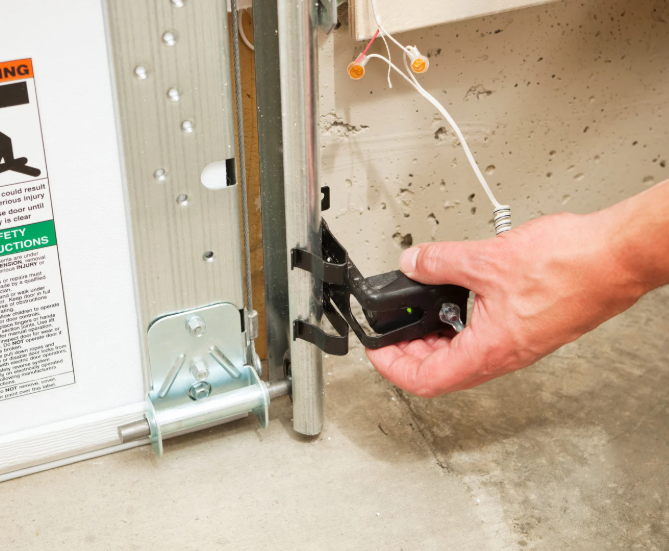
Slight Sensor Misalignment Is One of the Most Common Causes
How Sensors Become Misaligned
Sensor misalignment is one of the most common issues affecting garage door sensor lights. Because sensors are installed close to the ground, they can easily be bumped during normal garage activities.
Common causes of misalignment include:
- Moving storage bins or tools
- Trash cans are hitting the sensor brackets
- Accidental bumps during garage cleaning
- Vibrations from regular garage door operation
Signs of Misalignment
When sensors move slightly out of position, the infrared beam may no longer reach the receiver. This often causes:
- One sensor light is blinking
- The garage door reverses while closing
- The door refuses to close completely
What Homeowners Can Check
A quick visual inspection can sometimes reveal the issue. Sensors should be:
- Facing each other directly
- Mounted at the same height
- Securely attached to the brackets
Prevention Tip
Keeping storage items and tools away from the sensor area helps prevent accidental bumps that may cause misalignment.
For more insight into another common sensor issue, check out the guide Why Are Garage Door Sensor Lights Blinking?.
Dirt, Dust, or Spider Webs Can Block the Sensor Beam
Why Garage Sensors Get Dirty
Garage environments often collect dust and debris. In Colorado Springs, dry weather and windy conditions can cause additional dust to settle on garage equipment.
Over time, this buildup may cover the small sensor lenses.
How Dirty Sensors Affect the Lights
When dirt covers the lens, the infrared beam may weaken or become blocked. As a result:
- Sensor lights may flicker
- One light may appear dim
- The garage door may stop closing properly
Quick Inspection Tip
Check the small lenses on both sensors for:
- Dust buildup
- Spider webs
- Dirt or grease
Prevention Tip
Including the sensors in seasonal garage cleaning routines can help prevent this type of issue.
For more information about uneven or irregular sensor signals, read the related guide What Causes Inconsistent Garage Door Sensor Lights?.
Wiring Issues Can Affect Sensor Lights
Why Sensor Wires Matter
Garage door safety sensors rely on low-voltage wiring that connects them to the garage door opener. If the wiring becomes damaged or loose, the sensors may lose power or fail to communicate with the opener.
Signs of Wiring Problems
Wiring problems can cause several symptoms, including:
- Sensor lights are turning off completely
- Lights flickering or blinking
- Garage doors refusing to close
Common Causes of Wiring Issues
Several conditions may affect garage door sensor wiring:
- Loose wire connections
- Rodent damage
- Aging wire insulation
- Accidental damage during storage or cleaning
Professional Inspection
Garage door technicians often inspect sensor wiring and electrical connections when diagnosing sensor problems. Electrical components should always be handled carefully to avoid damage to the opener system.
Sunlight Interference Can Affect Garage Door Sensors
Direct Sunlight Can Confuse Sensors
Garage door sensors use infrared beams to detect objects in the doorway. Strong sunlight can sometimes interfere with this beam, especially when the sun shines directly into the garage.
Why This Happens in Colorado Springs
Because Colorado Springs sits at a higher elevation, sunlight can be especially bright during certain times of the day. Direct sunlight entering the garage may temporarily affect the sensor’s ability to detect the infrared beam.
Signs of Sunlight Interference
Sunlight interference may cause symptoms such as:
- The garage door is working normally in the morning
- Sensor lights are blinking in the afternoon
- The door reverses unexpectedly during bright sunlight
Possible Solutions
Small adjustments to the sensor angle or placement can sometimes reduce sunlight interference.
Aging Sensors or Opener Components
Wear Over Time
Like any electronic device, garage door sensors can wear out over time. Years of use, exposure to dust, and temperature changes may affect the internal components.
Common Aging Symptoms
Older sensors may begin showing warning signs such as:
- Dim or fading sensor lights
- Random blinking lights
- Inconsistent door operation
System Compatibility
Older garage door opener systems may also struggle to maintain communication with aging sensors. When components wear down, the entire garage door opener safety system may become less reliable.
Average Repair Situations
In many situations, a technician may recommend sensor replacement or a system inspection if the sensors are showing clear signs of wear.
The Garage Door Opener Safety System Is Preventing a Hazard
Why does the system stop the door?
Garage door safety sensors exist to protect people, pets, and property. If the sensors detect anything blocking the beam, the garage door opener will stop or reverse the door.
Federal Safety Requirements
Modern garage door systems are required to include automatic reversing safety sensors. These sensors became standard safety features in residential garage doors to prevent accidents.
When the Lights Indicate a Safety Block
If the beam between the sensors is blocked, the lights may begin blinking, or the garage door may refuse to close.
What Homeowners Should Check
Before assuming the sensors are broken, check the doorway for:
- Storage boxes
- Sports equipment
- Tools
- Bicycles
- Yard equipment
Even small objects placed near the floor can block the sensor beam.
How Colorado Springs Weather Can Affect Garage Door Sensors
Dust and Wind
Colorado Springs often experiences dry conditions and windy weather. These conditions can cause dust to collect on garage door sensor lenses, reducing their effectiveness.
Winter Conditions
Cold temperatures and freezing conditions may sometimes affect:
- Sensor brackets
- Wiring connections
- Garage door opener components
Seasonal Garage Maintenance Tips
Checking sensors during spring and fall garage maintenance helps ensure they continue working reliably throughout the year.

When It May Be Time to Call a Garage Door Professional
Some sensor problems can be identified during a quick visual inspection. However, professional service may be necessary if the issue continues.
Consider contacting a garage door technician if:
- Sensor lights remain off
- Blinking continues despite alignment checks
- The garage door refuses to close consistently
- Wiring damage is suspected
- The garage door opener system shows signs of malfunction
Professional technicians can safely inspect the garage door safety sensors, wiring connections, and the garage door opener system to identify the cause of the problem. In some properties, technicians may also evaluate related systems such as access control installation, especially when garage doors are integrated with modern security or entry systems.
Prompt attention helps ensure the garage door continues operating safely and maintains its built-in safety protections.
Tips to Prevent Garage Door Sensor Light Problems
Preventive maintenance can help reduce the chances of sensor-related issues. Several simple habits can help keep garage door sensors working properly:
- Keep storage items away from the sensor area
- Clean the sensor lenses occasionally
- Avoid bumping sensors when moving tools or equipment
- Inspect the sensor brackets during garage cleaning
- Schedule periodic garage door inspections
- Keep the garage floor clear near the sensor path
Routine care helps ensure the garage door opener and safety sensors continue operating reliably throughout the year. If sudden sensor problems prevent the door from closing or operating safely, emergency garage door service may be necessary to quickly inspect and restore proper system function.
Understanding Red and Green Garage Door Sensor Lights
Garage door sensor lights that appear red and green usually indicate that the safety sensors are working as designed. These sensors communicate with each other using an infrared beam to ensure the garage door does not close when something is in the way.
However, blinking lights, dim lights, or sensors that turn off may signal issues such as misalignment, dirt buildup, wiring problems, sunlight interference, or aging components. In some situations, professional garage door opener installation or system upgrades may be recommended if older equipment is no longer functioning reliably. Regular inspections and basic preventive maintenance can help reduce the chances of these problems developing.
Because garage doors are used frequently in many homes throughout Colorado Springs, CO, keeping the garage door opener safety system functioning properly is important for both safety and convenience.
Professional Garage Door Sensor Inspection in Colorado Springs
For homeowners who notice persistent sensor issues, Ascension Garage Door Service provides professional garage door inspections and repairs in Colorado Springs. Experienced technicians can evaluate sensor alignment, wiring connections, and the entire garage door opener system to ensure everything operates safely and reliably. If sensor lights continue blinking or the door refuses to close properly, scheduling a professional inspection can help restore safe operation. Contact us today, or give us a call to have your garage door system checked by trained professionals.