



Garage door safety sensors help protect people, pets, and vehicles by creating an invisible beam across the garage door opening. If something blocks the beam while the door is closing, the garage door opener automatically stops or reverses the door.
Normally, sensor lights stay steady, with one amber or yellow light and one green light. When the lights begin blinking, flickering, or turning off, it usually signals a problem with the garage door safety system or a need for garage door opener repair.
Inconsistent garage door sensor lights are often caused by alignment issues, wiring problems, dirt on the lenses, or objects blocking the sensor path. In places like Colorado Springs, CO, where garage doors are used frequently, even small sensor problems can quickly become noticeable.
Misaligned Garage Door Safety Sensors
Why sensor alignment matters
Garage door safety sensors communicate with each other through an invisible infrared beam. One sensor sends the beam while the other receives it. When both sensors are properly aligned, the safety system works correctly, and the indicator lights remain steady.
If the sensors shift even slightly out of alignment, the beam may become unstable. This often causes the sensor lights to blink or flicker.
What homeowners may notice
Common signs of misaligned garage door sensors include:
- A blinking sensor light
- The garage door reverses before it closes
- One sensor light is turning off unexpectedly
- The garage door is refusing to close
What to check
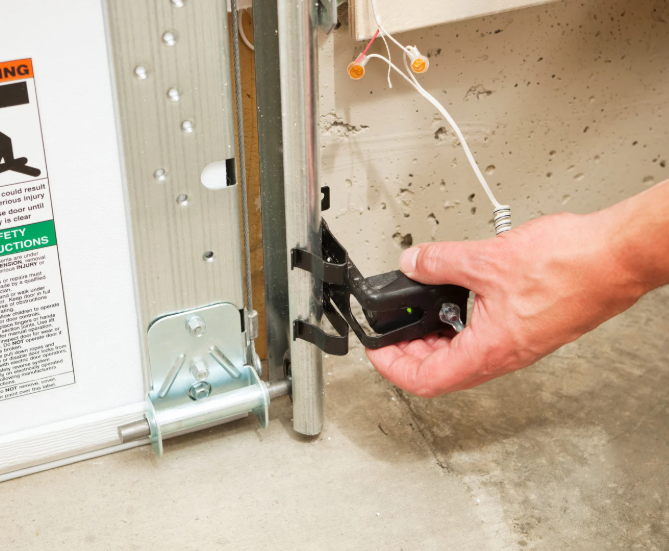
Look at the sensors mounted near the bottom of the garage door tracks. If one appears tilted or slightly moved, the alignment may have shifted.
Tip to avoid the problem
Avoid bumping sensors when moving storage bins, bicycles, or lawn equipment. Even a small bump can shift the sensor bracket enough to interrupt the safety beam.
For more helpful information about sensor lights, see the guide What Color Should Garage Door Sensor Lights Be?.
Dirt, Dust, or Debris on the Sensor Lenses
Why dirty lenses cause sensor problems
Garage door sensors rely on a clear infrared signal to communicate. Dirt, dust, spider webs, or garage debris can block or weaken that signal. When the beam becomes partially blocked, the sensor lights may behave inconsistently.
Signs of lens obstruction
Homeowners may notice:
- Flickering sensor lights
- Sensors working intermittently
- Garage doors are reversing during closing
These problems often appear gradually as debris builds up on the lenses.
What to check
Inspect the small lenses on the front of each garage door sensor. Dust, cobwebs, or grime can easily accumulate in garages over time.
Prevention tip
Cleaning the sensor lenses occasionally during garage cleaning routines helps keep the safety beam clear and functioning properly.
For more helpful insight, read the guide Why Are Garage Door Sensor Lights Blinking?.
Sunlight Interference
Why sunlight affects garage door sensors
Garage door safety sensors use infrared light to detect obstructions. Strong sunlight can sometimes interfere with the receiving sensor and disrupt the signal.
Common situations in Colorado Springs
Homes in Colorado Springs often experience strong sunlight throughout the year, especially during clear winter and summer days. Garages that face east or west may receive direct sunlight during certain times of the day.
Symptoms of sunlight interference
- Sensor lights are working normally at night
- Lights blinking during bright daylight
- Garage door refusing to close during sunny hours
Prevention tip
In some situations, small adjustments to sensor positioning or installing a simple shade can help reduce direct sunlight exposure.
For more details about sensor light colors, read the guide Why Are Garage Door Sensor Lights Red and Green?.
Loose or Damaged Sensor Wiring
Why wiring affects sensor lights
Garage door safety sensors are connected to the garage door opener through low-voltage wiring. These wires carry signals that allow the sensors to communicate with the opener system.
If wiring becomes loose, pinched, or damaged, the signal may become inconsistent. This can cause sensor lights to flicker or turn off.
Signs of wiring issues
Possible signs include:
- Sensor lights are turning on and off randomly
- One sensor light is completely off
- Garage door reversing unexpectedly
What to check
Inspect the thin wires running along the wall and near the garage door tracks. Look for signs of damage, loose connections, or exposed wiring.
Professional inspection
A garage door technician can safely inspect electrical connections and test sensor wiring if a wiring issue is suspected.
Vibrations from Daily Garage Door Use
How vibration affects sensor alignment
Garage doors open and close many times each day. Over time, repeated movement can cause slight vibrations that gradually shift sensor brackets or mounting hardware.
Even a small shift may cause the infrared beam to become inconsistent.
Signs of vibration-related sensor problems
Homeowners may notice:
- Sensors have been working normally for weeks before suddenly blinking
- Lights turning off after long periods of normal operation
What homeowners can observe
Take a look at the sensor brackets and mounting screws. If the bracket appears loose or slightly angled, vibration may be the cause.
Preventive tip
Checking sensor brackets during seasonal garage cleaning or routine garage door maintenance can help detect small shifts early.
Aging Garage Door Sensors
Why sensors wear out over time
Like many electronic components, garage door sensors eventually wear out. Exposure to temperature changes, humidity, dust, and constant operation can slowly affect sensor performance.
Signs sensors may be aging
Common indicators include:
- Dim sensor lights
- Sensors are losing signal occasionally
- Lights appearing weaker than usual
When sensors begin aging, the system may work inconsistently even if alignment and wiring appear normal.
What to consider
Sensor replacement may eventually become necessary as part of routine garage door maintenance.
Average cost insight
Garage door safety sensor replacement costs can vary depending on the system and installation conditions.
Garage Door Opener System Issues
When the opener affects the sensors
In some cases, inconsistent sensor lights are not caused by the sensors themselves. Instead, the issue may originate from the garage door opener system.
The opener’s control board manages communication between the sensors and the motor. If the system experiences a malfunction, it may interfere with the sensor signals.
Signs the opener may be involved
Possible symptoms include:
- Sensors appear aligned, but the lights remain inconsistent
- The garage door is refusing to close even when the sensor path is clear
- Sensor lights are behaving normally, but the door is still reversing

Why professional diagnosis may help
A trained garage door technician can inspect the entire garage door opener system, including electrical components, safety sensors, and system programming.
Extreme Weather Conditions
Weather impact in Colorado Springs
The climate in Colorado Springs, CO, includes cold winters, seasonal snow, and significant temperature changes throughout the year. These conditions can occasionally affect electronic components.
Possible effects on sensors
Extreme weather may cause:
- Temporary moisture around sensor wiring
- Condensation inside sensor housings
- Fluctuations in electrical performance
Prevention tip
Keeping the sensor area clean, dry, and protected from water exposure can help maintain reliable sensor performance.
Obstructions in the Sensor Path
Why small objects can trigger sensor lights
Garage door sensors are designed to detect anything that blocks the safety beam. Even small items can interrupt the beam and cause the sensor lights to behave inconsistently.
Signs of obstruction
Homeowners may notice:
- Sensor lights blink when objects are nearby
- Garage door reversing during closing
- Sensors are working again after the area is cleared
What to check
Look for items near the bottom of the garage door opening, such as:
- Storage bins
- Tools
- Leaves or debris
- Garden equipment
Keeping the sensor path clear allows the safety system to operate normally.
How to Prevent Inconsistent Garage Door Sensor Lights
Preventive maintenance can reduce the chances of garage door sensor problems. Several simple habits can help keep the garage door safety system functioning properly. For properties with enhanced entry systems, regular checks may also be helpful after access control installation to ensure all connected garage and security components operate smoothly.
- Helpful maintenance tips include:
- Keeping objects away from the sensor path
- Cleaning sensor lenses occasionally
- Inspecting sensor brackets during garage cleaning
- Avoiding accidental bumps to sensors when moving items
- Scheduling periodic garage door inspections
Regular care helps ensure the garage door opener and safety sensors continue operating reliably throughout the year.
When to Call a Garage Door Professional in Colorado Springs
Some sensor issues can be identified through a quick visual inspection. However, professional service may be necessary if the problem continues. In urgent situations where the garage door will not close or operate properly, emergency garage door service may also be necessary.
- Consider contacting a garage door technician if:
- Sensor lights remain completely off
- Blinking continues despite alignment checks
- The garage door refuses to close consistently
- Wiring damage is suspected
- The garage door opener system shows signs of malfunction
Professional technicians can safely inspect garage door safety sensors, wiring connections, and the garage door opener system to identify the underlying cause.
Prompt attention helps ensure the garage door continues operating safely and maintains its built-in safety protections.
Ensuring Safe Operation of Your Garage Door Sensors
Inconsistent garage door sensor lights usually indicate that something is affecting the garage door safety system. Common causes include misaligned sensors, dirty lenses, wiring issues, sunlight interference, aging components, or simple obstructions. In some cases, problems may also appear after a garage door opener installation if sensors need proper alignment or system adjustments.
Because these sensors protect people and property, maintaining proper operation is essential. Regular inspection, routine cleaning, and basic preventive maintenance can help reduce sensor problems and keep the garage door operating safely.
For homeowners in Colorado Springs, CO, addressing sensor issues early helps ensure the garage door opener system continues working reliably throughout changing seasons and daily use.
Professional Garage Door Sensor Inspection in Colorado Springs
When sensor problems continue or the cause is unclear, professional inspection can help restore safe and reliable operation. Ascension Garage Door Service is known for providing dependable garage door solutions in Colorado Springs, including thorough inspections of safety sensors, garage door openers, and complete garage door systems. Experienced technicians focus on identifying the root cause of issues and ensuring the system operates safely. For homeowners experiencing inconsistent garage door sensor lights, contacting us is a helpful step toward restoring proper garage door performance and safety. Contact us today or give us a call to schedule a professional inspection and keep your garage door system operating safely and reliably.