


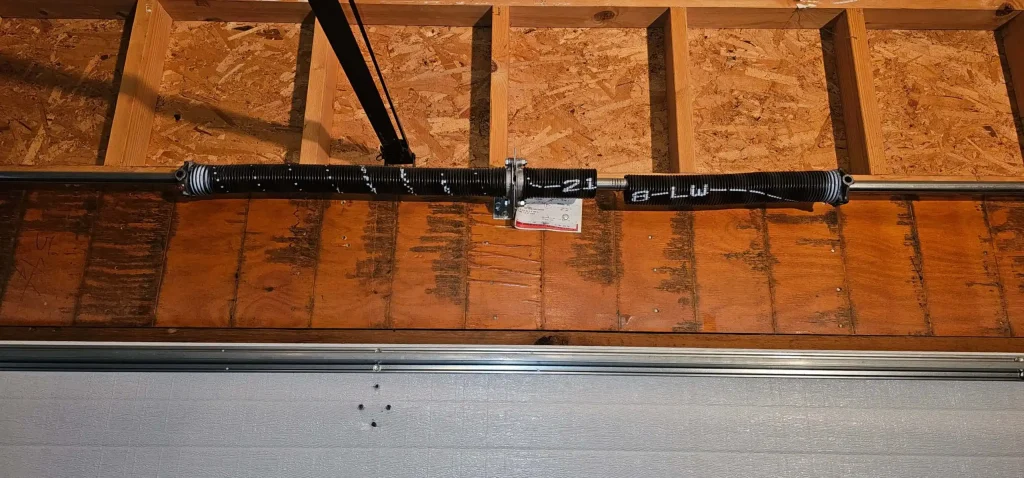
Garage door springs are engineered to perform one of the most physically demanding tasks in a residential mechanical system, yet they are rarely inspected until something goes wrong. As springs work quietly and invisibly, early warning signs of strength loss are often misinterpreted as minor inconveniences or normal aging. In reality, a garage door spring almost never fails without advance notice, and those early clues usually appear during everyday use. Recognizing these signs early is essential because springs counterbalance the full weight of the door, not merely assist its movement, and timely garage door spring repair can prevent more significant issues down the line.
When spring strength begins to decline, the impact extends far beyond the spring itself. Reduced tension shifts additional load onto cables, rollers, tracks, hinges, and the garage door opener, accelerating wear across the entire system. While garage door maintenance inspections can identify these changes early, many homeowners notice the warning signs long before a formal evaluation. Understanding what those clues look and feel like helps prevent sudden failures, safety risks, and costly secondary damage.
How Garage Door Springs Gradually Lose Strength
Garage door springs are designed to store and release mechanical energy repeatedly, but each operating cycle introduces microscopic stress into the steel. Over thousands of cycles, that stress accumulates and gradually reduces the spring’s elasticity, even if the spring appears intact. This loss of elasticity directly reduces lifting capacity, meaning the spring can no longer counterbalance the door’s weight as effectively as before.
Several factors contribute to gradual spring fatigue, including:
- Repeated opening and closing cycles that exceed the spring’s rated lifespan
- Metal fatigue caused by constant expansion and contraction under load
- Surface corrosion that weakens the steel at a molecular level
- Temperature fluctuations that alter metal elasticity over time
- Lack of lubrication, increasing friction, and internal stress
Garage door maintenance can slow deterioration through inspection and lubrication, but it cannot reverse metal fatigue once it develops. This gradual weakening explains why performance changes often appear subtle and progressive rather than sudden.
Look into the underlying causes of garage door spring failure and why addressing the problem at the right time can prevent more serious damage by reading: The Real Reason Garage Door Springs Fail and Why Timing Matters.
The Garage Door Feels Heavier During Manual Operation
One of the earliest and most common clues of spring strength loss is a noticeable increase in door weight when lifting manually. Springs are designed to offset most of the door’s mass, allowing it to feel relatively light despite weighing hundreds of pounds. As spring tension decreases, more of that weight becomes noticeable during manual operation.
Homeowners may observe several related changes, including:
- Increased effort is required to lift the door from the closed position
- Difficulty starting the door’s upward movement
- Greater strain when holding the door at mid-height
- Faster fatigue when lifting the door repeatedly
- A general sense that the door no longer feels “balanced.”
From a mechanical perspective, reduced spring tension means less stored energy is available to counteract gravity. Garage door maintenance evaluations often include balance testing to measure this loss before it leads to further strain on the system.
Learn what experienced technicians inspect and evaluate during professional garage door spring repair by reading: What Skilled Technicians Check During Garage Door Spring Repair.
The Door Will Not Stay Open Without Support
A properly functioning garage door should remain stationary when opened manually to a halfway or fully open position. When springs begin losing strength, this equilibrium is disrupted, and the door may slowly drift downward under its own weight. This behavior is a strong indicator that spring tension is no longer sufficient.
Signs related to poor door balance include:
- The door was slowly closing after being manually opened
- Difficulty keeping the door fully open without holding it
- Reliance on the opener to prevent the door from falling
- Uneven stopping points during manual testing
- Increased sensitivity to slight downward pressure
Mechanically, this occurs because weakened springs cannot maintain equilibrium under gravity. Garage door maintenance professionals frequently use controlled balance tests to confirm whether the door remains safely counterbalanced throughout its travel range.
Know when a garage door spring problem has reached the point where repair is no longer optional and immediate action is needed by reading “When a Garage Door Spring Issue Stops Being Optional to Fix.“
The Garage Door Opener Appears to Work Harder Than Normal
As spring strength declines, the garage door opener must compensate by exerting more effort during lifting cycles. This often presents as changes in speed, sound, or consistency that are easy to notice during daily use. Although it may appear to be an opener issue, the root cause is often spring-related.
Common indicators of increased opener strain include:
- Slower opening speeds, especially at the start of travel
- Hesitation or pausing during lifting
- Louder motor noise or humming sounds
- Increased vibration transferred to the door or ceiling
- Frequent need to adjust force settings
Garage door openers are designed to guide the door’s motion, not to lift its full weight. Garage door maintenance inspections often compare opener performance with door balance to determine whether spring weakness is causing the opener to exceed its intended workload.
Uneven, Jerky, or Shaking Door Movement
When spring strength declines unevenly, particularly in dual-spring systems, the door may no longer lift evenly on both sides. This imbalance causes visible shaking, jerking, or tilting as the door moves along the tracks. These symptoms tend to worsen gradually as tension differences increase.
Observable signs of uneven spring performance include:
- One side of the door lifts slightly faster than the other
- Shaking or rattling during movement
- Noticeable tilting when the door is partially open
- Inconsistent alignment within the tracks
- Increased wear on rollers or hinges on one side
Uneven force distribution increases stress on cables, tracks, and rollers. Garage door maintenance inspections often assess cable tension symmetry to detect imbalances before they lead to off-track movement or cable failure.
Increased or Unusual Noise During Operation
Changes in operational noise are another early clue that spring strength is declining. As springs weaken, force distribution throughout the system changes, increasing friction and vibration in components that were not designed to carry additional load.
Noise-related warning signs may include:
- Creaking or groaning sounds during lifting
- Popping or snapping noises near the spring area
- Metallic rubbing sounds that were not previously present
- Increased vibration transmitted through the door panels
- Noise patterns that worsen over time rather than remain consistent
From a diagnostic standpoint, noise provides valuable information about altered mechanical stress. Garage door maintenance professionals often use changes in sound as an early indicator of imbalance or excessive load.
Visible Gaps or Stretching in the Spring Coils
As garage door springs fatigue, they may permanently elongate, creating visible gaps between coils when the door is closed. This stretching indicates that the spring has exceeded its elastic limit and can no longer return to its original shape. Worse, other key components of your garage door might also be affected, leading to garage door opener repairs.
Visual signs of coil elongation include:
- Small but noticeable gaps between coils at rest
- Uneven spacing along the length of the spring
- Increased overall spring length compared to original specifications
- Irregular coil shape rather than uniform winding
- Visible deformation near anchor points
From an engineering perspective, elongation reduces the spring’s ability to store energy effectively. Garage door maintenance inspections often include visual and dimensional checks to identify this advanced stage of fatigue.
Faster or Less Controlled Closing Speed
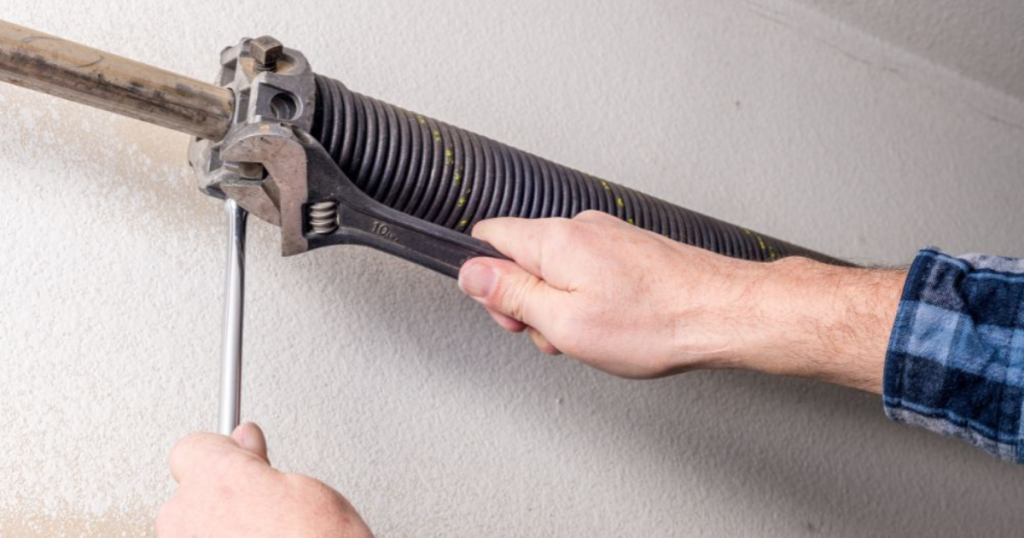
A garage door that closes faster than before may indicate reduced spring resistance rather than an adjustment issue. As spring tension decreases, gravity plays a greater role in the downward movement, resulting in faster, less controlled closing behavior.
Indicators associated with accelerated closing include:
- Noticeably faster descent speed
- Heavier feel when guiding the door downward manually
- Reduced resistance near the bottom of travel
- Increased impact force when the door reaches the floor
- Greater reliance on safety sensors to stop motion
Reduced spring resistance increases safety risk, especially for people and vehicles. Garage door maintenance evaluations often include controlled-descent tests to verify that closing speed remains within safe limits.
Repeated Need for Adjustments or Recalibration
When springs lose strength, homeowners or technicians may repeatedly adjust the opener’s force settings or the door balance. While these adjustments may temporarily restore acceptable operation, the need for frequent recalibration is a strong indicator of ongoing mechanical decline.
Patterns associated with repeated adjustments include:
- Force settings needing regular increases
- Balance corrections that fail to last
- Door behavior improves briefly, then deteriorates again
- Adjustments are becoming less effective over time
- Increasing sensitivity to small changes in settings
From a system perspective, repeated adjustments mask declining spring performance rather than correcting it. Garage door maintenance aims to identify why adjustments are necessary rather than treating them as a long-term solution.
Accelerated or Uneven Cable Wear
As springs lose strength, additional load is transferred to the lift cables, increasing tension beyond normal operating conditions. Cable wear often becomes visible before spring failure is obvious, making it an essential secondary warning sign.
Cable-related indicators include:
- Fraying or broken strands
- Uneven winding on cable drums
- Visible stretching or thinning
- Cables jumping grooves during operation
- Increased noise from cable movement
Garage door maintenance inspections routinely examine cable condition because cable wear often indicates underlying spring-related issues. Addressing spring weakness early helps prevent sudden cable failure and associated safety hazards.
Instability or Unpredictable Movement During Manual Operation
A final early clue is a general sense of instability when manually operating the door. The door may feel unpredictable, harder to control, or prone to sudden changes in resistance throughout its travel range.
Signs of instability include:
- Sudden shifts in resistance while lifting
- Difficulty maintaining smooth, consistent motion
- Lack of predictable balance at different heights
- Door movement that feels “loose” or uncontrolled
- Increased effort required to stabilize the door
Garage door maintenance evaluations often include manual operation testing specifically to assess control and stability. Loss of predictable movement indicates that spring performance is unreliable and should be addressed promptly.
According to the International Door Association, performing reversing mechanism tests helps identify underlying issues that may prevent your garage door from operating properly.
Expert Garage Door Service Detects Spring Problems Early
Garage door springs rarely fail without warning, and early strength loss almost always manifests as multiple, observable changes in door behavior. Increased door weight, balance problems, opener strain, uneven movement, unusual noise, visible coil stretching, and faster closing speeds all indicate declining spring performance well before a complete break occurs. Garage door maintenance plays a critical role in identifying these clues early, helping reduce safety risks and prevent damage to other components. Recognizing and responding to these early indicators enables homeowners to proactively manage spring issues, preserving system reliability and avoiding unexpected failures.
Ascension Garage Door Service provides reliable garage door solutions designed to support safety and everyday functionality. Whether you need a minor repair or a complete replacement, service is delivered with care and precision. Every project is handled with a commitment to exceeding expectations and ensuring peace of mind.
Contact us today or give us a call to schedule professional garage door service.