



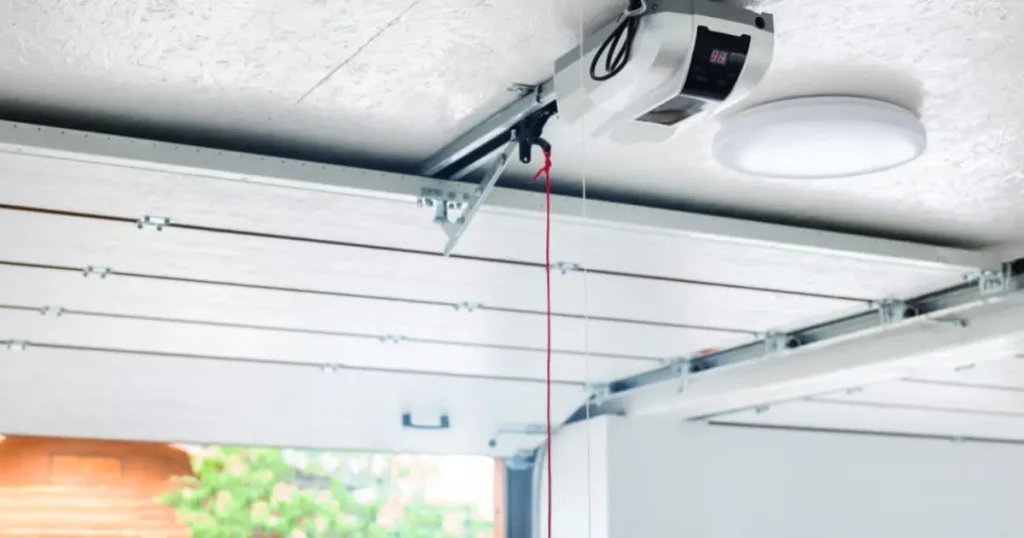
Clicking from a garage door opener can sound like the system is trying to run, even when the door stays in place. Homeowners in Colorado Springs, CO often notice the sound during the first press of the button, then see no movement or only a brief attempt to start.
This article explains the most common reasons a garage door opener clicks and what that noise often signals inside the system. Each section focuses on a specific cause that can affect reliable operation in Colorado Springs, CO, and helps clarify when professional service is typically the safest next step.
Why Does a Clicking Opener Happen Without Door Movement?
Clicking often means the system received a command, but another condition stopped the start-up sequence before the door could move. In Colorado Springs, CO, wind-driven dust, vibration, and rapid temperature swings can make borderline power, safety, or load issues more common.
What clicking without door movement often indicates
- Power reaches the unit, but the output is not steady enough to start the motor
- Safety inputs are showing as unstable, so the opener will not run
- Door resistance or door weight is too high, so travel does not begin
- Drive engagement is incomplete, so movement does not transfer to the door
- Control signals are inconsistent, so commands register without being acted on
- Stopping repeats in a similar way, which helps narrow the likely cause
For a complete overview of these clicking patterns and what they usually point to, read our guide on Garage Door Opener Clicking but Not Opening? Here’s What to Check, which explains the most common causes and the symptom clues that help identify why the door is not starting or not moving reliably.
Reason 1: Power Supply Problems at the Opener
Power irregularities can cause a garage door opener to click even when the door does not move. Electricity reaches the unit, but unstable delivery prevents the motor from starting a full operating cycle.
Common signs professionals watch for
- Opener lights come on, but door travel never begins
- Clicking repeats each time a command is sent
- Wall control responds, then the system stops right away
- The operation becomes less reliable when other appliances are running
What does a service visit typically checks
- Outlet condition, wiring connections, and circuit stability under load
- GFCI behavior and whether intermittent trips interrupt power
- Power consistency while the opener attempts to start
- Diagnostic indicators that separate usable power from idle power
Chamberlain explains that many opener issues begin at the outlet or power source and recommends confirming consistent power delivery before assuming a motor or control failure, which directly supports the electrical inspection steps listed above.
When electrical instability interferes with safe operation, a full evaluation by a garage door repair professional helps determine whether the issue stems solely from power delivery or from related door or opener components.
Reason 2: Safety System Conditions Blocking Movement
Safety systems can stop operation even when the opening appears clear. Modern openers review multiple safety inputs before movement begins, and clicking can occur when the command is accepted, but the system refuses to proceed to prevent unsafe travel.
Situations that often trigger a safety-related stop
- Safety sensor signals appear unstable, so movement is blocked for protection
- Travel or force logic detects abnormal resistance and stops the cycle
- Control inputs conflict, causing the opener to reject the command
What pros confirm during inspection
- Sensor response under normal conditions and when the beam is interrupted
- Door travel behavior across the full cycle to identify repeat stop points
- Control logic consistency across the wall station and remote commands
- Safety response designed to reduce entrapment risk
To better understand how safety logic and sensor signals translate into clicking behavior, read What Does a Garage Door Opener Clicking Noise Usually Mean?, which explains how these protection checks work together and why they can stop movement even when the door looks clear.
Reason 3: Door Path Resistance Increasing the Load
Rising resistance along the door’s travel path can stop movement even when the opener receives a command. Clicking can occur when the system attempts to start, detects an abnormal load, and shuts down to avoid strain or damage.
Common contributors in Colorado Springs
- Wind-driven dust and grit that increase friction on moving parts
- Gradual hardware wear that creates drag during travel
- Door movement that becomes rough or uneven over time
What technicians evaluate
- Travel consistency from fully closed to fully open across multiple cycles
- Binding points that increase load and trigger protective stops
- Wear patterns that cause uneven or shifting movement
- Noise level changes that line up with resistance during travel
When the resistance patterns above indicate binding or uneven movement, garage door cable and drum service can correct cable or drum conditions that increase friction and load, which often lead to clicking and stalled operation.
Reason 4: Broken or Weak Springs Making the Door Too Heavy
Spring counterbalance helps the door lift with controlled effort. When spring performance drops, the door can become too heavy for the opener to lift safely, so the system may click and then stop because the load is beyond what the operator can handle.
Why can the symptom appear suddenly?
- Springs can weaken over time, then fail once tension drops past a working point
- Oversized doors and heavier doors place more demand on the counterbalance system
- Standard garage door openers can struggle sooner when the load or weight increases unexpectedly
What pros check first?
- Whether the door weight has changed compared to normal operation
- Counterbalance performance and how the cables behave under load
- Conditions that make heavy garage doors difficult to lift without strain
A service visit can confirm whether counterbalance loss is overloading the opener and restore safe lifting without forcing the system to strain.
Reason 5: Drive System Engagement Failure Inside the Opener
Clicking can happen when the motor receives the command, but the drive system cannot transfer motion to the rail or trolley. Wear inside the head unit can create sound without lift, especially when engagement parts slip or fail under load.
A quick review of the main types of garage door openers helps explain why clicking symptoms can vary, since each drive design handles load and engagement differently over time.
How common drive styles relate to clicking
- Chain drive systems use a metal chain and handle heavier doors, but worn engagement points can cause start-stop behavior.
- A belt-drive opener uses a rubber belt, which supports quiet operation, but internal wear can still lead to slipping.
- Screw drive openers can react differently in cold weather, which can make performance feel inconsistent.
- Direct-drive openers use fewer moving parts and can be quieter, but internal issues can still cause clicking.
- Jackshaft openers suit limited ceiling space, though engagement problems can still block motion transfer.
LiftMaster explains how belt, chain, and screw designs differ in operation and noise, which supports the drive-style overview above and helps clarify why clicking can present differently depending on the system.
What pros inspect for engagement-related clicking
- Gear and sprocket condition inside the head unit
- Trolley connection integrity and consistent motion transfer
- Signs of internal wear that prevent lift transfer under load
- The garage door motor responds when the unit receives a run command
A professional inspection can confirm whether wear within the drive system is preventing motion transfer and whether garage door opener installation is the better long-term option.
Reason 6: Control Signal Conflicts From Wall Station, Remote, or Receiver
Clicking can happen when command signals reach the opener, but the system does not start a full cycle. Input conflicts are more likely when the wall station behaves differently from the remote, or when smart controls add extra command pathways.
Modern garage door openers often include smart technology, smart features, and smart home integration. A smartphone app can send commands through a networked system, while a wall station uses a direct control circuit, so differences between those pathways can help isolate whether the issue is tied to the control device, the receiver, or opener logic.
Common patterns pros use to narrow the cause
- Wall station works, but remote clicks without motion
- Remote works, but the wall station clicks without motion
- Behavior changes after power outage recovery
- Intermittent response tied to time of day or device use
A consistent difference between control methods usually points to signal recognition or receiver response, so testing focuses on input reliability before pursuing mechanical causes.
Reason 7: Universal Remote Compatibility Creating Clicking Without Operation
A universal remote can trigger the receiver enough to create a click, yet the signal may not fully match what the opener expects. Garage door opener clicking can appear as a partial response that mimics a mechanical problem, even when compatibility is the real issue.
What pros verify before recommending parts
- Correct pairing and reliable command recognition
- Receiver stability and consistent response across repeated cycles
- Whether the opener logic rejects the signal after validation fails
Comparing responses across remotes helps confirm whether compatibility or communication is the true cause before any major parts are replaced.
Reason 8: Clicker Remote Programming or Interference Issues
Universal remotes can be convenient, but programming mismatches or wireless interference can create misleading symptoms. Clicking without movement can occur if the opener receives an inconsistent command and stops before a full cycle begins.
Common professional checks
- Programming accuracy and matched frequency behavior for the opener model
- Receiver sensitivity and interference conditions in the garage environment
- Consistent operation across repeated cycles, not only one successful attempt
Clear testing across controls helps identify whether the root problem is programming, interference, or receiver response, and garage door accessories service can resolve remote and signal issues that interfere with consistent operation.
Reason 9: Colorado Springs Weather Swings Exposing Marginal Performance
Colorado Springs temperature shifts can alter how components expand and contract, as well as how they respond under load. Cold nights followed by warmer afternoons often reveal borderline performance in electronics and mechanics, while wind and dust can add resistance, reducing reliability.
Where weather connects to opener selection
- Ceiling space influences whether an overhead unit or a side-mount style makes more sense
- Noise level preferences matter more when bedrooms or living areas sit above the garage
- Door weight can require a stronger setup for heavier doors and oversized doors
- Drive style affects how smoothly the system runs during frequent seasonal swings
Matching the opener design to local weather conditions, door weight, and garage layout helps reduce strain on the system and improve reliable operation amid Colorado Springs’ frequent seasonal changes.
Reason 10: Internal Wear That Calls for Professional Service
Internal wear can cause clicking without movement when key components inside the opener begin to fail. Control boards, relays, and engagement parts can still respond to commands, yet the system may no longer start or sustain reliable travel.
Signs of internal wear may be the cause
- Clicking continues after power and safety checks show no clear issue
- Operation becomes inconsistent from one cycle to the next
- Opener responds to commands, but movement never starts
- Performance gradually worsens instead of stabilizing
What professionals evaluate
- Control board response and relay behavior under command
- Engagement parts that transfer motion from the motor to the rail
- Whether heavy garage doors or heavier doors are overloading the operator
- Indicators that repair may not restore reliable long-term operation
To understand when the signs above move from an annoyance to a service need, read When Should You Call a Pro for a Clicking Garage Door Opener?, which explains why repeated clicking, inconsistent operation, and worsening performance often signal a problem that requires professional evaluation to restore safe, reliable movement.
Reliable Garage Door Opener Help in Colorado Springs, CO
Clicking is a useful warning sign because it often means the garage door opener is receiving a command but cannot start or complete safe movement. Power instability, safety system inputs, door resistance, drive engagement problems, and internal wear can produce similar symptoms, so a complete inspection is the best way to identify the true cause and restore reliable operation.
Ascension Garage Door Service can inspect the opener and door system together, explain the findings in clear terms, and recommend solutions that match your home, your door weight, and your performance needs in Colorado Springs, CO. Contact us or give us a call today to schedule a visit and get lasting answers for your clicking opener and overall garage door reliability.
Frequently Asked Questions
Why does the unit click once and stop?
A single click often means the system accepted the command but stopped due to safety logic, unstable power, or abnormal resistance. We review the operating conditions and stopping pattern to accurately identify the root cause.
Can a control board cause clicking without movement?
Yes. A failing board can trigger relay action but fail to deliver a stable output to run the motor. We confirm a consistent response under command and rule out door-load issues that can cause similar symptoms.
Why does the door start and then stop after a short move?
A short movement followed by stopping often points to rising resistance, a force-limited response, or a safety input interrupting travel. This is a common way a garage door opener clicking shows up, especially when stopping happens at the same point during multiple cycles.
Can cold weather in Colorado Springs make the issue worse?
Yes. Cold can expose borderline performance in electronics and moving parts as tolerances shift. We compare symptom patterns across temperature changes to determine whether the weather is contributing to the problem.
Does clicking always mean the motor has failed?
No. Clicking can come from relay action, control logic decisions, or engagement parts that fail to transfer motion. We test motor response and drive transfer to confirm whether the motor is failing or another condition is preventing operation.
Can heavy doors make a clicking sound without opening?
Yes. A heavy door can overload the operator and trigger protective stopping behavior. We check counterbalance performance and door load characteristics to confirm whether door weight is driving the symptom.
Why does a remote behave differently from the wall station?
Different control paths can reveal receiver issues, wiring problems, or device compatibility conflicts. A clicker garage door opener remote can also behave differently if programming or signal recognition varies from the wall control, so we compare responses across inputs to isolate the cause.
Can interference cause clicking but no movement?
Yes. Wireless interference can disrupt clean command recognition and cause inconsistent responses. We verify whether the receiver decodes commands consistently and whether the system operates reliably across repeated cycles.
Is repeated clicking a safety concern?
It can be. Repeated clicking may signal a safety stop, a door-load problem, or an internal failure that can worsen with continued use. If you are searching for a garage door opener near me, our evaluation can determine whether garage door opener repair is needed to restore safe, reliable operation.
How do you confirm whether the opener or the door system is at fault?
We evaluate both together because door resistance and door weight can mimic opener failure. Our process checks control logic, drives engagement, and door travel behavior so the final recommendation targets the true source of the problem.