


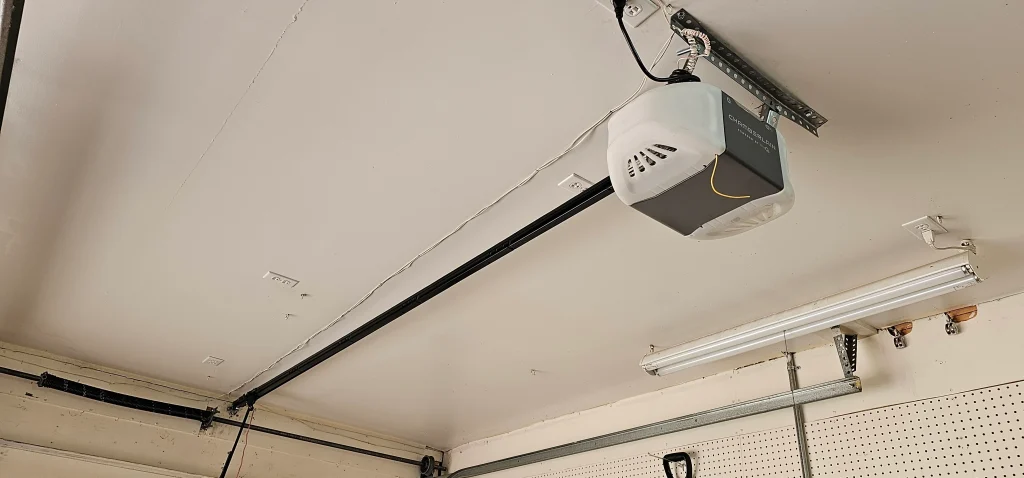
A clicking garage door opener in Colorado Springs, CO, often means the opener receives a command, but the door cannot complete a safe open or close cycle. Weather swings and wind-blown grit can increase resistance and trigger stalling, reversals, or strain, making the clicking more noticeable and more frequent.
In this guide, you will learn the most common signs that it is time to call a professional for a clicking garage door opener. You will also learn what a technician typically checks to restore safe operation, reliable performance, and daily access you can trust.
Is a Clicking Opener a Sign You Need Professional Service?
A click paired with unreliable movement often means the opener receives the command but cannot complete a safe open or close cycle. Professional diagnosis helps confirm whether the issue originates inside the opener, is caused by door resistance, or is triggered by a safety input that blocks travel.
Clear reasons why professional service becomes the smart next step
- Clicking repeats while the door stays still, which can mean the garage door motor is not receiving steady drive power.
- Stalling or reversing happens under load, which often points to resistance, force-sensing limits, or a fault input.
- Response changes across controls, which suggests commands are not running consistently through a full cycle.
- Heat, burning odor, or unusual electrical sounds appear, increasing the risk and potentially leading to more extensive damage if the operation continues.
To understand how clicking patterns relate to a door that will not open or close and what those patterns typically indicate, read our blog on Garage Door Opener Clicking but Not Opening? Here’s What to Check, which explains the most common causes and how professionals narrow the issue to the opener, the door system, or the safety inputs.
Situations That Mean It Is Time to Schedule Service
No Door Movement Even Though the Opener Responds
Clicking with no movement often indicates an electrical start failure or a drive engagement problem in the opener. Added door resistance can also block travel, which is why the diagnosis must evaluate both the opener and the door system.
What makes this a professional-level issue
- Electrical parts can click and still fail under load, so testing must happen while the opener attempts to start.
- Drive engagement can fail internally, so movement never transfers to the garage door.
- Door resistance can imitate an opener failure, so both systems need confirmation to avoid the wrong repair.
Service for opener-side faults often aligns with a garage door opener repair service, since clicking can come from internal parts that require proper testing and verification afterward.
Motor Strain Sounds Like Humming, Grinding, Or a Brief Stall
A click followed by humming or grinding often means the motor is trying to turn but meets resistance. Resistance can come from the opener drive or from the door system, and repeated strain can overheat the motor and damage internal parts.
How strain turns into a bigger problem
- Motor strain can overheat internal components and shorten the motor’s lifespan.
- Grinding often points to worn drive parts, and wear accelerates quickly once slipping begins.
- Load-related strain can come from door movement problems, so opener-only work can miss the root cause.
Because drive style affects both noise and lifting demand, Angi’s comparison of chain and belt systems helps explain why resistance can quickly turn clicking into strain, overheating, and accelerated wear during start-up and travel.
The Door Starts, Stops, Or Reverses During Travel
Start-stop travel or reversal often points to force sensing, travel-limit drift, unstable safety inputs, or mechanical binding. Clicking often shows up right as the opener tries to move, meets resistance, or receives a fault signal, and then stops or backs off.
What the stop-and-reverse pattern usually indicates
- Force sensing can read resistance as a safety risk and block travel.
- Travel limits can drift and create false stop points, especially after wear or door changes.
- Intermittent safety input signals can trigger mid-cycle shutdown, so testing must confirm stable inputs during movement.
Clicking that occurs right before a stall or reversal often depends on the cause, so see our guide on What Does a Garage Door Opener Clicking Noise Usually Mean? for a clearer breakdown of how force limits, travel settings, and unstable safety inputs commonly shape the sound-and-stop pattern.
Wall Control Works But the Clicker Garage Door Opener Does Not
Wall button response with a remote failure often points to a command-path issue rather than a mechanical stall. Signal interference, receiver behavior problems, or programming state issues can cause an inconsistent response even when the opener still has power.
Why mixed control response need professional testing
- Signal and receiver issues can be intermittent, so input behavior must be verified under normal operating conditions.
- Programming state problems can imitate hardware failure, so the cause should be confirmed before parts are replaced.
- Control-board input faults can behave differently by command path, so wall control, keypad, and remote inputs need systematic testing.
Professional service helps restore consistent control response across the system, so the opener runs reliably from every device you use.
Flashing Lights, Beeping, Or Error Patterns Appear With the Noise
Flashing lights, beeping, or error patterns usually mean the opener has entered a fault or lockout state. Safety features in modern garage openers can block movement when the system cannot confirm safe travel.
How warning indicators raise the urgency
- Error patterns can narrow the fault category, but the meaning depends on the opener model.
- Lockouts can be triggered by safety inputs, unstable power, or internal board failure.
- Post-service verification is necessary to confirm safe reversal behavior before normal use resumes.
Warning indicators often point to a safety lockout tied to reversal protection, which is why correct error interpretation and post-service verification matter, and UL Standards & Engagement explains how automatic garage door safety standards help support safer operation.
Jerky Travel, Uneven Movement, Or a Heavy Door Feel Develops
Jerky movement often indicates door-system resistance that makes the opener work harder than it was designed to. Clicking can increase when the opener tries to start under added load from drag or balance problems.
Why movement quality matters more than the noise
- Jerky travel creates load spikes that can trigger stops, clicking, and early wear.
- Balance problems can turn a normal door into an overload condition, so the opener becomes the symptom, not the cause.
- Resistance often returns quickly if only the opener is addressed, so the door system needs to be evaluated as well.
Balance-related load problems that cause jerky travel often lead to garage door spring repair, because worn or unbalanced springs can turn normal movement into an overload that triggers clicking and early opener strain.
The Noise Begins After Storms, Power Flickers, Or Electrical Surges
Power events can weaken electronics and cause intermittent clicking. Battery backup can keep the operation going during a power outage, but charging circuits and control boards still need stable power to run reliably.
Why post-outage clicking deserves inspection
- Surges can weaken components, leading to intermittent clicking later.
- Power can look normal until the opener starts under load, so testing must confirm steady operation.
- Battery backup charging depends on healthy boards, so inspection can prevent repeat shutdowns.
Storm-related clicking can vary by timing and pattern, so see our guide Why Is My Garage Door Opener Clicking in Colorado Springs? for the most common local causes and the symptom clues that help narrow the issue after an outage or surge.
Operation Becomes Intermittent Across Multiple Controls
Intermittent response often points to unstable power delivery, a failing receiver path, wiring problems, or safety inputs that drop in and out. Clicking may appear in one cycle and disappear in the next, making the cause hard to confirm without proper testing.
Why on-and-off behavior signals a deeper issue
- Intermittent faults often worsen over time, so early diagnosis lowers the chance of sudden failure.
- Loose connections can seem fine at rest but fail with vibration during travel.
- Brief signal drops from controls or safety inputs can trigger stoppage mid-cycle.
At this stage, many homeowners search for a garage door opener near me because consistent testing is usually needed to pinpoint whether the failure originates in the opener, the control path, or the safety system.
Heat, Burning Smell, Smoke, Or New Electrical Sounds Appear
Heat or a burning smell signals a stop-use condition that should not be ignored. Clicking paired with odor, smoke, or sharp electrical sounds often points to overheating, damaged electronics, or stressed wiring inside the opener.
Situations that call for immediate shutdown and service
- Heat and odor can signal electrical stress that can escalate quickly.
- Continued operation can damage wiring, boards, or motor components and increase risk.
- A safety-first inspection is required to confirm whether operation can resume without creating a hazard.
An emergency garage door service helps identify the source of electrical stress, inspect wiring and internal components for damage, and verify the opener can operate safely again before normal use resumes.
What to Expect During a Professional Inspection for a Clicking Garage Door Opener
A professional service visit prioritizes safety, correct diagnosis, and verified performance before leaving the job site. Clicking can come from the control system, drive engagement, or door load, so inspection should cover the full system.
What a professional service visit usually includes
- Confirm command behavior from the wall control, keypad, and remote.
- Inspect drive engagement, gears, and internal wear based on opener design.
- Evaluate travel resistance and door load through the full movement range.
- Verify safety features and reversal response under controlled conditions.
- Run multiple open-and-close cycles to confirm consistent results after service.
Safety reversal and entrapment protection requirements influence how openers must respond during operation, and the official eCFR standard for automatic residential garage door operators outlines those requirements.
How Professional Service Helps Prevent Repeat Clicking Problems
Professional service prevents repeat clicks by fixing the root cause and verifying that the system runs correctly after the repair. The how comes from a full-system process that removes overload, restores proper engagement, and confirms safety inputs stay stable through real open and closed cycles.
How professionals stop the clicking from coming back
- Load problems get corrected by checking door balance and travel resistance, so the opener no longer strains under normal use.
- Drive engagement is stabilized by inspecting worn gears, couplers, or drive components, so motion transfers smoothly rather than slipping.
- Electrical faults get isolated by testing power delivery and control behavior under load, so intermittent clicking does not return after a few cycles.
- Safety inputs are verified by confirming that sensors and reversal response remain consistent during movement, so the opener does not lock out or stop mid-cycle.
- Performance is validated by running multiple cycles and confirming consistent starts, travel, and stopping points before service is complete.
Why clicking can come back without a full-system approach
- Door load stays too high due to balance issues or hardware wear.
- Drive wear continues, so engagement becomes inconsistent again.
- Electrical instability remains, so commands fail during repeated cycles.
What most homeowners want after service
- Smooth travel with a lower noise level and less vibration.
- Reliable response on every cycle, not only on good days.
- Confidence that safety features work correctly.
- Peace of mind that supports daily use without worry.
Consistent results come from correcting the underlying fault and confirming stable operation through repeated test cycles, so the system runs smoothly without the clicking pattern returning.
Schedule Professional Help for a Clicking Opener in Colorado Springs, CO
Clicking often signals that safe, reliable operation is being blocked, especially when the door stalls, reverses, strains, or responds inconsistently. Professional service helps identify the true cause, protect the system from added damage, and restore dependable daily access.
Ascension Garage Door Service supports homeowners across Colorado Springs, CO, with thorough diagnostics and repairs focused on safe performance. Contact us today or give us a call to schedule service and restore reliable garage door operation.
Frequently Asked Questions
Can a clicking garage door opener still be safe to use?
Sometimes, yes. Safety depends on consistent movement and correct reversal behavior. Clicking paired with stalling, reversing, strain, heat, or inconsistent response signals a need for service, and we confirm safe operation through controlled testing and verification runs.
Does clicking always mean the garage door opener is failing?
No. Clicking can come from the opener or from resistance in the door system. We inspect both because accurate repairs depend on identifying the true cause, not replacing parts based only on symptoms.
Can door weight cause a clicking garage door opener to start suddenly?
Yes. Door weight changes can overload the opener, especially after upgrades or normal wear and tear. We check balance, travel resistance, and opener response under load to prevent repeat clicking.
Can power flickers cause clicking even if the opener lights still turn on?
Yes. Lights can turn on while power stability fails during start-up. We test the opener under load to confirm whether surge damage, weak components, or power-delivery issues are present.
Does the type of garage door opener matter for clicking problems?
Yes. Opener type matters because belt, chain, screw, direct, and jackshaft designs fail in different ways. We use the opener design to narrow likely causes, then confirm the root issue through testing.
How long does professional service take for a clicking opener?
Service time varies based on symptom pattern, opener design, and whether door resistance is involved. We focus on diagnosis and verification, so stable operation is confirmed before service ends.
Should an opener be replaced right away when clicking starts?
Not always. Repair often works when testing shows a focused fault. Replacement may be recommended when reliability cannot be restored or when the opener no longer matches door load needs.
Can a quieter opener stop clicking problems?
No. Noise reduction alone does not solve clicking, but a quieter option can improve comfort after safe operation is restored. We can recommend the right drive style based on door weight and usage.
What affects the average cost of clicking opener service?
Average cost may depend on the opener type, required parts, labor complexity, access, and whether additional issues are found in the door system during inspection.
Do you check the full door system during the clicking opener service?
Yes. Full-system checks are part of professional service because opener performance depends on the quality of door movement. We verify stable travel, safe reversal response, and consistent operation.