



It is a freezing February morning in Colorado Springs. The car is running, the coffee is in hand and it is time to head to work. The garage door button gets pressed and nothing happens. Or worse, the door lifts a few inches and slams back down. Nine times out of ten, the culprit is a failing garage door spring.
Garage door springs are the unsung heroes of every home. They carry the full weight of the door, which can range anywhere from 130 to 250 pounds for a standard residential door and they do it thousands of times a year without complaint. But like every mechanical component, they wear out. And when they do, a worn or broken garage door spring is more than just an inconvenience. It can be a genuine safety hazard.
After years of garage door service across the Pikes Peak region, one thing is clear: most homeowners do not think about their springs until something goes wrong. This guide is designed to change that. Below are the most common warning signs that a garage door spring needs to be replaced, along with practical tips to stay safe and extend the life of the entire system.
What Do Garage Door Springs Actually Do?
Before diving into the warning signs, it helps to understand how the spring system works.
Most residential garage doors in Colorado Springs use one of two types of springs. Torsion springs are mounted on a metal shaft above the door opening. They use torque to lift and lower the door in a controlled motion. Extension springs run along the horizontal tracks on both sides of the door and stretch to create the lifting force.
Both types act as a counterbalance system. Without functioning springs, the full weight of the door falls on the opener motor, which is not designed to handle that load on its own. Springs are under extreme tension at all times, which is exactly why they should never be handled without professional training.
One thing Colorado Springs homeowners should keep in mind is that the local climate plays a direct role in spring wear. Temperature swings, high altitude at over 6,000 feet and cold winter nights cause metal to expand and contract repeatedly, which accelerates fatigue over time.
For a deeper look at the risks and consequences of spring failure, check out this helpful guide on What Happens When Garage Door Springs Break?
10 Signs Your Garage Door Springs Need to Be Replaced
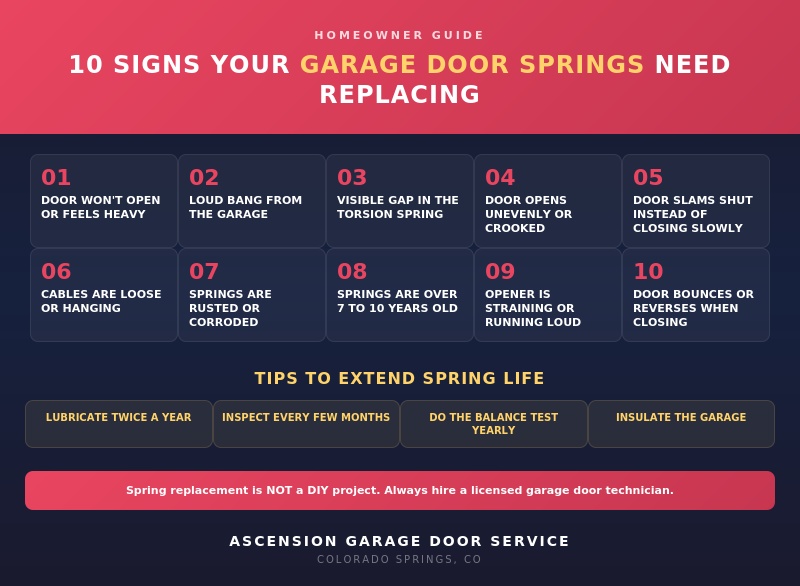
1. The Garage Door Will Not Open or Feels Extremely Heavy
This is the most obvious sign that something is wrong with the springs. If the door will not respond to the opener, or if it barely lifts off the ground, the springs have likely lost their tension or snapped entirely.
A simple way to check is the manual lift test. Disconnect the automatic opener by pulling the emergency release cord, then try to lift the door by hand. A properly balanced door should lift smoothly and stay open about three to four feet off the ground. If the door feels like it weighs a ton or crashes back down the moment it is released, the springs are not doing their job.
- Safety tip: Never force a heavy door open. Doing so can damage the opener, bend the tracks, or cause the door to fall unexpectedly. On cold Colorado Springs mornings, metal contracts and makes this problem even more noticeable, so do not assume the door is just “frozen shut.”
Wondering if your springs might be nearing the end of their lifespan? Learn more in this related guide on How Long Do Garage Door Springs Typically Last?
2. A Loud Bang Came from the Garage
A garage door spring snapping under tension produces a loud, startling sound that many homeowners describe as a gunshot or a firecracker going off inside the garage. It is one of the most common calls garage door technicians receive in the Colorado Springs area and more than a few homeowners have dialed 911 thinking someone broke into their home.
If a loud bang was heard and the garage door is no longer working, the first thing to do is visually inspect the springs. A broken torsion spring will have a visible gap in the coils, usually a two to three inch separation. A broken extension spring may be hanging loosely or dangling in pieces along the track.
- What to do: Do not attempt to operate the door manually or with the opener. Keep everyone away from the door and contact a licensed garage door technician.
Not sure if the door is still safe to use after a spring breaks? Read more about it in this useful guide on Can a Garage Door Work With a Broken Spring?
3. There Is a Visible Gap in the Torsion Spring
Even without the dramatic bang, a torsion spring can show clear signs of failure. A gap or separation in the coils is the most telltale indicator. This can be spotted from the ground by simply looking up at the spring mounted above the door.
When the spring breaks, the tightly wound coils release and separate, leaving a noticeable space in the middle. This is not something that can be repaired. The spring needs full replacement.
- Safety note: Even a broken spring can hold residual tension. Never touch, poke, or attempt to adjust a torsion spring without proper tools and training.
4. The Garage Door Opens Unevenly or Looks Crooked
If the door tilts to one side when opening or closing, it usually means one spring has failed while the other is still functional. This is especially common in homes with extension spring systems, where there is one spring on each side of the door.
Stand inside the garage and watch the door closely as it operates. If one side moves faster or lifts higher than the other, the springs are out of balance.
An uneven door puts serious stress on the tracks, rollers, cables and the opener motor. Ignoring this issue often turns a simple spring replacement into a much bigger and more expensive repair. Many older homes in established Colorado Springs neighborhoods like Old North End, Broadmoor and Ivywild still use extension spring setups, making this a particularly common issue in those areas.
5. The Door Slams Shut Instead of Closing Slowly
Healthy springs control the speed at which a garage door closes. They act as a brake, allowing the door to lower slowly and smoothly. When the springs lose tension or break, gravity takes over and the door can come crashing down.
This is one of the most dangerous signs on this list, especially for households with children or pets who may be near the door when it closes.
- What to do: Disconnect the opener immediately. Keep the door in the closed position and do not use it until a professional has inspected and replaced the springs. This is not a problem that should wait.
6. The Cables Are Loose or Hanging
Garage door cables work hand in hand with the springs. When a spring breaks, the cables lose their tension and can unspool from the drums or hang loosely along the sides of the door. Some homeowners notice cables dangling near the bottom brackets or tangled in the track hardware.
Loose cables are a symptom, not the root cause. In most cases, replacing the broken spring restores proper cable tension and solves the problem. However, if the cables are frayed or damaged, they should be replaced at the same time.
- Tip: Do not attempt to rewind or adjust cables without professional help. Cables under tension can snap and cause serious injury.
7. The Springs Are Visibly Rusted or Corroded
Rust is one of the silent killers of garage door springs. It weakens the metal, increases friction during operation and significantly shortens the overall lifespan of the spring.
While Colorado Springs has a relatively dry climate compared to coastal areas, that does not mean springs are safe from corrosion. Winter road salt tracked in by vehicles, snowmelt moisture and the constant expansion and contraction from temperature swings all contribute to rust buildup. Garages that are not fully sealed or insulated are particularly vulnerable.
- Prevention tip: Applying a light coat of silicone-based garage door lubricant to the springs twice a year, once in the spring and once in the fall, can slow down rust and add years to spring life. It takes about five minutes and is one of the best things any homeowner can do for their garage door.
8. The Springs Are More Than 7 to 10 Years Old
Standard torsion springs are rated for approximately 10,000 cycles. One cycle equals one full open and close of the garage door. For the average household that uses the garage door two to four times a day, that works out to roughly 7 to 10 years of use.
If the springs have never been replaced and the home is approaching or past that age range, it is smart to have a technician inspect them, even if everything seems to be working fine. Springs can fail suddenly without much warning.
- Tip for homebuyers: When purchasing a home in Colorado Springs, ask the seller or home inspector about the age of the garage door springs. It is one of the most commonly overlooked items during a home inspection and replacing worn springs before they fail is far less stressful than dealing with an emergency breakdown.
9. The Garage Door Opener Is Straining or Running Louder Than Usual
When springs begin to weaken, the automatic opener has to compensate by working harder to lift the door. The motor may run louder than usual, take longer to complete a cycle, or stop mid-operation entirely.
If the opener is relatively new but is already struggling, the problem almost certainly lies with the springs rather than the motor. A healthy set of springs handles the heavy lifting so the opener only needs to guide the motion.
- Why this matters: Ignoring this sign can burn out the opener motor, which is a much more costly repair than replacing a set of springs. Catching spring fatigue early protects the entire system.
10. The Door Bounces or Reverses When Closing
Modern garage door openers have a built-in auto-reverse safety feature. If the system detects unusual resistance or imbalance, it stops and reverses the door to prevent damage or injury. Weak or failing springs can trigger this safety mechanism because they can no longer control the weight of the door properly.
If the door passes the photoelectric sensor test and there is no physical obstruction, but it still bounces back up when closing, the springs are a likely culprit. A qualified technician can confirm this with a proper spring balance test.
Why Colorado Springs Weather Is Tough on Garage Door Springs
Living at an elevation of 6,035 feet comes with a lot of perks, but easy conditions for garage door hardware is not one of them. Colorado Springs is known for dramatic temperature swings that can shift 40 to 50 degrees in a single day, especially during the fall and winter months.
Every time the temperature changes, the metal in the springs expands and contracts. Over thousands of cycles, this thermal stress fatigues the steel and accelerates wear. Winter is consistently the peak season for spring failures across the Colorado Springs metro area, with the highest volume of emergency replacement calls coming between November and March.
Homes at higher elevations in areas like Woodland Park, Monument and the western edges of Colorado Springs tend to see even harsher conditions, making regular spring maintenance especially important in those communities.
Tips to Extend the Life of Garage Door Springs
While springs will not last forever, there are several steps homeowners can take to get the most out of them. A well-maintained garage door starts with giving the springs the attention they deserve.
- Lubricate the springs and moving parts twice a year. Use a silicone-based garage door lubricant on the springs, hinges, rollers and track. Avoid WD-40, which is a solvent and not a long-term lubricant.
- Perform a visual inspection every few months. Look for rust, gaps in the coils, loose cables and any signs of wear. Catching problems early is always cheaper than emergency repairs.
- Do the balance test once a year. Disconnect the opener and manually lift the door halfway. A balanced door should stay in place on its own. If it falls or rises, the springs need adjustment or replacement.
- Keep the garage insulated. Reducing temperature extremes inside the garage minimizes the expansion and contraction cycle that wears springs out faster. This is especially valuable during Colorado Springs winters.
- Schedule professional maintenance before winter. A pre-season tune-up from a qualified technician is the single best investment any homeowner can make to avoid a mid-winter breakdown.
Should Garage Door Springs Be Replaced as a DIY Project?
The short and direct answer is no. Garage door spring replacement is not a safe do-it-yourself project. Torsion springs are wound under extreme tension and a single mistake during removal or installation can result in serious injury or even death. A failed DIY attempt can also cause damage to other components like a garage door panel, track, or opener.
Even experienced technicians approach spring work with caution, using specialized tools like winding bars and safety clamps that most homeowners do not have access to. The average cost for professional torsion spring replacement is generally affordable for most homeowners and it is a small price to pay compared to the risk of a DIY attempt gone wrong.
Always hire a licensed, insured garage door technician. This is especially important in Colorado, where building codes and permit requirements can vary by municipality.
Know the Signs and Act Early
Garage door springs do not give a lot of warning before they fail. But for homeowners who know what to look for, the signs are there. Strange noises, a heavy door, visible rust, uneven movement and an opener that sounds like it is working overtime are all red flags that should not be ignored. Keep in mind that a failing spring can also put extra stress on the garage door drum and cable system, leading to even bigger problems down the road.
The best approach is a proactive one. Regular maintenance, seasonal inspections and prompt professional service when something seems off will keep the garage door running safely and smoothly for years to come.
For homeowners in Colorado Springs and throughout the Pikes Peak region, staying ahead of spring problems is especially important given the local climate. Do not wait for a breakdown on the coldest morning of the year. Schedule a professional inspection and make sure the garage door is ready for whatever Colorado weather throws at it.
Trusted Garage Door Spring Replacement in Colorado Springs
When it comes to reliable, professional garage door spring replacement in Colorado Springs, Ascension Garage Door Service is the name local homeowners trust. With years of hands-on experience serving the Pikes Peak region, our team understands the unique challenges that Colorado’s climate and altitude bring to garage door systems. From emergency spring repairs to routine maintenance, every job is handled with safety, quality and customer satisfaction as the top priorities. Contact us today or give us a call to schedule a free inspection and keep your garage door operating at its best.