



It is early on a freezing Colorado Springs morning. The car is running in the driveway, the kids are late for school and the garage door refuses to budge. Or maybe there was a loud bang from the garage in the middle of the night that sounded like a gunshot. Either way, the culprit is almost always the same: a broken garage door spring.
A garage door spring is the unsung workhorse of every home. It carries the full weight of the door, which can range anywhere from 150 to over 250 pounds depending on the size and material. When a garage door spring fails, the entire system comes to a halt. And in a city like Colorado Springs, where temperatures can swing wildly and winter hits hard, spring failures happen more often than most people think.
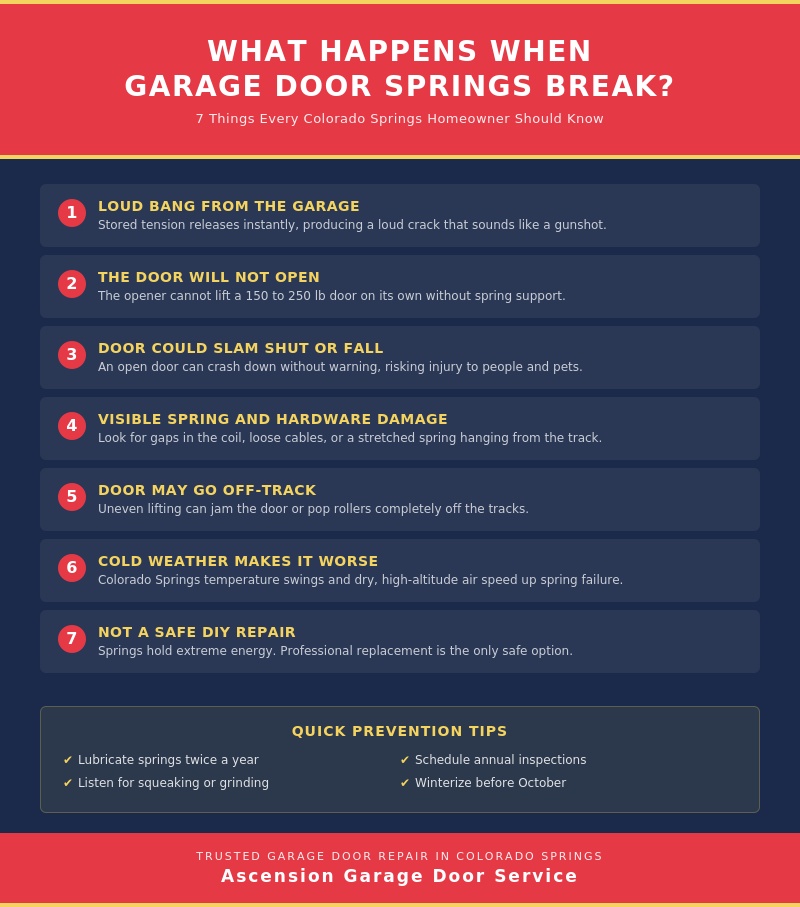
There Will Likely Be a Loud Bang
One of the first things most homeowners notice is the sound. A garage door spring breaking often produces a loud, startling bang that echoes through the house. Many people in Colorado Springs have called the police thinking someone broke in or that something fell off the roof during a windstorm.
That noise comes from the sudden release of tension. Garage door springs, especially torsion springs mounted above the door, are wound extremely tight. When the metal finally gives out, all that stored energy releases at once. The result is a sharp crack or boom that can rattle walls and wake up the entire household.
If that sound came from the garage and the door will not open the next morning, a broken spring is almost certainly the reason.
For help spotting the warning signs before a spring fails, check out this guide on [How to Know If Garage Door Springs Need to Be Replaced?]
The Garage Door Will Not Open or Will Barely Move
This is the most obvious sign something is wrong. The garage door opener is designed to work alongside the springs, not replace them. Without functioning springs to counterbalance the weight of the door, the opener motor simply does not have enough power to lift it on its own.
Some homeowners try pressing the remote button over and over, hoping the door will eventually respond. That is a mistake. Forcing the opener to work against a dead spring can burn out the motor, strip the gears, or damage the opener’s internal components. What starts as a spring replacement can quickly turn into a much bigger repair bill.
- Tip: If the door will not open with the remote, disconnect the opener by pulling the emergency release cord. Then try lifting the door by hand from the inside. If it feels extremely heavy or will not budge at all, stop immediately. That confirms a broken spring and the door should not be operated until a qualified technician inspects it.
Curious about when springs typically give out? Read more in this related post on [How Long Do Garage Door Springs Typically Last?]
The Door Could Slam Shut or Fall Without Warning
This is where things get dangerous. If a spring breaks while the garage door is in the open or partially open position, the door can come crashing down with little to no warning. A standard two-car garage door weighs enough to cause serious injury to a person, pet, or anything underneath it.
Extension springs, which run along the horizontal tracks on either side of the door, pose a particular risk. When they snap, the broken pieces can fly across the garage at high speed. Older homes in Colorado Springs, especially those built before the mid-1990s, may still have extension springs without safety cables running through them. Without those cables, a broken extension spring becomes a projectile.
- Tip: Check the extension springs on both sides of the garage door. There should be a thin steel cable running through the center of each spring, anchored at both ends. If that cable is missing, having a technician install safety cables is one of the most affordable and important upgrades available. It is a small investment that prevents a potentially serious accident.
Wondering if the door can still function after a spring fails? Learn more in this helpful guide on [Can a Garage Door Work With a Broken Spring?]
Visible Damage to the Spring or Surrounding Hardware
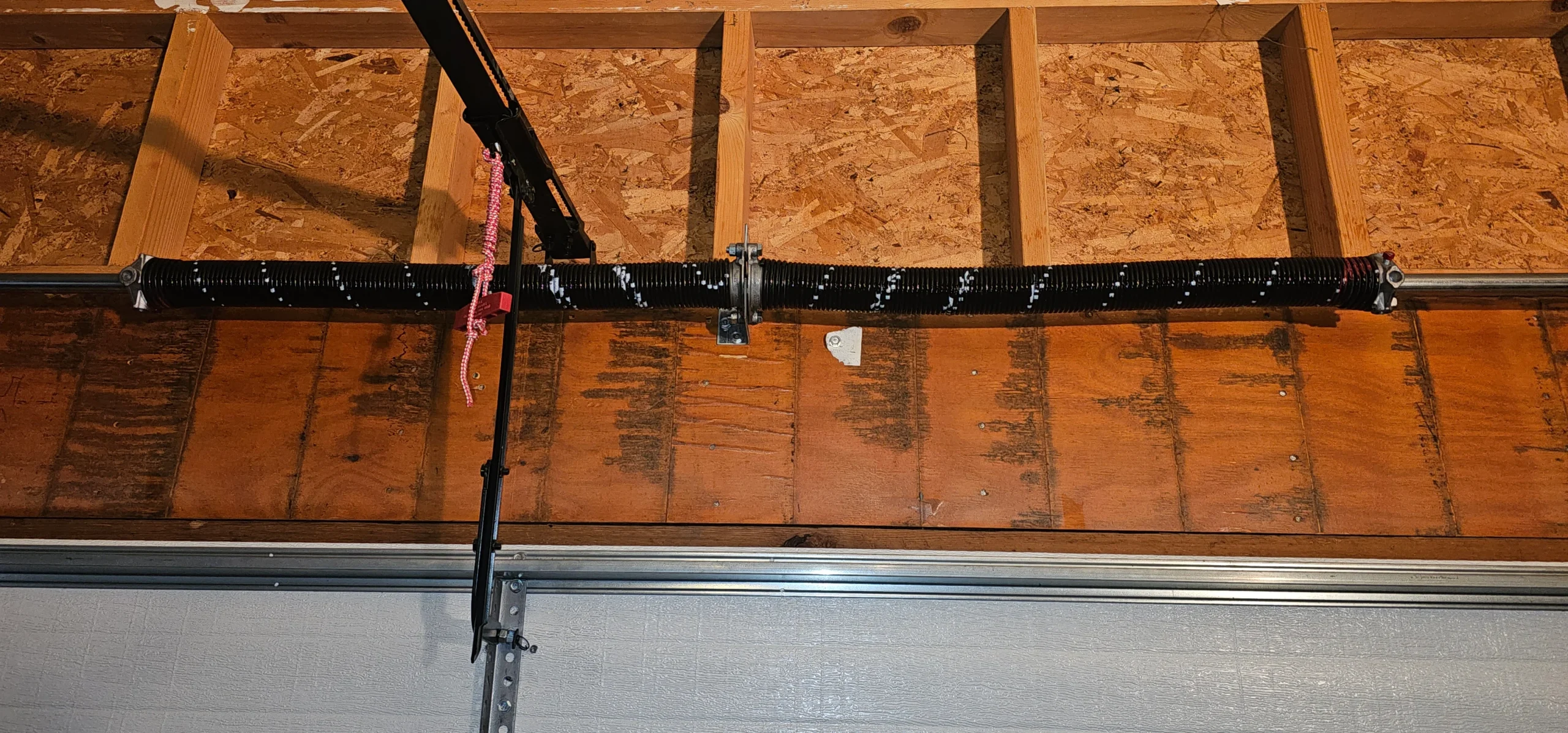
After a spring breaks, the damage is usually easy to spot if homeowners know where to look. For torsion springs, which are the thick coiled springs mounted on a metal shaft directly above the garage door, a break will show as a visible gap in the coil. The spring will look like it has separated into two pieces with a space in between.
For extension springs, a break might look like the spring is stretched out, hanging loosely, or completely detached from one of its mounting points. In either case, there may also be slack or dangling cables, which is another red flag.
Sometimes the damage goes beyond just the spring itself. A broken spring can cause cables to come off the drums, the door to shift in its tracks, or brackets to bend under the sudden redistribution of weight.
- Tip: Do a visual inspection from a safe distance. Look for a gap in the torsion spring above the door or a hanging, stretched extension spring along the tracks. Never touch, poke, or try to adjust any spring, cable, or bracket. Even a broken spring can retain enough tension to cause serious harm.
The Garage Door May Come Off Its Tracks
When one spring breaks and the other is still intact, the door loses its balance. One side becomes significantly heavier than the other and the door starts to lift unevenly. This puts tremendous stress on the tracks, rollers and hinges on the heavier side.
In many cases, the door will jam partway up or tilt noticeably to one side. If someone continues trying to operate the door in this condition, the rollers can pop out of the tracks entirely. Once a garage door derails, it becomes a much more complex and costly repair. The tracks may need to be realigned, rollers replaced and the entire door rebalanced from scratch.
- Tip: If the garage door looks crooked, tilted, or seems to be sticking on one side, do not try to force it open or closed. Operating a misaligned door makes the problem worse every single time. Leave the door in place and contact a local Colorado Springs garage door professional to assess the situation.
Colorado Springs Weather Accelerates the Problem
This is something that does not get talked about enough. Colorado Springs has a unique climate that is particularly tough on garage door springs. The city regularly sees temperature swings of 30 to 40 degrees in a single day, especially during the spring and fall shoulder seasons. Those constant expansions and contractions weaken the metal over time, making springs more brittle and prone to snapping.
Winter is the worst season for garage door spring failures across the Front Range. When temperatures drop below freezing, the metal in the springs contracts and loses flexibility. That is exactly why so many Colorado Springs garage door technicians see a spike in emergency spring calls between November and March.
The altitude plays a role too. At over 6,000 feet, Colorado Springs has drier air than most cities. That dry air means lubricant on the springs evaporates faster, leaving the coils exposed to friction, rust and corrosion. A spring that might last 10 years in a humid coastal city could fail in 7 or 8 years here without proper maintenance.
- Tip: Apply a silicone-based garage door lubricant to the springs, hinges and rollers at least twice a year. The best times are in early fall before winter sets in and again in spring once temperatures stabilize. Avoid using WD-40, which is a solvent and not a true lubricant. A quality silicone or lithium spray designed for garage doors will do a much better job of protecting the metal from Colorado Springs weather conditions.
This Is Not a Safe DIY Project
There are plenty of garage door maintenance tasks that a handy homeowner can tackle safely. Replacing a spring is not one of them. Torsion springs require specialized tools called winding bars and the process of unwinding and rewinding a spring involves working with an extreme amount of stored mechanical energy. One slip, one wrong move, or one improperly sized replacement spring can lead to catastrophic results.
Emergency rooms across Colorado see injuries every year from homeowners who attempted DIY garage door spring replacement after watching an online video. The videos make it look straightforward, but they rarely convey just how much force is involved. A standard torsion spring on a two-car garage door holds enough energy to cause broken bones, deep lacerations, or worse.
Professional garage door spring replacement in Colorado Springs typically varies depending on the type of spring, the size of the garage door and whether any additional hardware needs attention. Compared to the risk of serious injury, the cost of hiring a licensed technician is well worth it.
- Tip: When choosing a garage door repair company in Colorado Springs, look for a business that is locally established, carries proper insurance and has verifiable reviews. Ask whether they use high-cycle springs as an upgrade option. Standard springs are rated for around 10,000 cycles, which translates to roughly 7 to 10 years of average use. High-cycle springs rated for 25,000 or even 50,000 cycles last significantly longer and are especially worth considering given the added wear that Colorado Springs weather puts on garage door systems.
How to Help Prevent Garage Door Springs from Breaking
While no spring lasts forever, there are simple steps that can extend their lifespan and reduce the chance of an unexpected failure.
- Regular maintenance makes a big difference. Having a garage door technician perform an annual inspection and tune-up keeps all the moving parts in check. During a routine visit, a technician can spot early warning signs like rust on the coils, uneven tension, worn cables, or noisy operation that signals a spring nearing the end of its life.
- Between professional visits, homeowners should listen for changes in how the door sounds. Squeaking, grinding, or popping noises during operation often point to springs or hardware that need attention. A door that feels heavier than usual when lifted manually is another early indicator. In some cases, a failing spring can also cause uneven movement that puts excess pressure on a garage door panel, leading to bending or cracking over time.
- Keeping track of the age of the springs is also helpful. If the garage door system was installed with the home and the house is approaching the 8 to 10 year mark, it may be time to have the springs inspected even if nothing seems wrong yet. Being proactive almost always costs less than dealing with an emergency repair.
- For Colorado Springs homeowners specifically, winterizing the garage door before October each year is a smart move. That means lubricating all springs and moving parts, checking weatherstripping and making sure the door is properly balanced. A balanced door puts less strain on the springs and helps them last longer through the cold months.
Keeping Colorado Springs Homes Safe and Functional
Broken garage door springs are one of the most common repair calls in the Colorado Springs area and for good reason. The combination of heavy daily use, extreme temperature swings and high-altitude dry air creates the perfect conditions for accelerated spring wear. A broken spring can also put extra stress on the garage door drum and cable, leading to additional damage if not addressed quickly.
The best defense is awareness and prevention. Knowing what a broken spring looks and sounds like, understanding the risks and keeping up with basic maintenance goes a long way toward avoiding a stressful and potentially dangerous situation.
When a spring does break, the smartest move is always the same: leave the door alone and call a trusted local garage door technician. It is a quick fix for a professional and it keeps everyone in the household safe.
Need Garage Door Spring Repair in Colorado Springs?
For homeowners across Colorado Springs looking for fast, reliable garage door spring repair, Ascension Garage Door Service is a trusted name in the community. With our experienced technicians who understand the unique demands that Colorado Springs weather puts on garage door systems, we deliver professional spring replacement, routine maintenance and honest advice homeowners can count on. Whether a spring just snapped or the door is showing early warning signs, our team is ready to help. Contact us today or give us a call to schedule an inspection or same-day repair and keep the garage door running safely all year long.