


One of the most technically demanding services within the garage door industry is, without a doubt, the garage door spring repair. This is mainly because springs are responsible for controlling hundreds of pounds of moving weight under constant tension. While a broken spring may appear to be the apparent problem, experienced technicians understand that spring failure rarely occurs in isolation. Instead, it is usually the result of gradual wear, imbalance, or stress that has affected multiple components over time. This is why professional spring repair always involves a full-system evaluation rather than a simple part replacement.
Understanding what skilled technicians check during garage door spring repair clarifies why this work requires training, precision, and careful inspection. Springs interact directly with shafts, cables, drums, tracks, rollers, and the opener, meaning a single miscalculation can compromise safety and reliability. Technicians approach spring repair as a process to restore balance, protect surrounding components, and prevent recurrence of failures. This article explains each significant inspection step in detail, highlighting how professionals prioritize long-term performance over temporary fixes.
Initial System Assessment Before Spring Replacement
Before replacing a garage door spring, technicians evaluate the overall condition and behavior of the door system. This initial assessment helps identify whether the spring failed due to age alone or whether underlying issues contributed to the failure. Observing system behavior provides critical context that informs every step of the repair process.
During this early assessment, technicians typically examine:
- Door operation during manual lifting to observe resistance, smoothness, and stopping points
- Balance behavior to determine whether the door was evenly counterbalanced before failure
- Failure characteristics to identify whether the spring snapped suddenly or weakened gradually
- Usage frequency to understand how often the door cycles daily
- Environmental conditions such as corrosion, moisture exposure, or extreme temperature variation
This assessment helps technicians determine whether additional components were stressed by the failing spring. Addressing these factors early prevents installing a new spring into an environment that will quickly cause another failure.
Take a closer look at what causes garage door springs to fail and why addressing issues at the right time makes a critical difference by reading: The Real Reason Garage Door Springs Fail and Why Timing Matters.
Verification of Correct Spring Type and Specifications
Selecting the correct spring is one of the most critical steps in garage door spring repair, as incorrect sizing can create immediate safety hazards and long-term performance issues. Skilled technicians do not rely on visual approximation, as springs that appear similar can perform very differently under load. Instead, they precisely calculate specifications to match the door’s weight and usage requirements.
Technicians verify multiple specifications, including:
- Wire size to determine lifting capacity and fatigue resistance
- Spring length in both relaxed and wound states
- Inside diameter to ensure proper fit on the torsion shaft
- Cycle rating appropriate for how frequently the door is used
- Wind direction to confirm the correct left-hand or right-hand configuration
Incorrect spring selection can cause imbalance, excessive opener strain, or accelerated wear across the system. Precise calculation ensures the restored system operates within its intended mechanical limits.
Pay attention to the subtle warning signs that indicate your garage door spring is starting to lose strength by reading: The Early Clues Your Garage Door Spring Is Losing Strength.
Inspection of Torsion Shaft and Bearing Assemblies
The torsion shaft is the backbone of the spring system, distributing the lifting force evenly across the door. Skilled technicians carefully inspect the shaft and bearing assemblies because damage or misalignment in these components compromises spring performance, regardless of spring quality. Installing new springs on a compromised shaft can lead to uneven tension and premature failure.
Key inspection points include:
- Shaft straightness to detect bending or deformation under load
- Surface wear at set screw contact points
- Bearing smoothness to ensure friction-free rotation
- End bearing plate alignment and secure mounting
- Center bearing condition to confirm even load transfer
This inspection ensures that spring torque is distributed evenly and that rotational movement remains smooth. Any issues identified at this stage must be corrected before new springs are tensioned.
Know when a garage door spring problem reaches the point where repair is no longer optional, and immediate action is required by reading: When a Garage Door Spring Issue Stops Being Optional to Fix.
Evaluation of Cable Drums and Lift Cables
Lift cables and cable drums work in direct coordination with garage door springs, meaning spring failure often places additional strain on these components. Skilled technicians understand that ignoring cable condition during spring repair increases the risk of future misalignment or sudden release. For this reason, cables and drums are always inspected during a professional repair.
Technicians typically check:
- Cable strands for fraying, thinning, or corrosion
- Cable length consistency to ensure even lifting on both sides
- Drum grooves for wear or deformation
- Cable seating within drum channels
- Drum attachment security on the torsion shaft
Uneven cable wear often indicates prior spring imbalance, and replacing springs without addressing cable issues can lead to immediate operational problems. Proper evaluation ensures safe tension restoration.
Door Weight Measurement and Balance Testing
Once new springs are installed, technicians perform precise balance testing to verify that spring tension matches the door’s weight. Balance testing is not a single action but a series of controlled evaluations conducted throughout the door’s travel range. This step ensures the door remains stable and predictable during operation.
Balance testing typically includes:
- Manual lifting tests at the bottom, midpoint, and near-open positions
- Observation of whether the door remains stationary when released
- Evaluation of resistance consistency throughout travel
- Verification of the side-to-side level during movement
- Controlled lowering to assess descent speed and stability
Proper balance is essential because it significantly reduces stress on the opener, cables, and tracks, thereby improving the operating environment. Additionally, even slight imbalances, if left uncorrected, can accelerate wear and tear on these components over time.
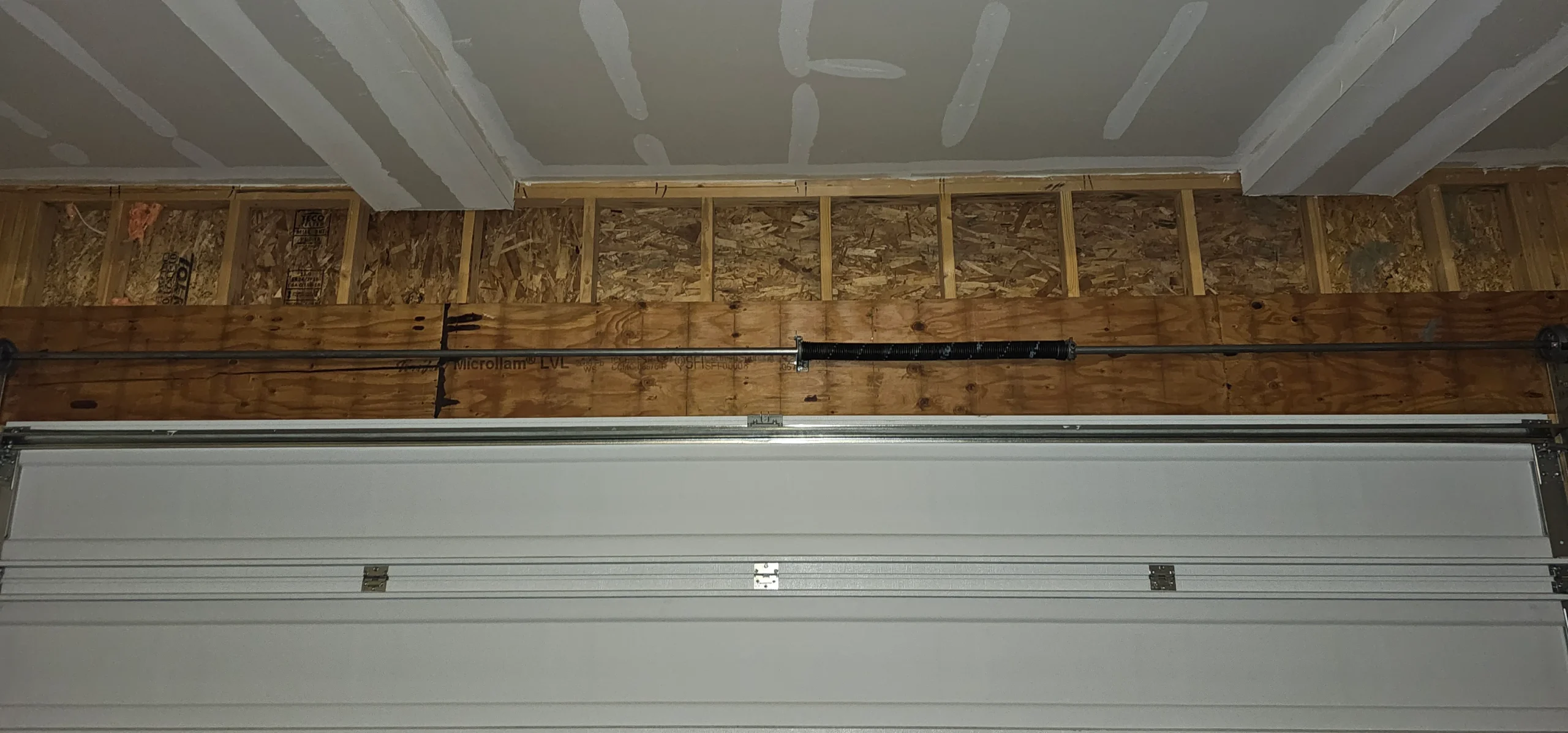
Inspection of Rollers, Hinges, and Track Alignment
Restoring spring tension often reveals weaknesses in other moving components that were previously masked by reduced force. Skilled technicians inspect rollers, hinges, and tracks to ensure they can safely handle the restored load. This step is critical for preventing noise, vibration, and uneven movement after spring repair.
During this inspection, technicians evaluate:
- Roller bearings for smooth rotation and structural integrity
- Roller stems for bending or excessive wear
- Hinges for elongation, cracking, or metal fatigue
- Track spacing to confirm parallel alignment
- Track mounting hardware for tightness and stability
Addressing these components during spring repair helps ensure the door moves smoothly and quietly while reducing stress on newly installed springs.
Verification of Opener Force and Travel Settings
Garage door openers are often adjusted over time to compensate for spring wear, which can result in unsafe force levels after new springs are installed. Skilled technicians recalibrate opener settings after spring repair to ensure the motor operates within safe parameters. This step protects both the opener and the door system.
Technicians typically review:
- Opening and closing force limits
- Travel limits to ensure accurate stop positions
- Safety reversal response under resistance
- Sensor alignment and responsiveness
- Opener noise patterns that indicate overload
Correct calibration ensures the opener guides movement rather than compensates for imbalance. This reduces motor wear and improves long-term reliability.
Controlled Operational Testing Under Load
Before concluding the repair, technicians conduct multiple operational tests to verify the system’s stability under real-world conditions, ensuring everything functions correctly. This comprehensive testing phase not only confirms that all components work together as intended but also guarantees that no new issues were inadvertently introduced during the repair process.
Operational testing includes:
- Multiple open and close cycles to observe consistency
- Monitoring of noise levels during movement
- Assessment of vibration or shaking
- Evaluation of speed and acceleration behavior
- Testing of the emergency release mechanism
Performing this step ensures the door will operate reliably in daily use and that its safety mechanisms function as intended. The International Door Association recommends these maintenance routines, among others, to keep one of your home’s most crucial features in optimal condition.
Documentation and Preventive Guidance
A professional spring repair typically concludes with comprehensive documentation and preventive guidance to help homeowners not only understand the work performed but also plan for future maintenance needs. Additionally, skilled technicians may recommend garage door accessories, such as safety sensors, remote controls, and decorative hardware, to enhance functionality and appearance. They clearly and thoroughly explain their findings, outlining any components that may require attention later to ensure the garage door system remains safe and efficient.
This final step often includes:
- Recording spring specifications and installation details
- Noting the component condition observed during inspection
- Explaining how usage frequency affects spring lifespan
- Discussing environmental factors that influence wear
- Recommending appropriate inspection intervals
Clear documentation supports informed ownership and reduces the likelihood of unexpected failures.
Expert Technicians Maximize Your Garage Door’s Value
Skilled technicians approach garage door spring repair as a comprehensive system evaluation rather than a simple component swap. From assessing door behavior and verifying spring specifications to inspecting shafts, cables, rollers, and opener settings, each step contributes to long-term safety and reliability. Thorough inspection prevents repeat failures, protects surrounding components, and restores predictable operation. Understanding what technicians check during spring repair highlights the importance of precision, experience, and attention to detail. Proper repair ensures not only functional restoration but lasting confidence in daily operation.
Ascension Garage Door Service is committed to providing garage door services that prioritize safety, durability, and peace of mind. Repairs and installations are completed with care to ensure dependable operation. Every service reflects a dedication to quality and customer satisfaction.
Contact us today or give us a call to book trusted garage door service.