


Most standard garage door springs last between 7 and 12 years, or roughly 10,000 cycles. In Colorado Springs, temperature swings and the high altitude at around 6,000 feet can shorten that garage door spring lifespan. Torsion springs generally outlast extension springs by several years when properly maintained.
That loud bang coming from the garage early in the morning is a sound no homeowner wants to hear. More often than not, it means a garage door spring just snapped. It happens to thousands of homeowners across Colorado Springs every year and it always seems to come at the worst possible time.
Understanding how long a garage door spring lasts, what causes garage door spring failure and how to get the most life out of them can save a lot of stress and money down the road. This guide breaks it all down in plain language, with practical garage door spring advice tailored specifically for homeowners dealing with the unique climate challenges of Colorado Springs, CO.
The Short Answer: Most Springs Last 7 to 12 Years
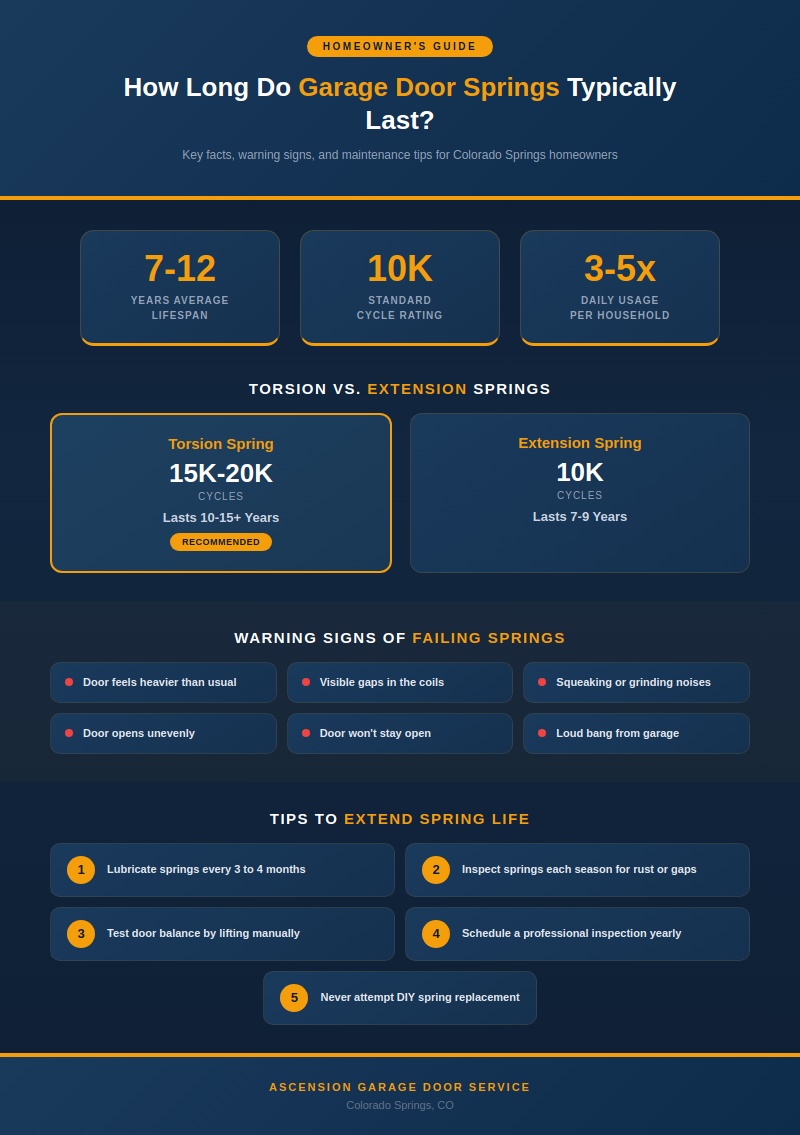
The average garage door spring is rated for about 10,000 cycles. One cycle equals one full open and one full close. That might sound like a big number, but it adds up faster than most people realize.
A typical household opens and closes the garage door around 3 to 5 times per day. At that rate, a standard 10,000-cycle spring will hit its limit in roughly 7 to 9 years. Homes where the garage serves as the main entrance or where multiple drivers come and go throughout the day can burn through those cycles even faster.
The key takeaway here is that garage door springs are a wear item. They are not designed to last forever. They fatigue over time with every single use and eventually, the metal gives out.
For Colorado Springs homeowners, factors like extreme temperature shifts and dry air can push that timeline even shorter, which is covered in more detail below.
Not sure if the springs on your garage door are still in good shape? Check out this helpful guide on How to Know If Garage Door Springs Need to Be Replaced? for the telltale signs to look for.
Torsion Springs vs. Extension Springs: How Lifespan Compares
Not all garage door springs are created equal. The two most common types found in residential garage doors are torsion springs and extension springs. Each one has a different design, a different mounting location and a different expected lifespan.
Torsion Springs
Torsion springs are mounted on a metal shaft directly above the garage door opening. They work by twisting and storing energy, which helps lift the door. These are the more durable option and are commonly found in newer homes throughout the Colorado Springs area.
A standard torsion spring lasts around 15,000 to 20,000 cycles. High-cycle upgrades can push that number to 25,000 or even 50,000 cycles for homeowners who want a longer-lasting solution.
Extension Springs
Extension springs run along the horizontal tracks on both sides of the door. They work by stretching and contracting to assist the door’s movement. These are more commonly found in older Colorado Springs homes or in budget-friendly installations.
Extension springs are typically rated for about 10,000 cycles, giving them a shorter overall lifespan compared to torsion springs. They also tend to wear less evenly, which can cause the door to open unevenly over time.
- Bottom line: Torsion springs generally last longer, perform more consistently and handle the stress of daily use better than extension springs. For homes in a climate like Colorado Springs, torsion springs are almost always the better long-term investment.
Curious about what actually happens when a spring gives out? Read more in this guide on What Happens When Garage Door Springs Break? to understand the risks and what to expect.
Why Garage Door Springs Wear Out Faster in Colorado Springs
Colorado Springs is a beautiful place to live, but the local climate is tough on garage door hardware. Here is why springs tend to have a shorter lifespan in this part of Colorado compared to more temperate regions.
- Elevation stress. At roughly 6,035 feet above sea level, Colorado Springs sits at a higher altitude than most U.S. cities. Metal components, including garage door springs, can behave differently under these conditions. The thinner air and lower atmospheric pressure place subtle but real stress on metal over time.
- Extreme temperature swings. It is not unusual for Colorado Springs to experience a 40 to 50 degree temperature swing in a single day. Metal expands in the heat and contracts in the cold. When that cycle happens repeatedly, day after day, season after season, it accelerates metal fatigue in the spring coils.
- Bitter winter cold. When temperatures drop below freezing, steel becomes more brittle. Springs that are already nearing the end of their cycle life are especially vulnerable to snapping during cold snaps in January and February.
- Dry climate. The low humidity along the Front Range means there is very little natural moisture in the air to help keep metal components from drying out. Without regular lubrication, springs can develop surface rust and lose flexibility faster than they would in a more humid environment.
None of these factors are something a homeowner can control. But being aware of them makes it easier to stay ahead of spring failure with proactive maintenance and timely inspections.
If a spring has already given out under these tough conditions, learn what to do next in this guide on Can a Garage Door Work With a Broken Spring? before attempting to use the door.
Warning Signs That Garage Door Springs Are Wearing Out
Garage door springs rarely fail without warning. There are almost always signs that something is going wrong before the spring actually breaks. Here are the most common red flags to watch for.
- The door feels heavier than usual. Try lifting the door manually with the opener disconnected. If it feels noticeably heavy or hard to lift, the springs are losing tension.
- Visible gaps or stretched coils. Take a look at the springs themselves. If there are visible gaps between the coils or the spring looks stretched out and uneven, that is a clear sign of wear.
- The door opens unevenly or looks crooked. When one spring is weaker than the other, the door may tilt to one side during operation. This puts extra strain on the opener and the remaining hardware.
- Loud squeaking or grinding noises. Springs that are dry, rusty, or fatigued often produce squeaking or grinding sounds during operation. This is especially common during Colorado Springs winters when the cold makes metal less flexible.
- The door slams shut or will not stay open. A healthy spring system holds the door in place at any point along the track. If the door drops quickly or will not stay open halfway, the springs are failing.
- A loud bang from the garage. If a loud bang has already been heard, the spring has likely already broken. This is the sound of the coil releasing all its stored energy at once.
If even one of these signs shows up, it is worth getting a professional inspection sooner rather than later. A failing spring puts added stress on the opener, cables and other components, which can lead to bigger and more expensive problems.
What Affects How Long Garage Door Springs Last
Several factors determine whether springs make it to the 7-year mark or well beyond the 12-year mark.
- Spring quality and gauge. Builder-grade springs that come standard with many new garage doors are often the bare minimum. Higher-quality springs made from better steel with a higher cycle rating last significantly longer.
- Door weight. Heavier doors, especially insulated double-car doors common in Colorado Springs, put more strain on springs with every cycle. The heavier the door, the harder the springs have to work.
- Maintenance habits. Springs that are regularly lubricated and inspected last longer than those that are neglected. It is one of the simplest things a homeowner can do to extend spring life.
- Usage frequency. A household with multiple drivers, teenagers, or a home-based business that relies on garage access will rack up cycles much faster than a retired couple.
- Installation quality. Springs that are improperly sized or poorly balanced from the start will wear out faster. A professional installation with correct spring sizing makes a real difference in longevity.
- Local climate. As covered earlier, the Colorado Springs climate with its altitude, temperature swings and dry air is harder on springs than many other parts of the country.
Simple Maintenance Tips to Extend Spring Life
The good news is that a little bit of routine maintenance can add years to the life of garage door springs. Here are some practical steps that any Colorado Springs homeowner can follow.
- Lubricate the springs every 3 to 4 months. Use a silicone-based garage door lubricant spray on the coils. This is especially important before winter sets in along the Front Range. Lubrication keeps the metal flexible and reduces friction.
- Visually inspect the springs each season. Look for signs of rust, gaps between coils, or any obvious deformation. A quick visual check takes less than a minute and can catch problems early.
- Listen for changes in sound. A healthy garage door operates relatively quietly. New squeaking, popping, or grinding sounds during operation often signal that something needs attention.
- Test the door balance. Disconnect the automatic opener and lift the door manually to about waist height. If it stays in place on its own, the springs are balanced. If it drops or rises, the springs may be losing tension or are improperly adjusted.
- Do not ignore small problems. A minor squeak or a slight tilt in the door might not seem urgent, but small issues tend to snowball. Catching them early can prevent a full spring failure at the worst possible moment.
- Schedule a professional inspection once a year. A trained garage door technician can spot wear, test tension and make adjustments that are not safe for homeowners to do on their own. Annual tune-ups are one of the best investments for extending the life of the entire garage door system.
Garage door spring replacement and adjustment is not a do-it-yourself project. These springs are under extreme tension and can cause serious injury or even death if handled incorrectly. Always leave spring work to a licensed professional.
When Should Garage Door Springs Be Replaced?
Knowing when to replace springs before they break can prevent a lot of inconvenience and potential safety hazards. Here are some guidelines.
- The springs are past the 7 to 10 year mark and showing signs of wear. Even if they have not broken yet, aging springs on borrowed time are a ticking clock.
- One spring has already broken. If one spring snaps, the other one is almost certainly close behind. It was installed at the same time, has gone through the same number of cycles and has endured the same weather conditions. Replacing both at the same time is always the smarter move.
- The garage door itself is being replaced. New doors often have different weight specs that require new springs anyway. It is the perfect opportunity to start fresh.
- The door is not operating smoothly despite other repairs. Sometimes the opener, cables and rollers are all fine and the real culprit is a set of tired springs that are no longer holding proper tension.
What to Do If a Garage Door Spring Breaks
A broken garage door spring can be startling, but staying calm and taking the right steps will keep everyone safe.
- Do not try to open or close the garage door. A garage door with a broken spring is extremely heavy and can drop unexpectedly. Operating it manually or with the opener can cause further damage or injury.
- Disconnect the garage door opener. Pull the emergency release cord to disengage the opener from the garage door. This prevents the motor from trying to lift a door it was never designed to move without spring assistance.
- Call a local garage door professional. Search for a reputable garage door repair company in Colorado Springs with strong reviews and proper licensing. Same-day or next-day service is available from most established garage door companies in the area.
- Do not attempt a DIY garage door spring replacement. This point cannot be stressed enough. Garage door springs store a tremendous amount of energy. Without the proper tools, training and experience, attempting a replacement can result in catastrophic injury.
A helpful tip for Colorado Springs homeowners: save the number of a trusted local garage door company in the phone contacts now, before an emergency happens. When a garage door spring breaks on a freezing February morning with the car trapped inside, having that number ready is a lifesaver.
Should Colorado Springs Homeowners Upgrade to High-Cycle Springs?
For homeowners who want to avoid dealing with spring replacement every 7 to 10 years, high-cycle springs are worth a serious look.
Standard springs are rated for 10,000 cycles. High-cycle springs come in 25,000-cycle and even 50,000-cycle options. That can translate to 20 or more years of reliable service depending on usage.
Who benefits the most from high-cycle springs?
- Families with busy households and multiple vehicles coming and going throughout the day
- Homeowners who use the garage as a primary entrance
- Anyone running a home-based business that requires frequent garage access
- Homeowners who simply want the peace of mind of not worrying about springs for decades
The upfront average cost is a bit higher than standard springs, but the long-term value is significant. Instead of replacing springs two or three times over the life of a home, a single set of high-cycle springs can potentially last the entire time. Failing springs can also cause uneven tension that damages the garage door panel over time, so investing in a longer-lasting spring protects more than just the hardware above the door.
Given the added climate stress that Colorado Springs puts on garage door components, upgrading to at least a 25,000-cycle spring is a recommendation that most local garage door professionals stand behind.
Stay Ahead of Spring Failure With the Right Approach
Garage door springs are one of those things most homeowners never think about until something goes wrong. But with a little knowledge and some basic maintenance, it is entirely possible to get the most out of every set of springs and avoid the hassle of an unexpected failure.
For homeowners in Colorado Springs, the combination of altitude, dry air and dramatic temperature changes means paying a bit more attention to garage door health than folks in milder climates. Regular lubrication, seasonal inspections and knowing when to call a professional can make all the difference. Keep in mind that worn springs also put extra stress on the garage door drum and cable, so catching problems early protects the entire system.
If the springs on the garage door are getting up there in age, or any of the warning signs mentioned above are starting to show up, getting a professional assessment sooner rather than later is the smart play. A small investment in maintenance and timely replacement goes a long way toward keeping the garage door running smoothly for years to come.
Local Spring Replacement Help You Can Count On
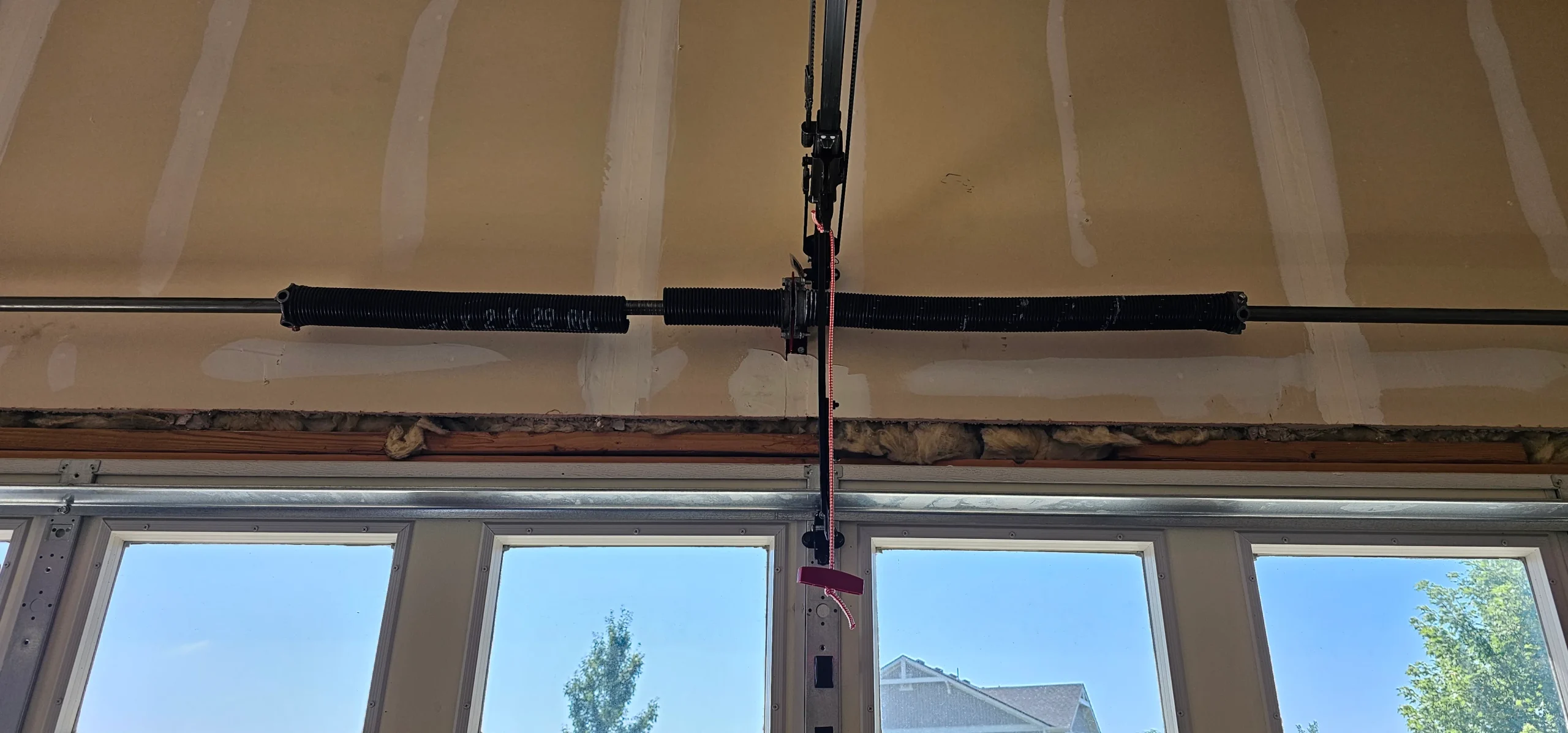
When the time comes for a professional inspection or spring replacement, Ascension Garage Door Service is the name Colorado Springs homeowners trust. With years of hands-on experience handling every type of spring system in the area, our team understands the unique challenges that local weather and altitude bring to garage door hardware. From routine maintenance to emergency spring replacements, we deliver reliable, same-day solutions that keep homes safe and garage doors running the way they should. Contact us today or give us a call to schedule a free inspection and get ahead of spring failure before it catches you off guard.