


Picture this. It’s a cold Monday morning in Colorado Springs. The car is packed, the coffee is ready and there’s just one thing left to do: hit the garage door opener. But instead of gliding open like it usually does, the door barely lifts a few inches, makes a terrible grinding noise and stops. Something is clearly wrong and there’s a good chance the culprit is a broken garage door spring repair in Colorado Springs.
So, can a garage door technically still work with a broken spring? The short answer is yes, but doing so is extremely dangerous and can lead to costly damage. A failing garage door spring is one of the most common issues homeowners face and knowing how to handle it matters. This breaks down everything Colorado Springs homeowners need to know about broken garage door springs, the warning signs to watch for and the safest steps to take when it happens.
Can Garage Door Work with Broken Spring? Complete Safety Guide
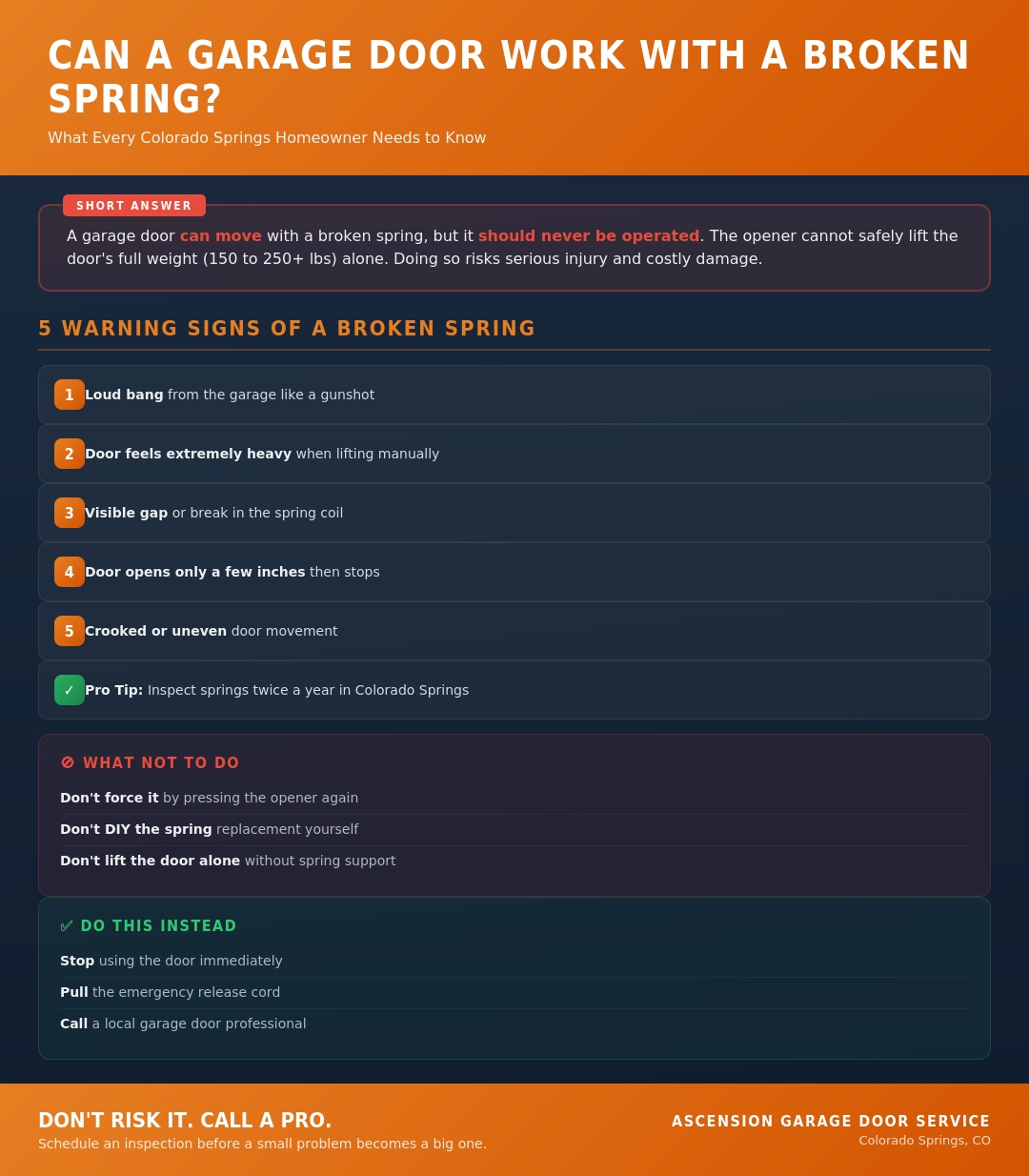
When a garage door spring breaks, the door might still move a little. The electric opener will try to do its job. But here’s the problem: the opener was never designed to lift the full weight of the door on its own.
A standard residential garage door weighs anywhere from 150 to over 250 pounds, depending on the material and whether it’s insulated. The springs do the heavy lifting by counterbalancing that weight. Without them, the opener motor is left struggling under a load it cannot safely handle.
Forcing the door to operate in this condition can burn out the opener motor, snap cables, bend the tracks, or cause the door to come crashing down without warning. For homeowners in Colorado Springs, where many properties feature heavier two-car insulated garage doors, this risk is even greater.
The bottom line? Just because the door moves doesn’t mean it’s safe to use.
Want to spot the problem before it gets this far? Read How to Know if Garage Door Springs Need to Be Replaced? for the key signs every homeowner should watch for.
What Garage Door Springs Actually Do and Why They Matter
Think of the garage door spring as the muscle behind the entire operation. The opener is more like the brain. It sends the signal, but the spring is what actually does the physical work of raising and lowering that heavy door.
There are two main types of springs found in most Colorado Springs homes:
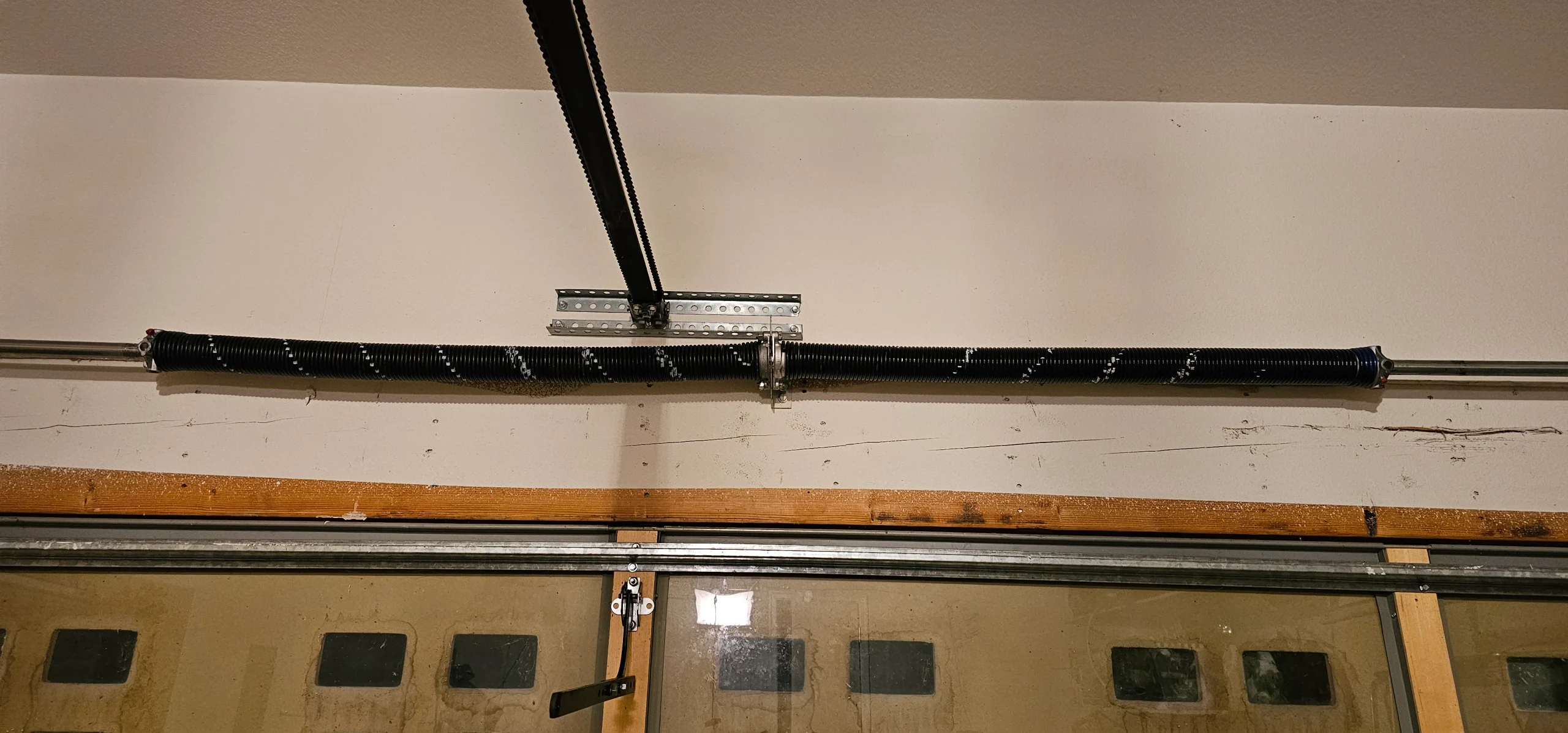
- Torsion springs are mounted on a metal shaft directly above the door. They twist and unwind to create the force that lifts the door. Most modern homes in neighborhoods like Briargate, Stetson Hills and Northgate use torsion spring systems.
- Extension springs run along the horizontal tracks on either side of the door. They stretch and contract to help move the door up and down. These are more common in older homes, including properties in Old Colorado City and near Fort Carson.
Both types are under extreme tension and both are affected by the unique climate conditions in Colorado Springs. Freezing winter temperatures, dry air and big swings between daytime heat and nighttime cold all put extra stress on the metal, causing springs to fatigue and break sooner than expected.
Curious about what actually happens the moment a spring gives out? Take a look at What Happens When Garage Door Springs Break? to understand the full impact it can have on the door and opener.
Warning Signs That a Garage Door Spring Is About to Break
Most springs don’t break without giving a few warning signs first. Knowing what to look for can help homeowners catch the problem early and avoid a more dangerous situation later.
- A loud bang from the garage. This is the most common sign. A breaking torsion spring releases stored energy all at once, producing a sound similar to a gunshot or a firecracker. Many Colorado Springs homeowners report hearing this noise late at night when the temperature drops suddenly.
- The door feels unusually heavy. Try lifting the door manually after disconnecting the opener. If it feels like dead weight or barely budges off the ground, the spring has likely failed.
- A visible gap in the spring coil. Take a look at the spring above the door. If there’s a clear gap or separation in the coils, the spring is broken.
- The door opens a few inches and then stops. This is the opener trying and failing to lift the full weight of the door.
- Crooked or uneven movement. If the door tilts to one side or moves in a jerky, uneven pattern, one of the springs (or a cable connected to it) may have snapped.
Make it a habit to visually inspect the springs at least twice a year, especially before the harsh Colorado Springs winter sets in and again in the spring after months of cold weather cycling.
Wondering how much life the springs have left? Read How Long Do Garage Door Springs Typically Last? to get a better idea of when a replacement might be due.
The Real Dangers of Operating a Door With a Broken Spring
Using a garage door after a spring breaks is not just inconvenient. It can be genuinely dangerous.
- Risk of the door falling. Without spring tension to control its movement, the door can drop suddenly. A 200-pound door in free fall can cause serious injury to anyone standing underneath, including children and pets.
- Cables can snap under stress. When the spring breaks, the cables that help guide the door are put under uneven tension. A snapping cable moves with enough force to cause lacerations and other injuries.
- Damage to the opener motor. Running the opener with a broken spring forces the motor to work far beyond its capacity. This leads to overheating, gear stripping and eventual motor burnout, turning a spring replacement into a much more expensive repair.
- Bent tracks and damaged panels. Without balanced support, the door can twist and slam into the tracks, warping them and cracking or denting the door panels.
Colorado Springs homes with oversized or insulated steel doors are especially vulnerable because of the additional weight involved.
What to Do Right Away When a Spring Breaks
Knowing how to respond safely in the first few minutes after a spring breaks can prevent injuries and further damage.
- Stop using the door immediately. Do not press the opener button again. Every attempt puts more strain on the system and increases the risk of something failing catastrophically.
- Pull the emergency release cord. Every garage door opener has a red cord hanging from the track. Pulling this cord disconnects the door from the opener so that no one accidentally activates it with a remote or wall button.
- Keep everyone away from the door. Make sure children, pets and other family members stay clear of the garage door until a professional has inspected it.
- Call a local garage door technician. A trained professional can safely assess the damage and determine whether the spring, cables, or other hardware need replacement.
If a vehicle is stuck inside the garage, do not try to force the door open. A qualified technician can manually raise the door safely using the right tools and techniques.
Can You Manually Open a Garage Door With a Broken Spring?
This is one of the most common questions homeowners ask after a spring breaks and the answer requires some caution.
Technically, it is possible to lift a garage door manually with a broken spring, but it takes significant effort because the full weight of the door is unassisted. For a standard Colorado Springs two-car garage door, that could mean lifting 200 pounds or more straight up.
Attempting this alone is not recommended. The door could slip, fall, or shift unexpectedly. If there is absolutely no other option, having at least two strong adults work together is essential. Each person should grip the bottom of the door and lift slowly, keeping hands and feet clear of the tracks.
Even then, the safest course of action is always to call a professional rather than risk injury.
Why DIY Spring Replacement Is Not Worth the Risk
It might be tempting to watch a tutorial online and try replacing a garage door spring at home. But this is one of those repairs that even experienced do-it-yourself homeowners should leave to the professionals.
Garage door springs are wound under extreme tension. A torsion spring that suddenly unwinds during removal can cause severe injuries, including broken bones, deep cuts and head trauma. According to safety reports, thousands of emergency room visits each year are linked to garage door spring accidents.
The job also requires specialized winding bars, clamps and knowledge of spring sizing. Using the wrong tools or the wrong spring size can make the problem worse and void any existing warranty on the door or opener.
For Colorado Springs homeowners, hiring a licensed and insured local technician is the smart and safe choice. It protects the household and ensures the job is done correctly the first time.
How Long Do Garage Door Springs Last in Colorado Springs?
Most standard garage door springs are rated for about 10,000 cycles. One cycle equals one full open and close. For an average household that uses the garage door three to four times a day, that works out to roughly 7 to 12 years of service life.
However, the Colorado Springs climate can shorten that lifespan. The combination of high altitude, low humidity, intense UV exposure and dramatic temperature changes between seasons accelerates metal fatigue. Springs in this region often show signs of wear sooner than springs in milder climates.
Homes built in different eras across the city may also have different spring types. Newer construction in areas like Wolf Ranch and Cortera typically uses higher-quality torsion springs, while older homes closer to downtown or near Fort Carson may still have extension spring setups that wear out faster.
- Tip: Ask the garage door technician about upgrading to high-cycle springs, which are rated for 25,000 to 50,000 cycles. The upfront cost is slightly higher, but the extended lifespan makes it a smart long-term investment, especially given the local climate conditions.
Simple Maintenance Tips to Extend the Life of Garage Door Springs
A little preventive care goes a long way toward avoiding an unexpected spring failure. These simple maintenance steps can help Colorado Springs homeowners get the most life out of their garage door springs.
- Lubricate the springs and hardware twice a year. Use a silicone-based or white lithium garage door lubricant on the springs, hinges, rollers and tracks. The best times to do this are in late fall before winter arrives and again in early spring after the cold season ends.
- Perform a visual inspection regularly. Look at the springs for signs of rust, corrosion, stretched coils, or visible gaps. Catching these early can prevent a sudden break.
- Do a balance test. Disconnect the opener by pulling the emergency release cord, then manually lift the door to about halfway. A properly balanced door should stay in place on its own. If it slides up or drops down, the springs are likely losing tension and may need adjustment.
- Schedule an annual professional inspection. A trained technician can spot issues that are easy to miss, including worn cables, loose brackets and springs that are nearing the end of their cycle life.
- Wipe down metal components after winter. Colorado Springs roads are treated with sand and salt during the winter months. That grit can make its way into the garage and onto the springs, speeding up corrosion. A quick wipe-down in the spring helps remove buildup before it causes damage.
When to Call a Garage Door Professional in Colorado Springs
Some garage door issues are minor, but a broken spring is never one of them. Here are the clearest signs that it’s time to pick up the phone and call a local garage door repair company.
The spring is visibly broken or shows a gap in the coils. The door won’t open at all, or it only lifts a few inches before stopping. The door feels extremely heavy when trying to lift it manually. There are loud scraping, popping, or grinding noises during operation. The opener motor runs, but the door doesn’t move. In some cases, a broken spring can also cause the door to drop unevenly, putting stress on the garage door panel and leading to cracks or dents that add to the repair bill.
When choosing a garage door company in Colorado Springs, look for a business that is licensed, insured and has strong reviews from local customers. Same-day or emergency service availability is also important since a broken spring often means a vehicle is trapped inside the garage.
The average cost for a spring replacement in Colorado Springs typically falls within the range of a standard service call, but prices can vary based on the type of spring, the size of the door and whether additional parts need attention. Always ask for a written estimate before any work begins.
Stay Safe and Act Fast When a Garage Door Spring Breaks
A garage door can technically move with a broken spring, but doing so is a risk no homeowner should take. The potential for personal injury, property damage and expensive repairs far outweighs the convenience of forcing the door to work.
For homeowners in Colorado Springs, where harsh winters, altitude and temperature swings take a toll on garage door components, staying on top of maintenance and acting quickly when a spring breaks is the best way to keep the household safe and avoid bigger problems down the road. A broken spring can also put extra strain on the garage door drum and cable, which can lead to even more extensive damage if left unchecked.
If the springs are showing signs of wear or a break has already happened, scheduling an inspection with a trusted local garage door professional is the smartest next step.
Trusted Garage Door Spring Repair in Colorado Springs
Ascension Garage Door Service is a trusted name in Colorado Springs for reliable, same-day garage door spring repair and replacement. With experienced technicians who understand the unique demands of the local climate, we deliver fast, professional service that keeps homes safe and garage doors running smoothly. Whether it’s a broken spring, a worn-out opener, or a routine maintenance check, our team is ready to help. Contact us today or give us a call to schedule an inspection and get the garage door back in safe working condition.