


Issues with garage door springs seldom present as an immediate concern, and the initial warning signs in most households are subtle shifts in noise, motion, or balance that homeowners often overlook as simply part of the natural aging of their garage doors. Since the door continues to function normally, opening and closing as it usually does without any apparent issues, the problem may seem more like a minor inconvenience rather than a critical concern that requires immediate attention.
As a result, broken garage door springs often deteriorate further before anyone addresses the issue, creating potentially hazardous situations. Garage door springs are not merely convenient components that can be neglected; they are core mechanical elements that are critical to whether the door operates safely and predictably. When these springs’ performance declines, the entire system does not fail gracefully; instead, it places increasing stress on every connected part, quietly raising both safety risks and the complexity of potential garage door repairs.
Why Garage Door Springs Matter More Than Most People Realize
Garage door springs are often overlooked because they operate quietly and remain out of sight, which can lead many homeowners to forget about their importance. Despite this lack of attention, these springs are the primary components that manage the door’s significant weight and ensure smooth movement. Understanding their critical role in the garage door’s overall operation helps explain why issues with these springs can escalate quickly and lead to more serious problems when left unaddressed.
Look into the underlying causes of garage door spring failure and why timing plays a key role in preventing bigger problems by reading: The Real Reason Garage Door Springs Fail and Why Timing Matters.
The mechanical responsibility springs carry
Garage door springs perform the heavy lifting that makes everyday operation possible. Without them, the door’s full weight would be unmanageable for both people and openers.
Their responsibilities include:
- Counterbalancing the entire weight of the garage door
- Allowing smooth and controlled movement during opening and closing
- Reducing strain on the garage door opener motor
- Maintaining alignment and stability throughout door travel
- Absorbing shock and reducing stress on hardware components
When springs weaken or fail, none of these functions is entirely replaced by other parts.
Pay attention to the early warning signs that show a garage door spring is beginning to lose strength by reading: The Early Clues Your Garage Door Spring Is Losing Strength.
Why spring deterioration is easy to miss
Spring problems often go unnoticed because strength loss happens gradually. Homeowners adapt without realizing it, which delays meaningful action.
Common adaptations include:
- Avoiding manual operation because the door feels heavy
- Ignoring new noises as long as the door still moves
- Relying more heavily on the opener to compensate
- Adjusting routines to minimize garage use
These behaviors tend to obscure the underlying problem and ultimately fail to provide a genuine solution to the issue at hand.
Learn what skilled technicians inspect during professional garage door spring repair to ensure safe and reliable operation by reading: What Skilled Technicians Check During Garage Door Spring Repair.
The Point Where Safety Concerns Override Convenience
Safety is often the first clear signal that a spring issue has become mandatory. Once spring performance drops below a safe threshold, the door’s movement becomes unpredictable and potentially dangerous.
Uncontrolled movement and sudden failure risk
When broken garage door springs no longer regulate the door’s weight, gravity becomes the dominant force. This creates scenarios where the door can move faster or more forcefully than intended.
Safety risks commonly include:
- The door slamming shut without warning
- Difficulty stopping the door mid-travel
- Increased risk of injury to people or pets
- Potential damage to vehicles or stored belongings
- Loss of control during manual operation
At this stage, the continued use of the garage door carries a measurable risk that can lead to more significant problems if not addressed promptly.
Why safety sensors are not a full safeguard
Many homeowners assume modern safety features will compensate for spring failure. While helpful, these systems are not designed to replace proper balance.
Limitations include:
- Sensors primarily monitor the lower travel area
- Auto-reverse systems rely on accurate force calibration
- Excessive door weight can overwhelm safety thresholds
- Sensor alignment can be affected by door imbalance
When springs fail, safety systems alone cannot restore safe operation.
Mechanical Stress That Signals a System in Trouble
Another clear indicator that a spring issue is no longer optional is the strain placed on other mechanical components. Broken garage door springs force the system to operate outside its design limits.
Opener overload and early failure signs
Garage door openers primarily direct the door’s movement rather than support its full weight. When the springs begin to weaken, the openers must take on more of the load. For a deeper understanding of how they operate, the Wikipedia article on garage door openers offers a helpful explanation.
Signs of opener strain include:
- Slower or inconsistent opening speed
- Louder motor noise during operation
- Hesitation or stopping mid-cycle
- Frequent need for force adjustments
- Reduced responsiveness to controls
Ignoring these signs often leads to opener damage that far exceeds the cost of spring repair.
Secondary damage to cables, tracks, and rollers
Spring failure also alters how force travels through the system. Components designed for balanced load begin wearing unevenly.
Secondary effects may include:
- Fraying or stretching lift cables
- Rollers are wearing faster on one side
- Tracks shifting or pulling away from the mounts
- Hinges are loosening under uneven pressure
- Increased vibration during operation
Once multiple components show stress, the issue has escalated beyond a single repair decision.
When Daily Use Becomes Inconsistent or Disruptive
For many homeowners, the moment a spring issue becomes unavoidable is when it disrupts daily routines. Reliability is not optional when a garage serves as a primary access point.
Loss of predictable operation
Broken garage door springs often cause inconsistent behavior from day to day, making the door unreliable.
Common disruptions include:
- The door is failing to open fully
- Inconsistent stopping points
- Difficulty keeping the door open
- Manual operation is becoming physically demanding
- Multiple attempts are required to complete one cycle
These issues turn everyday use into a daily frustration.
Temporary workarounds that signal deeper problems
When homeowners begin altering habits to cope with a malfunctioning door, the system is no longer functioning as intended.
Examples of unsustainable workarounds include:
- Avoiding garage use entirely
- Leaving the door partially open
- Disconnecting the opener for manual lifting
- Timing usage to avoid peak hours
- Relying on secondary entrances instead
These adjustments indicate the problem has moved beyond convenience.
Physical Indicators That Demand Immediate Attention
Certain signs clearly indicate that broken garage door springs can no longer be ignored. These indicators often appear suddenly but reflect long-term deterioration.
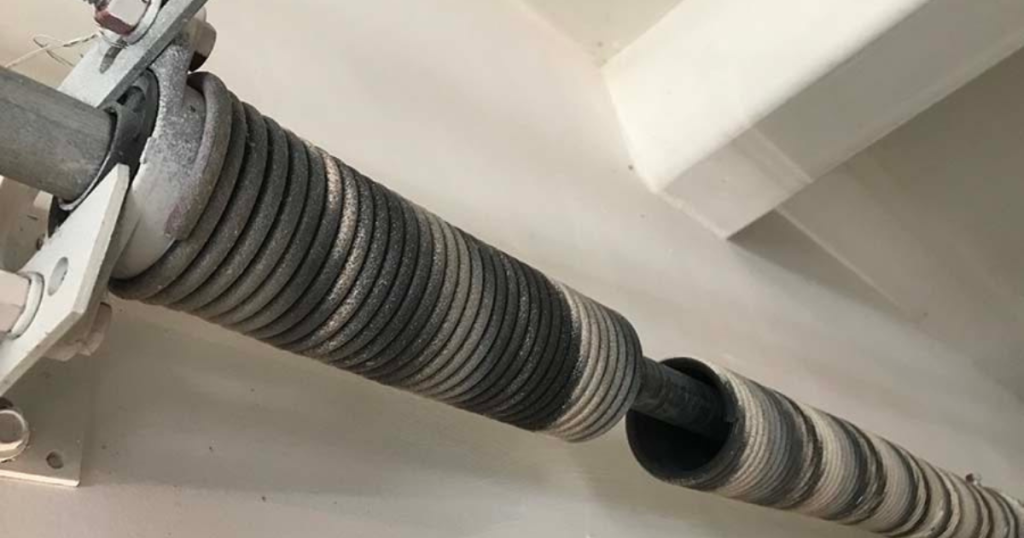
Visual and audible warning signs
Some symptoms are unmistakable and require immediate action.
These include:
- A visible gap or separation in the spring
- A loud bang or snapping noise from the garage
- The door appears crooked or uneven
- Loose or dangling lift cables
- The door is refusing to move at all
At this point, continued operation is unsafe regardless of partial functionality.
Why partial movement does not equal safety
One of the most misleading aspects of spring failure is that the door may still move temporarily.
Important realities include:
- Movement does not indicate stability
- Partial function often precedes total failure
- Stress on other components increases rapidly
- Sudden collapse becomes more likely
- Safety margins are significantly reduced
Once these conditions exist, delay increases risk rather than preserving options.
Long-Term Consequences of Postponing Action
Waiting too long to address broken garage door springs often leads to further damage. What begins as a manageable issue can expand into a full-system problem.
Escalation of repair scope
When spring issues are ignored, secondary damage becomes more likely and more severe.
Long-term consequences often include:
- Premature failure of the garage door opener
- Track deformation or detachment
- Cable replacement is becoming unavoidable
- Panel stress or cracking from uneven movement
- Reduced the lifespan of newly installed parts
The longer the delay, the broader the repair scope becomes.
Financial and logistical impact over time
Delaying necessary repairs often increases both cost and inconvenience.
Escalation typically leads to:
- Higher overall repair expenses
- Emergency service requirements
- Extended downtime without garage access
- Increased safety liability
- Reduced flexibility in repair options
Early action preserves control over timing and cost.
Recognizing the Moment Action Is No Longer Optional
Many people struggle not with identifying a problem, but with deciding when it truly requires immediate attention. Broken garage door springs reach a non-optional stage when several warning signs converge.
Practical criteria for deciding timing
Action becomes necessary when multiple indicators appear together.
Key decision points include:
- Safety risks are becoming apparent
- Daily operation is losing consistency
- Visible or audible signs of failure
- Secondary components showing strain
- Temporary fixes no longer holding
Viewing urgency as prevention rather than panic
Taking action does not need to feel reactive or rushed. Addressing a spring issue at the right time is about preventing harm and preserving system integrity.
A preventive mindset emphasizes:
- Reducing risk before accidents occur
- Protecting people and property
- Maintaining reliable daily routines
- Avoiding unnecessary escalation
Understanding the different types of garage door springs is crucial, as it equips you with knowledge of how each type works and helps you choose the most suitable replacement when the time comes. For more detailed information on these types, read the in-depth guide to garage door springs on Angi.
Professional Garage Door Spring Service
Broken garage door springs are a clear example of a mechanical issue that can transition from optional to unavoidable if ignored. Subtle changes in balance, noise, and effort gradually give way to safety risks, mechanical strain, and daily disruption. Recognizing this progression allows homeowners to act before minor problems become major failures.
Ascension Garage Door Service is committed to providing garage door services that prioritize safety, durability, and peace of mind. Repairs and installations are completed with care to ensure dependable operation. Every service reflects a dedication to quality and customer satisfaction.
Contact us today or give us a call to book trusted garage door service.