


Your garage door is frozen shut because water pooled under the rubber bottom seal and refroze overnight, bonding the door to the concrete. That is the cause in the large majority of cases. The rest come down to ice packed in the tracks, grease that has thickened in the cold, springs that have gone brittle, sensors fogged or blocked by snow, and damage from a door that was forced while it was still frozen. Almost all of it is fixable in fifteen minutes with a scraper and patience. The one thing that turns a fifteen-minute job into a repair bill is hammering the opener button.
Key takeaways
- Stop pressing the button. Two attempts is the limit. Forcing a frozen door is what strips opener gears and cracks panels.
- The bond is usually a thin layer of ice between the rubber seal and the slab, not the door itself freezing solid.
- Melting snow off your car is the source of the water. Colorado Springs averages roughly 42 inches of snow a year, and most of it arrives in your garage on your tires.
- Never use boiling water, an open flame, or a propane torch. Boiling water refreezes within minutes and can spall the concrete.
- If the door frees but now sounds rough, sits crooked, or shows a bowed section, get it inspected before the next cold snap.
1. The bottom weather seal is frozen to the slab
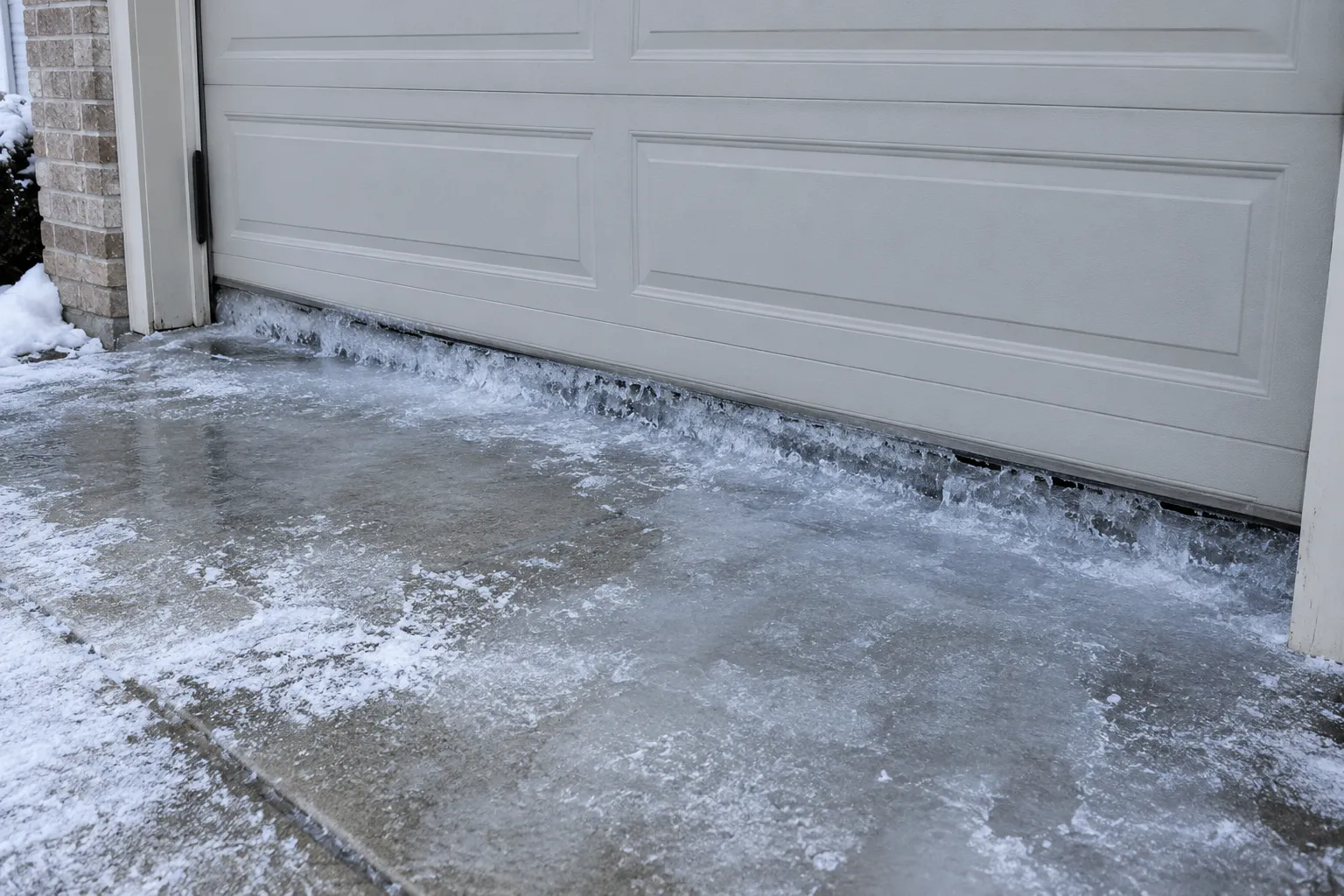
Symptom: The opener strains, the door shudders or lifts a fraction of an inch and drops back, or it simply will not budge. It worked normally last night.
Most likely cause: Snowmelt ran off your vehicle, pooled along the threshold, and refroze overnight. The rubber or vinyl seal on the bottom of the door is now bonded to the concrete. This is the single most common winter call we run.
Fix steps:
- Stop using the opener.
- Look along the base of the door for a visible ice line where the seal meets the slab.
- Chip the ice away from the outside edge with a plastic scraper or a stiff putty knife. Work along the width, not at one spot.
- Warm the remaining bond with a hair dryer on low, keeping it moving. Never hold heat on one section of vinyl.
- Once it releases, open the door fully, clear and dry the slab, and leave the door up until the floor is dry.
Call a pro if: The seal tore away from its retainer, the door frees but no longer sits flush, or the bottom section looks bowed where the ice held it.
Why a garage door seal sticks to concrete overnight
Concrete is porous and holds moisture near the surface, so a thin film of water sits right where the seal makes contact. Overnight temperatures in the teens turn that film into a bond that can hold a 200-pound door in place. It is not the door that froze, it is the quarter inch between the door and the floor. If the door is not moving at all and you are not sure ice is the reason, work through Why Is My Garage Door Stuck? 10 Common Causes (and How to Fix Them) first to rule out a broken spring, which produces a very similar symptom.
2. Ice and packed snow in the tracks
Symptom: The door breaks free at the bottom but binds, grinds, or stops a foot or two up. You may hear a crunch as it travels.
Most likely cause: Snow blown against the door melts, runs into the lower vertical tracks, and refreezes into a ridge. Rollers cannot climb over it. Packed snow and road grit inside the track do the same thing.
Fix steps:
- Inspect both vertical tracks with a flashlight from the floor up to about four feet.
- Chip out ice with a plastic scraper. Do not use a screwdriver or chisel, since a gouged track will derail rollers permanently.
- Wipe the tracks dry with a rag. Leave them dry, because grease in a track collects grit and makes the next freeze worse.
- Clear snow from the outside of the door and at least a foot out from the threshold.
Call a pro if: The door came off track, one side sits lower than the other, or you can see slack cable near the top drum. When one side of a door is held by ice and the opener lifts anyway, the cable on the free side goes slack and can jump its drum. That needs proper garage door drum and cable service to rewind and rebalance, not a quick reseat.
How ice in the garage door track derails a roller
The track is formed to a specific radius and the roller has almost no clearance in it. A ridge of ice the thickness of a coin is enough to lift a roller out of its path. Once one roller is riding the lip instead of the channel, the door is no longer square, and every cycle after that makes it worse.
3. Grease and lubricant have thickened in the cold
Symptom: The door moves but feels heavy, slow, and noisy. It may stop partway. By afternoon it runs normally again.
Most likely cause: Old grease on rollers, hinges, and torsion bar bearings stiffens as the temperature drops. What was a lubricant in October becomes a paste in January. The opener now has to overcome drag it was never sized for.
Fix steps:
- Wipe old buildup off rollers, hinges, and bearing plates with a rag. Heavy, sticky grease should come off rather than be added to.
- Apply a garage-door-rated silicone or lithium spray to rollers, hinges, bearings, and the springs. Silicone stays flexible in cold better than most greases.
- Never use WD-40 as a lubricant here. It is a solvent and it strips what is already there.
- Run a few full cycles to distribute it.
Call a pro if: Lubrication does not restore normal travel, or the opener has to be forced to complete a cycle. That points at a mechanical fault rather than cold grease.
Why a garage door gets slow and heavy in cold weather
Thickened lubricant is a drag problem, and drag reads to the opener as an obstruction. That is why a door that gets sluggish in the cold often starts stopping partway before it fails outright. If yours is stalling mid-travel rather than at the threshold, Why Is My Garage Door Stuck Halfway? 7 Causes (and How to Get It Down Safely) breaks down the difference between a drag problem and a limit setting problem.
4. Cold has pushed a tired spring over the edge
Symptom: A loud bang, often overnight or on the first cycle of a cold morning. The door will not lift, or lifts an inch and stops. It feels enormously heavy by hand.
Most likely cause: Steel loses ductility as it gets colder, so a spring already near the end of its cycle life is far more likely to fail in a cold snap. Cold does not wear springs out, but it decides when a worn one breaks. This is why spring calls cluster around the first hard freeze every year.
What to do: Stop. Do not use the opener, do not try to lift the door by hand, and do not pull the release cord while the door is up. With no spring tension there is nothing holding the door’s weight.
How to confirm: Look at the spring on the shaft above the door. A break shows as a visible gap of two to three inches in the coil.
Call a pro if: Always. Springs hold hundreds of pounds of stored energy and replacing one takes winding bars and correct torque values. This is standard broken garage door spring repair work and a trained technician handles it in under an hour.
Why garage door springs break in cold weather
Think of cold as the trigger rather than the cause. A spring rated for 10,000 cycles is roughly seven to ten years for an average household, and the failure lands on whichever morning puts the most stress on the weakest coil. In Colorado Springs, that is almost always a January morning below twenty degrees.
5. Sensors, remotes, and the opener itself are struggling
Symptom: The door will not close, the opener light blinks, a remote works from ten feet but not thirty, or the unit is dead after a storm.
Most likely cause: Four separate cold-weather faults. Condensation or frost on the sensor lenses blocks the beam. A snow drift or a mound of shoveled snow interrupts it. Remote and keypad batteries lose a large share of their output in freezing temperatures. Winter storms trip the GFCI outlet the opener is plugged into.
Fix steps:
- Wipe both sensor lenses with a dry cloth and check that both LEDs glow steady.
- Clear snow piles from inside and outside the opening, especially within six inches of the floor.
- Replace remote and keypad batteries. This is the single most common winter remote complaint and the cheapest fix on this page.
- Reset the GFCI outlet in the garage and check the breaker.
Call a pro if: Sensors are clean, aligned, and both LEDs are solid but the door still reverses, or the opener is dead with confirmed power at the outlet.
Why garage door sensors fail in freezing weather
Sensors are safety equipment, not an optional convenience. Every opener sold in the United States since 1993 has to include entrapment protection, a requirement enforced by the U.S. Consumer Product Safety Commission. It is tempting on a freezing morning to tape over a fogged sensor or hold the wall button to force the door down. Do not. That beam is the only thing that stops a closing door when a child, a pet, or a shovel is in the path.
6. The door was forced while it was still frozen
Symptom: The door came free but now something is wrong. It sits crooked, a panel is bowed or creased, the seal hangs loose, or the opener grinds and slips.
Most likely cause: Someone kept pressing the button. The opener pulled the top section upward while the bottom stayed bonded to the slab, and something had to give. Usually it is the bottom panel, the seal retainer, the top brackets, or the plastic drive gear inside the opener.
What to check:
- Look at the bottom section for a bow, a crease, or a bracket pulling out of the panel.
- Check whether the seal is still fully seated in its retainer.
- Look for plastic shavings or grey dust on top of the opener, which means a stripped gear.
- Watch a full cycle and listen for grinding or slipping.
Call a pro if: Any of the above. A bowed section throws every roller on that panel out of alignment, and garage door panel replacement service costs far less than the cascade of track and roller damage that follows if the section stays in place.
What forcing a frozen garage door actually damages
The damage is rarely where people expect it. The panel takes the visible hit, but the expensive failures are the ones you cannot see: a stripped opener gear, a bent top bracket, or a cable stretched past its rating. We regularly arrive at what began as a fifteen-minute ice job and find a customer has also cooked a perfectly good opener in the process.
How to safely free a garage door that is frozen shut
- Stop using the opener. Two attempts, then stop. Everything past that is damage.
- Confirm it is actually ice. Look for a visible ice line at the base. If there is no ice and the door is dead weight, suspect a spring and stop here.
- Clear snow away from the outside of the door and a foot out from the threshold so meltwater has somewhere to go.
- Chip the ice along the full width of the seal with a plastic scraper. Work the whole edge rather than digging at one point.
- Apply gentle heat with a hair dryer or heat gun on its lowest setting, kept moving. Never use a torch, a propane heater aimed at the door, or boiling water.
- Disengage the opener and test by hand. Pull the red release cord with the door fully closed, then lift gently. If it moves, the bond has broken. If the release cord is unfamiliar territory, How Do You Open a Stuck Garage Door Manually? 8 Steps Using the Emergency Release covers the full procedure including how to re-engage the trolley afterward.
- Prop the door open a few inches once it frees so the seal cannot refreeze to the slab.
- Dry the slab and the seal, then reconnect the opener and run a full cycle to confirm normal travel.
How to keep it from freezing again
- Squeegee or sweep standing water off the threshold before the temperature drops. This one habit prevents most repeat calls.
- Wipe the bottom seal dry and apply a silicone spray to it. Silicone stops the rubber from bonding to concrete.
- Park with the nose out or shake heavy snow off the vehicle outside, so less of it melts onto the garage floor.
- Keep the last two feet of both vertical tracks swept clear of grit and salt.
- Book a fall service that cleans out old grease and replaces it with a cold-rated lubricant.
- Check the threshold for a low spot or a backward slope that pools water. Sealing and drainage details for attached garages are covered in the Department of Energy’s attached garage sealing guide, and a threshold seal is often the permanent fix.
DIY-safe vs. call-a-pro: a quick reference
|
The situation |
Safe to try yourself |
Call a licensed tech |
|
Seal frozen to the slab |
Yes. Scrape, low heat, dry the floor |
If the seal tore or a panel bowed |
|
Ice in the lower tracks |
Yes. Plastic scraper only, wipe dry |
If a roller left the track |
|
Thickened grease, sluggish door |
Yes. Clean and re-lubricate |
If lubrication does not restore travel |
|
Fogged sensors or dead remote batteries |
Yes. Wipe lenses, replace batteries, reset GFCI |
If LEDs are solid and it still reverses |
|
Snapped or brittle spring |
No. Never. |
Always |
|
Slack or jumped cable |
No. Never. |
Always |
|
Bowed panel or torn seal retainer |
No. |
Always |
|
Opener grinding after being forced |
Diagnosis only. Look for plastic shavings |
For gear or logic board work |
What to do next
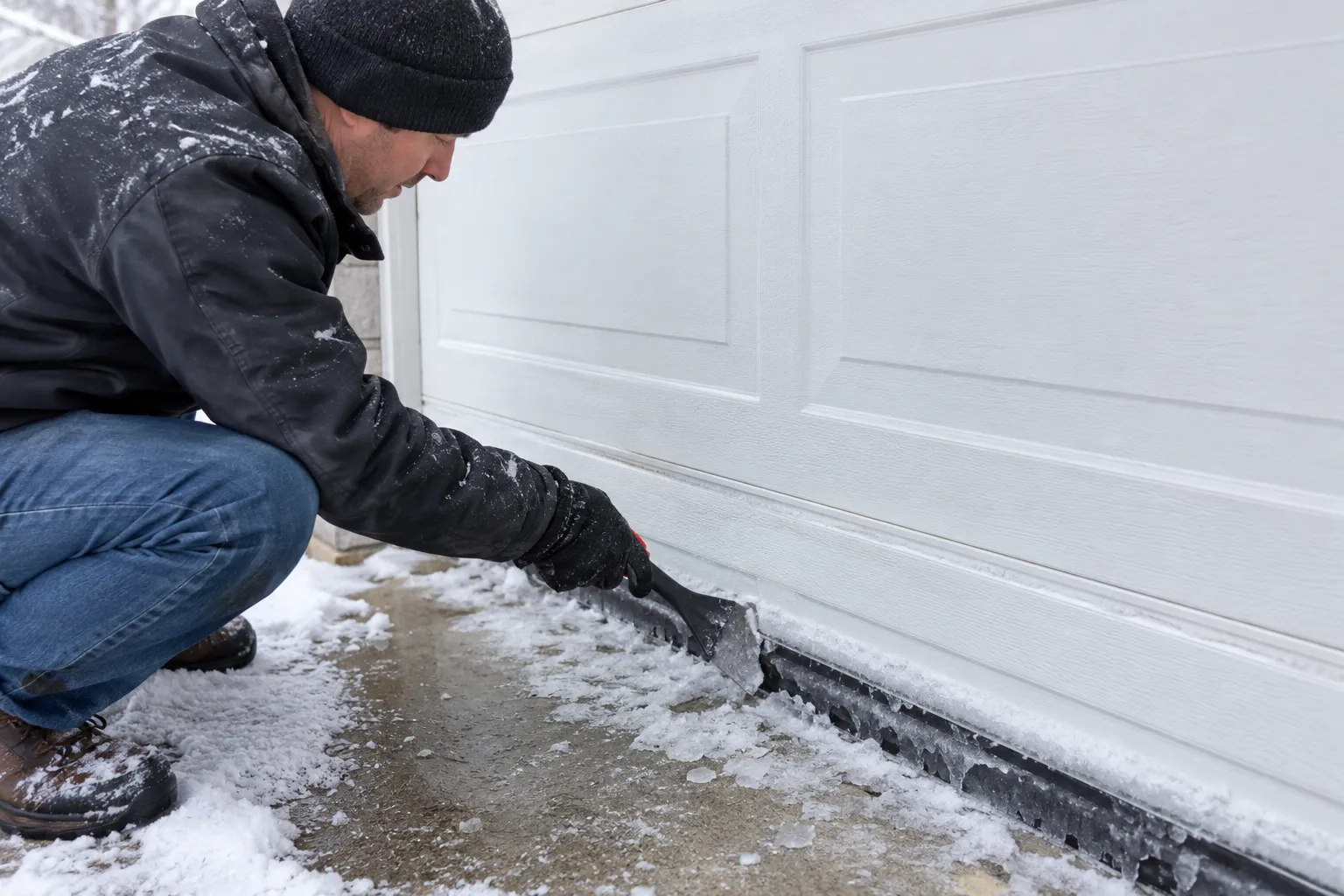
Work in this order: confirm ice is actually the problem, clear the snow, scrape the seal, apply low heat, then test by hand with the opener disengaged. That sequence resolves the majority of frozen doors without a service call. What it will not fix is a snapped spring, a jumped cable, or a panel that was damaged by force, and those three are the ones where continuing to try makes things worse rather than better.
If the door will not release, sits crooked, or came free but no longer runs right, Ascension Garage Door Service has licensed technicians across Colorado Springs with same-day availability through the winter. Book garage door repair or request a free quote and we will get it open and check what the ice did to the rest of the system.