


Your garage door is stuck because something in the system has failed, disengaged, or is physically blocking the door. The most common cause is a broken torsion spring, which makes the door far too heavy for the opener to lift. After that, the usual suspects are misaligned safety sensors, an opener that has been disengaged by the emergency release cord, the lock mode on the wall console, and a door that has come off its track. A few of these you can fix in five minutes. Springs and cables you should never touch. This guide walks the ten causes in order of how often we actually see them.
Key takeaways
- A door that will not move at all, paired with a loud bang you heard earlier, almost always means a broken spring. Stop using the opener.
- A door that starts and then reverses is usually a safety sensor problem, not a motor problem.
- If the motor runs but the door stays still, the trolley is disengaged from the opener. This is the easiest fix on the list.
- Never force a stuck door with the opener. Repeated attempts strip gears and burn out motors, turning a small repair into a large one.
- Springs, cables, and bottom brackets are under extreme tension. Those are call-a-pro items every time, no exceptions.
1. A broken torsion spring
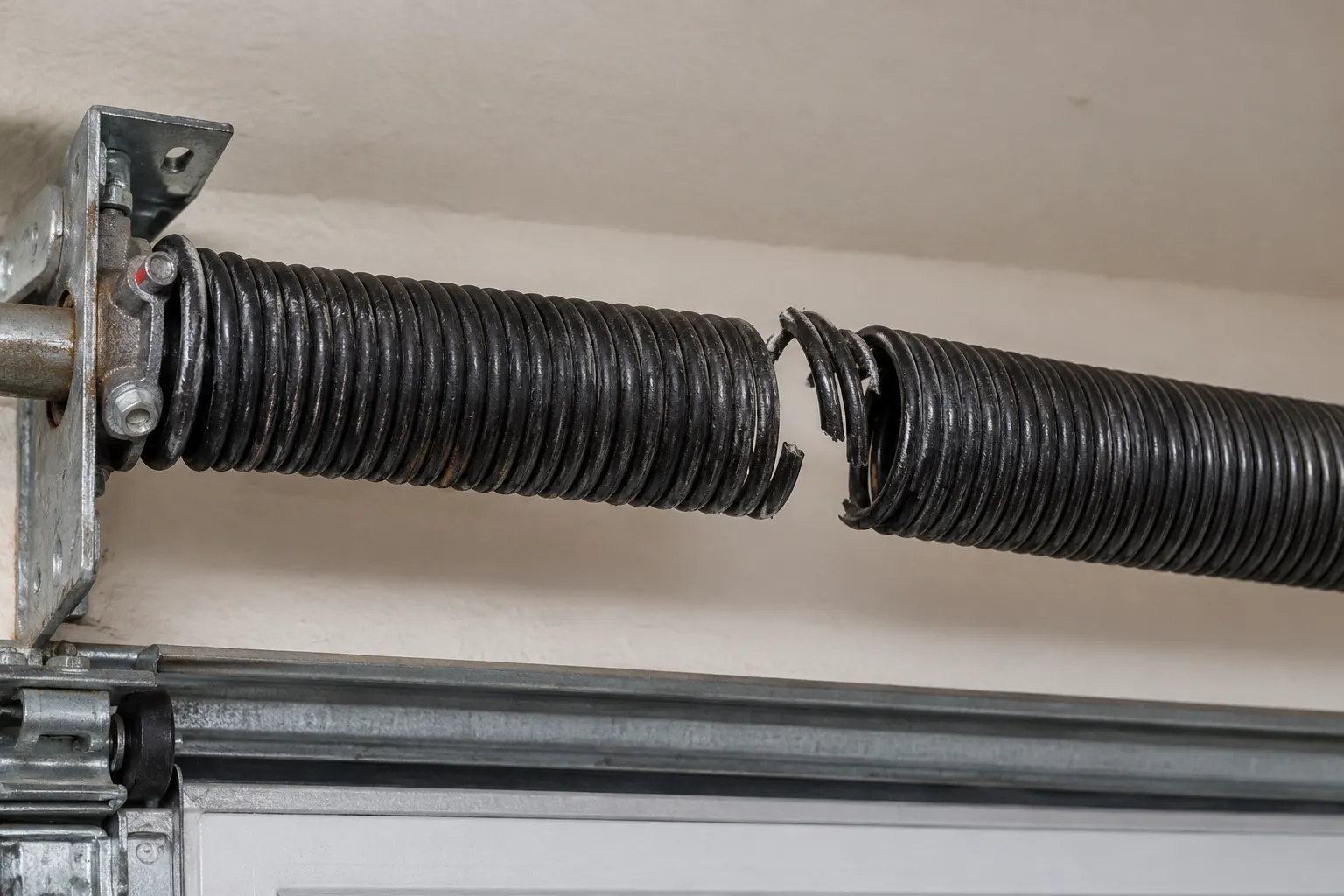
Symptom: The opener hums or clicks, the door lifts an inch or two and stops, or it will not move at all. You may have heard a loud bang from the garage hours or days earlier.
Most likely cause: The torsion spring above the door has snapped. Springs do the actual lifting, not the motor. A double-car door can weigh 150 to 250 pounds, and the opener is only rated to guide that weight, not carry it.
How to check: Look at the spring on the shaft above the door. A broken spring shows a visible gap of two to three inches in the coil. If you see that gap, you have your answer.
What to do: Stop using the opener immediately. Do not try to lift the door by hand. Do not pull the emergency release while the door is up, because with no spring tension the door can slam down.
Call a pro if: Always. Spring replacement requires winding bars and correct torque calculations, and getting it wrong causes serious injury. This is standard broken garage door spring repair work and takes a trained tech under an hour.
Why a broken spring makes a garage door stuck and too heavy to lift
Springs are counterweights. When one breaks, the full dead weight of the door transfers to the opener and to you. That is why a door with a broken spring feels like it is bolted to the floor. Colorado Springs doors typically run 10,000 cycles on a standard spring, which is roughly seven to ten years for an average household. Cold snaps accelerate metal fatigue, which is why breaks cluster in winter here.
2. Misaligned or blocked safety sensors
Symptom: The door closes partway then reverses back up, or refuses to close while the opener light blinks. Opening usually still works.
Most likely cause: The two photo eyes near the floor on each side of the door are no longer seeing each other. A bumped bracket, a cobweb, a leaf, road salt on the lens, or a bike wheel parked in the beam will all do it.
Fix steps:
- Look at the LEDs on both sensors. Both should glow steady. A blinking or dark LED points to the misaligned side.
- Wipe both lenses with a dry cloth.
- Clear anything within six inches of the floor across the opening.
- Loosen the wing nut on the blinking sensor, aim it at its partner until the light goes solid, then retighten.
Call a pro if: Both LEDs are dark (that is a power or wiring fault), the sensors are solid and the door still reverses, or the wire is chewed or pinched.
How to fix garage door sensors that stop the door from closing
Sensors are federally mandated equipment, not an optional accessory. Every opener made for U.S. sale since 1993 must have entrapment protection, a requirement enforced by the U.S. Consumer Product Safety Commission. Bypassing or taping over sensors to force a door closed defeats the one system designed to stop a door from closing on a child or pet. Never do it.
3. The opener is disengaged from the door
Symptom: The motor runs the full cycle, the chain or belt moves, and the door does not budge. Or the door is loose and slides freely by hand.
Most likely cause: Someone pulled the red emergency release cord, usually during a power outage, and the trolley never re-engaged.
Fix steps:
- Close the door fully by hand.
- Pull the red cord toward the door (or straight down, depending on model) to reset the release lever.
- Press the wall button. The trolley will travel until it clicks back onto the carriage.
- Run a full open and close cycle to confirm.
Call a pro if: The trolley will not lock back on, the carriage is cracked, or the door is too heavy to move by hand (that points back to cause #1).
Why the garage door opener runs but the door does not move
This is the single most common false alarm we get called out for, and it is worth checking before anything else because it costs nothing. If you need the full procedure, including how to do it safely when the door is stuck partway up, read How Do You Open a Stuck Garage Door Manually? 8 Steps Using the Emergency Release.
4. Lock mode is engaged
Symptom: Remotes and keypad do nothing. The wall console beeps or its LED flashes. The door may work from the wall button only, or not at all.
Most likely cause: The lock or vacation button on the multi-function wall console was pressed, often by accident. It disables all remote transmitters by design. Older doors may also have a manual slide lock on the inside of the track.
Fix steps:
- Press and hold the LOCK button on the wall console for about two seconds until the flashing stops.
- Check both sides of the door for a manual slide bolt or a rope-pull lock and retract it.
- Test a remote.
Call a pro if: The console still shows a lock indicator after the reset, which usually means a failed console or a wiring short.
How to unlock a garage door stuck in lock mode
If a manual slide lock is engaged and someone runs the opener anyway, the motor pulls the door against a fixed bolt. That can bend the track, tear the bracket out of the panel, and put the door off track. Always confirm the locks are open before troubleshooting anything electrical.
5. The door is off track
Symptom: The door is crooked, jammed at an angle, grinding against the frame, or visibly out of the metal track. It may be stuck partway.
Most likely cause: A roller jumped the track after an impact (a bumper tap is the classic one here), a broken cable let one side drop, or debris in the track derailed a roller.
What to do: Stop. Do not run the opener. Do not try to lever the door back into the track. An off-track door is unstable and can drop or fall inward.
Call a pro if: Always, with one exception. If a single roller has popped out at the very top of a fully closed door and the door is otherwise level and under spring tension, it is a minor fix. Anything beyond that is a repair, not an adjustment.
Why a garage door comes off track and gets stuck at an angle
Off-track doors are rarely the root problem. They are usually the symptom of something else on this list, most often a snapped cable or a worn roller. A tech will fix the derailment and the underlying cause in the same visit, which is why patching it yourself tends to fail within a week.
6. A broken or frayed lift cable
Symptom: One side of the door hangs lower than the other, the door is wedged in the opening, or you can see a steel cable hanging loose or bunched on the drum.
Most likely cause: The lift cable frayed through and snapped, or it slipped off the cable drum at the top of the door. Moisture, road salt, and a door that has been running out of balance all accelerate this.
What to do: Leave it alone and keep people and vehicles out from under the door. A cable failure means the load is now carried unevenly, and the second cable is under strain it was not designed for.
Call a pro if: Always. Cables sit under the same tension as the springs they work with. Correct garage door drum and cable service includes rewinding the drum and rebalancing the door, not just swapping the cable.
Why a garage door cable snaps and jams the door in place
Cables are the most-overlooked part on the door. They are also the part most likely to fail second, right after springs. If a tech replaced your springs recently and did not inspect the cables at the same time, that is a gap worth closing on the next service visit.
7. The door is frozen to the concrete
Symptom: The door will not break loose on a cold morning. The opener strains, shudders, or reverses. Everything worked fine the night before.
Most likely cause: Snowmelt from your vehicle pooled under the bottom seal overnight and refroze, bonding the rubber weather seal to the slab. This is a routine Colorado Springs winter call.
Fix steps:
- Stop pressing the button. Every attempt strains the gears.
- Chip the visible ice away from the base of the door with a plastic scraper.
- Warm the seal with a hair dryer on low, moving constantly. Never use an open flame or a torch.
- Once it releases, prop the door open a few inches so it cannot refreeze, and dry the slab.
- Apply a silicone-based lubricant to the seal before the next freeze.
Call a pro if: The door releases but now sounds rough, the seal tore away from the retainer, or a panel bowed where the ice held it.
How to free a garage door frozen shut without damaging the seal
Standing water under the door is the root cause, so drainage and sealing fix it long-term. The Department of Energy’s Building America program covers the sealing details for attached garages in its attached garage air sealing guide. For the full winter breakdown, including seized rollers and thickened lubricant, see Why Is My Garage Door Frozen Shut? 6 Winter Causes and Safe Fixes.
8. Travel limits or force settings are out of adjustment
Symptom: The door consistently stops at the same spot, reverses just before touching the floor, or opens only partway. Nothing looks broken.
Most likely cause: The travel limit tells the opener where the floor is. The force setting tells it how hard to push before assuming it hit something. Both drift over time, and both get thrown off by a door that has grown stiffer with age.
Fix steps:
- Find the limit adjustment dials or buttons on the motor housing (check your manual, they vary by brand).
- Adjust the down limit in small increments, testing after each change.
- Retest the safety reverse afterward by laying a 2×4 flat under the door. The door must reverse on contact.
Call a pro if: You have to keep increasing force to make the door close. That is the opener compensating for a mechanical problem, and it is masking the real fault while wearing out the motor.
Why a garage door stops partway and reverses on its own
Force settings are a safety system, not a strength dial. Cranking them up to overpower a binding door removes the protection that stops the door on contact. If your door is stopping mid-travel, Why Is My Garage Door Stuck Halfway? 7 Causes (and How to Get It Down Safely) covers this failure in depth.
9. Power, breaker, or remote failure
Symptom: Nothing happens at all. No lights, no motor noise, no click.
Most likely cause: In order of likelihood: the opener is unplugged, the GFCI outlet tripped, the breaker tripped, the remote battery died, or the logic board failed.
Fix steps:
- Check that the opener is plugged in and the outlet has power.
- Reset the GFCI outlet in the garage. Storm activity and winter surges trip these constantly here.
- Check the breaker panel.
- Replace the remote battery and test the wall button separately. Wall button works but remote does not equals a remote problem, not a door problem.
- Unplug the opener for thirty seconds and plug it back in to clear a logic fault.
Call a pro if: The outlet has power, the breaker is on, and the unit is still dead. That is usually a failed board or capacitor.
Why a garage door will not open after a power outage in Colorado Springs
After an outage, three things go wrong at once: the opener loses its programming, the emergency release often gets pulled to get a car out, and the battery backup (if fitted) may be drained. Work through those three before assuming the unit is dead.
10. Bent track, seized rollers, or a damaged panel
Symptom: The door binds at the same point every cycle, grinds, or squeals. You may see a dented or bowed section, or a roller that is not turning.
Most likely cause: A dented panel or a bent track section narrows the path the rollers travel. Dry, worn nylon rollers with flat spots drag instead of rolling. Hail damage and vehicle impacts are the two we see most.
Fix steps:
- Inspect the full track for dents, gaps, or loose lag bolts.
- Lubricate rollers, hinges, and the torsion bar bearings with a garage-door-rated silicone or lithium spray. Never use WD-40 as a lubricant here, it strips existing lubrication.
- Tighten visibly loose track brackets.
Call a pro if: A track section is bent, a hinge is cracked, or a panel is creased. A bowed panel puts every roller on that section out of alignment, and garage door panel replacement service is usually cheaper than the cascade of roller and track damage that follows if it is left alone.
How to fix a garage door that binds and grinds in the track
Do not hammer a bent track back into shape. The track is engineered to a specific radius, and a hand-straightened section will keep derailing rollers at that spot. Sections are replaceable and inexpensive compared to a new door.
DIY-safe vs. call-a-pro: a quick reference
|
The problem |
Safe to try yourself |
Call a licensed tech |
|
Sensors misaligned or dirty |
Yes. Clean lenses, realign, clear the beam path |
If both LEDs are dark or wiring is damaged |
|
Emergency release pulled |
Yes. Re-engage the trolley with the door closed |
If the trolley will not lock back on |
|
Lock mode engaged |
Yes. Hold the LOCK button, retract manual bolts |
If the lock indicator persists after reset |
|
Dead remote or tripped GFCI |
Yes. Battery, breaker, outlet, power cycle |
If the unit is dead with confirmed power |
|
Door frozen to the slab |
Yes. Chip ice, low heat, silicone the seal |
If the seal tore or a panel bowed |
|
Travel or force settings |
Cautiously. Small increments, always retest reverse |
If force has to keep increasing to close |
|
Broken torsion spring |
No. Never. |
Always |
|
Broken or frayed cable |
No. Never. |
Always |
|
Door off track |
No. |
Always |
|
Bent track or damaged panel |
Lubrication only |
For any bent, cracked, or creased component |
What to do next
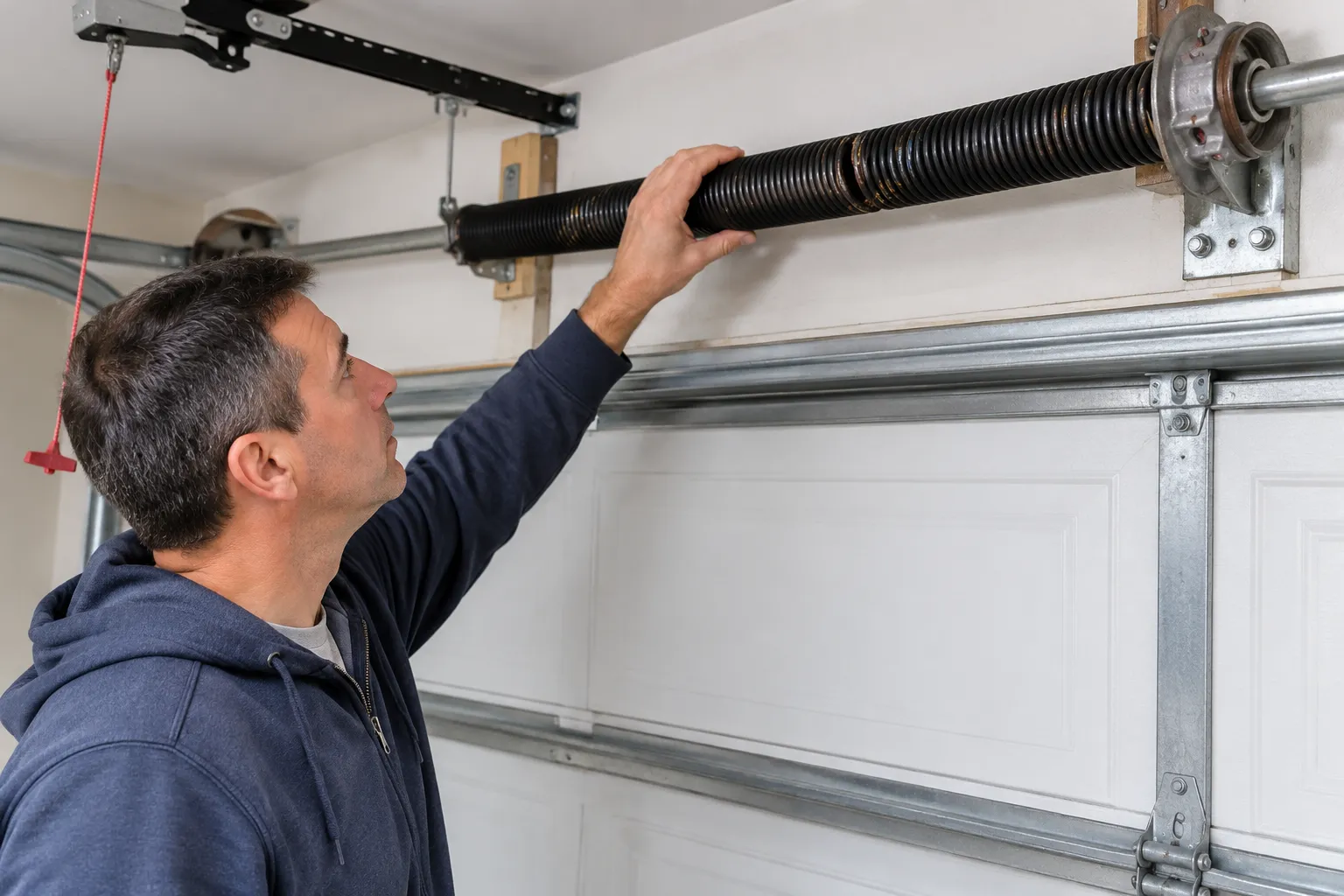
Work the list in order. Check the spring first, then the sensors, then the release cord, then the lock. Those four account for the large majority of stuck doors, and three of the four cost nothing to rule out. If you land on a spring, a cable, or an off-track door, stop and call someone. Those three components hold enough stored energy to cause serious injury, and no amount of care substitutes for the right tools.
If the door is stuck right now and you are not sure which category you are in, Ascension Garage Door Service runs licensed technicians across Colorado Springs with same-day availability for doors that will not open. Book garage door repair or request a free quote and we will diagnose it on-site.